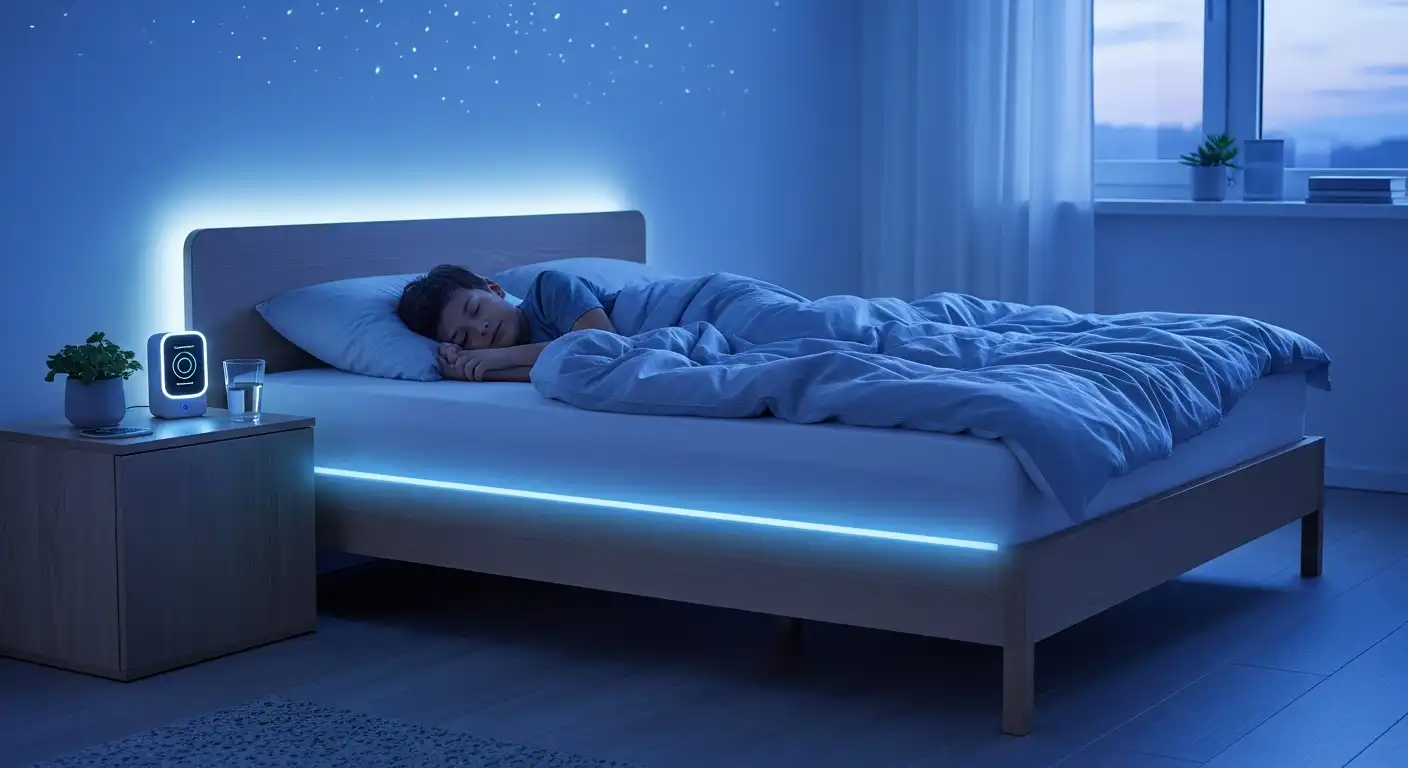
We live in a culture that often wears sleep deprivation as a badge of honor. We celebrate the “grind,” the late nights, and the “I’ll sleep when I’m dead” mentality. However, modern neuroscience and biology are screaming a different message: Sleep is not a luxury; it is the fundamental pillar of human performance, longevity, and mental health.
If you are reading this, you are likely tired. Perhaps you struggle to fall asleep, wake up groggy, or hit a wall of exhaustion at 2 PM. You don’t just want to sleep more; you want to sleep better. This is where biohacking comes in.
Biohacking is the art and science of modifying your internal and external environment to gain greater control over your biology. When applied to sleep, it moves beyond the generic advice of “drink warm milk” and delves into light spectrums, thermoregulation, and circadian biology.
This comprehensive guide explores the science of sleep optimization and provides actionable, evidence-based protocols to improve sleep.
Understanding the Architecture of Sleep
Before we can hack sleep, we must understand how it works. Sleep is not a uniform state of unconsciousness. It is a dynamic process consisting of 90-minute cycles that repeat throughout the night.
The Stages of Sleep
The stages of sleep progress from light sleep to deep slow-wave sleep and REM sleep, each playing a distinct role in physical restoration, memory consolidation, and emotional processing.
- Light Sleep (Stages 1 & 2): This is the transition phase. Your heart rate slows, and your body temperature drops. While often dismissed, light sleep is crucial for memory consolidation and synaptic pruning.
- Deep Sleep (Stages 3/4 – Slow Wave Sleep): This is the phase of physical restoration. The brain washes itself with glymphatic fluid, removing toxins like beta-amyloid (linked to Alzheimer’s). Growth hormone is released, repairing muscles and tissues. This is the sleep that makes you feel refreshed.
- REM Sleep (Rapid Eye Movement): This is the phase of mental restoration. It is when you dream. REM is vital for emotional regulation, creativity, and processing complex information.
The Two Forces Driving Sleep
Two opposing forces govern your ability to sleep:
- Circadian Rhythm: Your internal 24-hour biological clock, regulated primarily by light.
- Adenosine Pressure (Sleep Drive): Adenosine is a chemical byproduct of cellular energy. It builds up in your brain every minute you are awake, creating “sleep pressure.” When you sleep, the brain clears it out.
Biohacking sleep is essentially the practice of optimizing these cycles and manipulating these two forces.
Pillar 1: Light Mastery (The Circadian Reset)
Light is the most potent drug you take every day. It signals to your master clock (the Suprachiasmatic Nucleus) whether it is time to be alert or time to rest.
Morning: The Solar Anchor
The single most important thing you can do for your sleep happens the moment you wake up.
- The Protocol: View direct sunlight within 30-60 minutes of waking.
- The Science: Bright light (specifically the blue/cyan spectrum) hits the melanopsin cells in your eyes, triggering a cortisol pulse. This “wakes up” your body and starts a timer for the release of melatonin (the sleep hormone) roughly 12-14 hours later.
- The Hack: Get outside for 10-20 minutes. Windows block the specific light spectrum needed, so open the window or step onto a balcony. On cloudy days, stay out longer. If you wake up before the sun, use a specialized 10,000 lux therapy lamp (SAD lamp).
Evening: Defending the Darkness
In the evening, blue light becomes the enemy. Artificial blue light (from phones, LEDs, TVs) suppresses melatonin production, tricking your brain into thinking it is noon.
- The Protocol: Block blue light starting 2-3 hours before bed.
- The Hack: Install apps like f.lux or Iris on your computer and use “Night Shift” on your phone. However, software isn’t enough. The gold-standard biohack is wearing Blue-Light-Blocking Glasses (amber or red lenses). Red lenses block nearly 100% of blue and green light, helping preserve your melatonin levels even when watching Netflix.
Pillar 2: Thermoregulation (The Chill Factor)
Your core body temperature must drop by about 2-3 degrees Fahrenheit to initiate and maintain sleep. If you are too hot, your body struggles to enter Deep Sleep.
The Ideal Ambient Temperature
Science suggests the optimal bedroom temperature is between 60°F and 67°F (15°C-19°C). It feels cold, but that is the point.
The Warm Bath Paradox
Taking a hot bath or shower 90 minutes before bed is a classic biohack.
- The Science: Hot water dilates your blood vessels (vasodilation), increasing blood flow to the surface of your skin. When you step out of the bath into the cool air, your body rapidly dumps heat from its core to the environment. This massive drop in core temperature acts as a powerful sleep trigger.
Advanced Gear: Cooling Mattresses
For serious biohackers, technology such as the Ooler or Eight Sleep mattress covers actively circulates water to regulate your bed temperature. You can program them to cool down deeply at night (promoting Deep Sleep) and warm up in the morning (waking you gently without an alarm).
Pillar 3: Chemical Engineering (Supplements and Diet)
While we should prioritize behavioral changes, strategic supplementation can bridge the gap.
The Caffeine Curfew
Caffeine works by blocking adenosine receptors. It doesn’t give you energy; it just hides your fatigue.
- The Science: Caffeine has a half-life of roughly 5-6 hours. If you drink a coffee at 4 PM, 50% of that caffeine is still in your system at 10 PM. This residual caffeine crushes Deep Sleep quality.
- The Hack: Implement a strict “Caffeine Curfew” 10 hours before your intended bedtime.
The Sleep Cocktail
Avoid generic “sleeping pills” (which are sedatives, not sleep aids). Instead, focus on nutrients that support the body’s natural relaxation pathways.
- Magnesium Glycinate or Threonate: 60-80% of people are deficient in magnesium. It is essential for calming the nervous system (GABA receptors).
- L-Theanine: An amino acid found in green tea that promotes relaxation without drowsiness. It helps quiet the “racing mind.”
- Apigenin: A compound found in chamomile that acts as a mild sedative.
- Note: Always consult with a doctor before starting new supplements.
Eating Windows
Digestion is a metabolically expensive process. If you eat a heavy meal right before bed, your body diverts energy to digestion rather than restoration. This raises your heart rate and body temperature.
- The Hack: Stop eating at least 3 hours before bed. This allows your blood sugar to stabilize and your body to cool down.
Pillar 4: The Nervous System Reset
Modern life keeps us in a state of sympathetic dominance (fight-or-flight). To sleep, we must switch to the parasympathetic state (Rest and Digest).
Breathwork: The 4-7-8 Technique
This technique acts as a tranquilizer for the nervous system.
- Inhale quietly through the nose for 4 seconds.
- Hold your breath for 7 seconds.
- Exhale completely through the mouth (making a whoosh sound) for 8 seconds.
- Repeat for 4 cycles. The long exhale stimulates the Vagus Nerve, slowing the heart rate.
NSDR (Non-Sleep Deep Rest) or Yoga Nidra
If you wake up in the middle of the night or struggle to fall asleep, try NSDR. This guided relaxation protocol systematically calms the body. Studies show that 20 minutes of NSDR can replenish neurotransmitters (such as dopamine) and significantly reduce stress hormones. There are free scripts available on YouTube (Huberman Lab or Ally Boothroyd).
Pillar 5: Tracking and Optimization
“What gets measured gets managed.” To truly biohack sleep, you need data.
Wearable Tech
Devices like the Oura Ring, Whoop Strap, or Apple Watch provide granular data on your sleep stages. They can tell you exactly how much Deep vs. REM sleep you are getting, your Heart Rate Variability (HRV), and your Latency (how long it takes to fall asleep).
How to Use the Data
Don’t obsess over the score (which can cause “orthosomnia”—sleep anxiety). Use the data to run experiments.
- Experiment: “If I wear blue light blockers tonight, does my Deep Sleep score go up?”
- Experiment: “If I don’t drink alcohol, how does my HRV change?” (Spoiler: Alcohol destroys REM sleep. It is one of the worst things for sleep quality).
The Bedroom Environment: Creating the Cave
Your bedroom should be a sanctuary dedicated solely to sleep and intimacy.
Pitch Black
Your skin has photoreceptors. Even a small LED from a smoke detector or streetlight filtering through the blinds can disrupt sleep quality.
- The Hack: Use blackout curtains. Use electrical tape to cover LEDs on electronics. If you can’t block out the room, wear a high-quality, contoured sleep mask (like Manta Sleep) that applies no pressure to your eyes.
Soundscaping
Sudden noises jolt us out of Deep Sleep (an evolutionary defense against predators).
- The Hack: Use a white noise machine or a fan. White noise creates a consistent “sound blanket” that masks sudden noises, such as a car door slamming or a dog barking. Pink noise (which sounds more like rain or wind) has also been shown in some studies to enhance slow-wave (Deep) sleep.
Conclusion: Consistency is King
You can buy all the gadgets, take all the supplements, and wear the orange glasses, but none of it matters if you don’t have consistency. The human body loves rhythm. Going to bed and waking up at the same time every day (even on weekends) anchors your circadian clock better than any hack.
Biohacking sleep is not about perfection; it is about progress. Start with the “Low Hanging Fruit”: get morning sunlight, block evening blue light, and cool down your room. Once you master the basics, layer in the advanced protocols. Prioritizing your sleep is the highest-ROI investment you can make in your health, your career, and your happiness. Reclaim the night, and you will conquer the day.