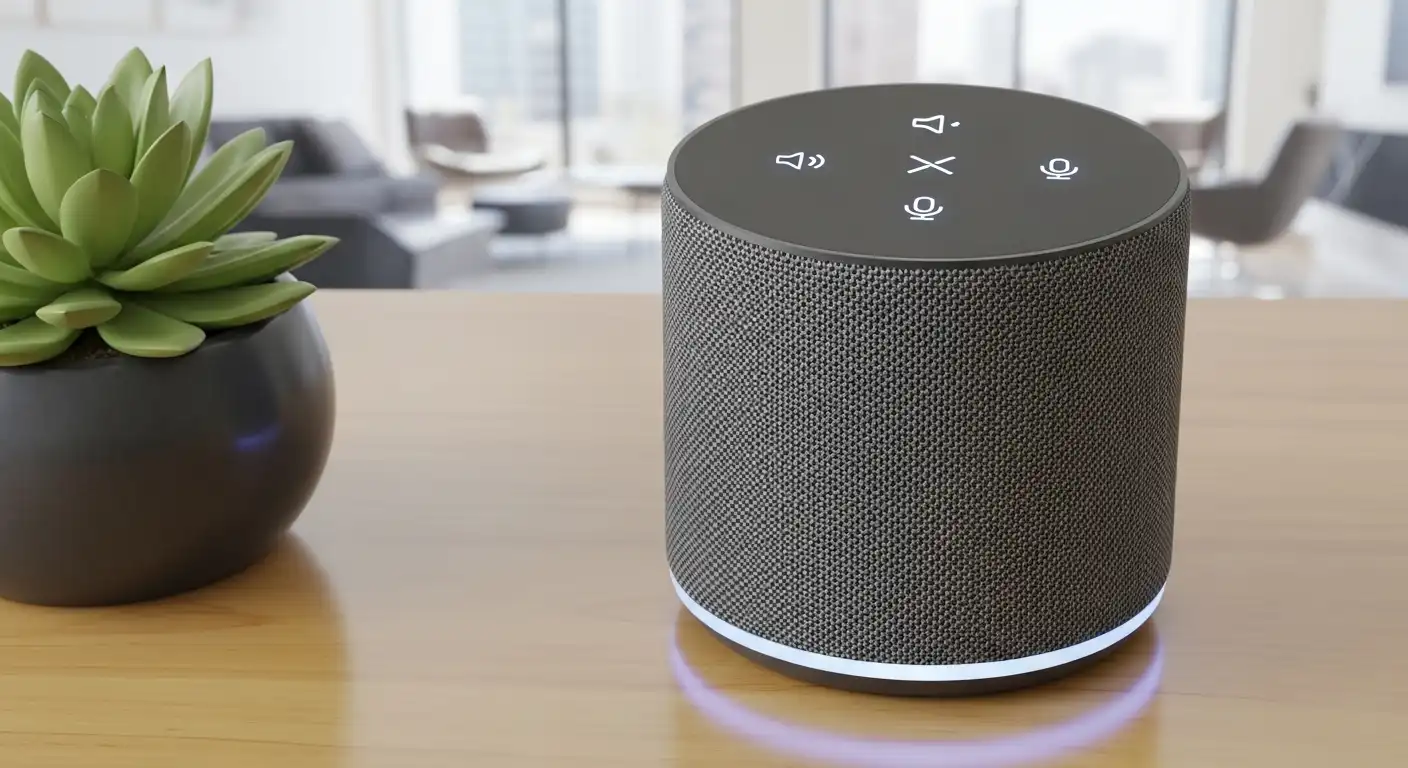
Remember the first Amazon Echo? It was a strange, black cylinder that sat on your counter. It felt like a parlor trick. You’d ask it for the weather, and it would tell you. You’d ask it to play a song, and it would. It was a novelty, a fun little piece of the future that was mostly good for setting timers and telling bad jokes. We invited this polite, disembodied voice into our homes without realizing that we were witnessing the first, clumsy steps of a technology that would quietly evolve into the brain of the modern home.
The Humble Music Box and Kitchen Timer
At first, the smart speaker’s job was simple. Its primary function was to be a better Bluetooth speaker—one you could talk to from across the room. Its killer app wasn’t some complex AI task; it was being the world’s most convenient kitchen timer. “Alexa, set a timer for 10 minutes.” This was the Trojan horse. The device proved its worth with simple, undeniably useful tasks that made our lives just a little bit easier. It was a humble, single-purpose tool that slowly but surely earned its place on our kitchen counters and bookshelves.
The Hub of the Smart Home
The first great evolutionary leap was when the smart speaker stopped being a standalone gadget and started talking to everything else. This was the moment it became the conductor of the smart home orchestra. “Hey Google, turn on the living room lights.” “Siri, lock the front door.” The speaker became the central, voice-activated hub for a sprawling ecosystem of smart plugs, bulbs, thermostats, and cameras. It was no longer just a speaker; it was the invisible control panel for our entire home, simplifying a complex web of different apps into a single, conversational interface.
The Sound Quality Arms Race
For years, one thing was universally true about smart speakers: they sounded terrible. The audio quality was an afterthought, good enough for a podcast but not for your favorite music. Then a new front in the war for our homes opened up: the sound-quality arms race. Spurred on by devices like the Apple HomePod, which prioritized audio fidelity, Amazon and Google were forced to get sound. Seriously, this gave us a new generation of devices, like the Echo Studio and Nest Audio, that weren’t just smart; they were actually good speakers. The evolution wasn’t just about the brain; it was about the voice, too.
The Conversational Brain
We are now on the cusp of the next, and most profound, evolutionary leap. For all their smarts, today’s assistants are still rigid. They respond to direct commands, but they have no memory and no real understanding of context. The rise of large language models is about to change that. The next generation of smart speakers will be conversational. You won’t just give orders; you’ll have a dialogue. You’ll be able to say, “Hey, what was that movie about the guy who gets stuck on Mars? Can you play the soundtrack on Spotify?” The assistant will understand, remember, and reason.
From Novelty to Necessity
The journey of the smart speaker has been a masterclass in quiet, gradual evolution. It crept into our homes as a simple music player and timer. It became the indispensable hub of our smart homes. It evolved into a high-quality audio device. And now, it is on the verge of becoming a true, conversational AI partner. That strange black cylinder is no longer a parlor trick. It has become the listening, thinking, and talking brain of a new kind of home.