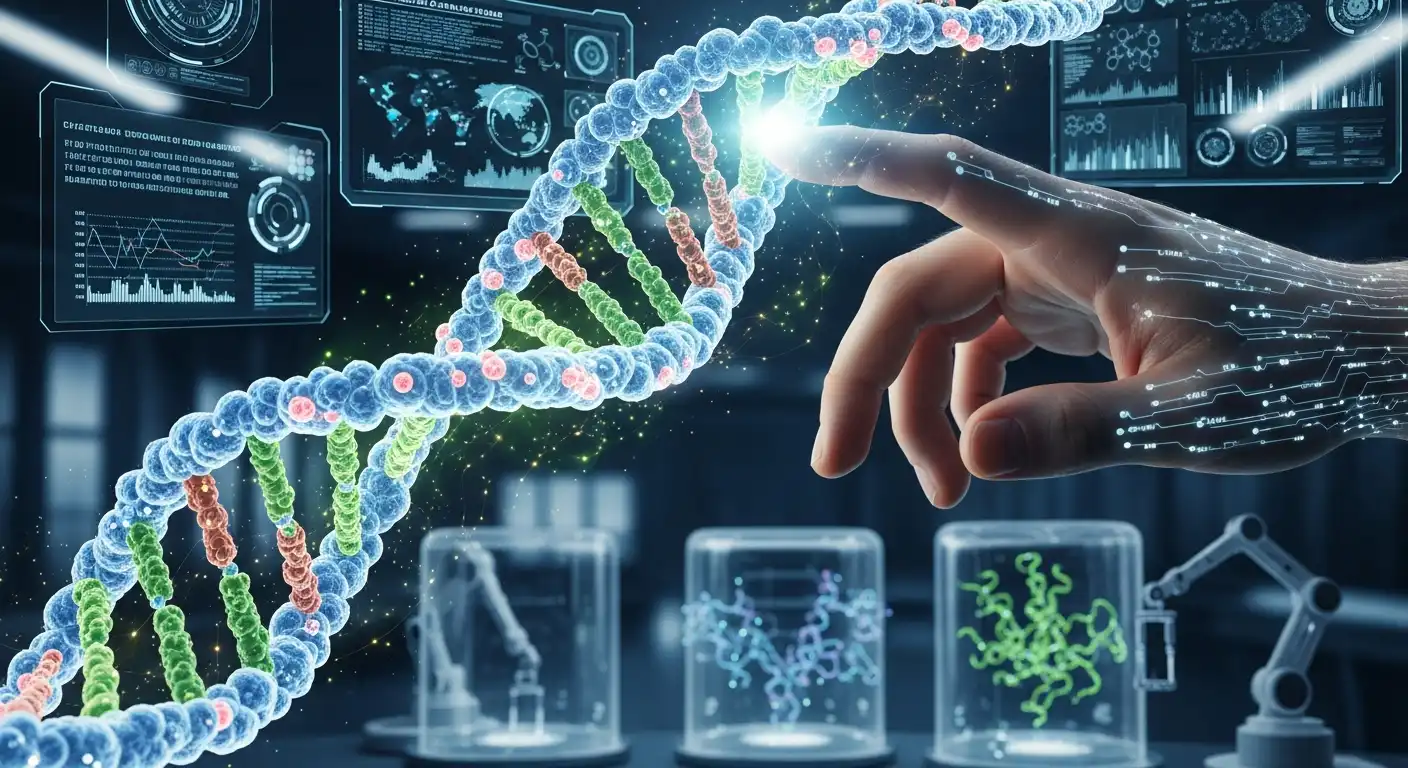
The practice of medicine has historically been a science of averages. A drug is tested on a few thousand people; if it works for the majority, it is approved for everyone. A disease is diagnosed based on symptoms; if two patients have a cough and a fever, they likely get the same treatment. However, this “one-size-fits-all” approach ignores a fundamental truth: biology is not uniform. Every human being is a unique biological entity, programmed by a distinct sequence of DNA.
For decades, the dream of reading this code—the 3 billion letters of the human genome—seemed like science fiction. But since the completion of the Human Genome Project in 2003, we have entered a new era. We are moving from the age of generalized medicine to the age of Genomic Medicine.
Genomic medicine is the use of genetic information to guide clinical care. It is the process of converting the raw digital code of our DNA into personalized, precise healthcare plans. From predicting cancer risk before a tumor forms to tailoring drug dosages to an individual’s metabolism, genomic medicine is rewriting the rulebook of how we treat disease.
This comprehensive guide explores the science behind this revolution, the real-world applications saving lives today, the technologies driving the change, and the ethical frontiers we must navigate.
The Foundation: Understanding the Code
To appreciate the power of genomic medicine, one must first understand the data it operates on. The human genome is the complete set of nucleic acid sequences for humans, encoded as DNA within the 23 chromosome pairs in cell nuclei.
The Book of Life
Think of the genome as a massive instruction manual. It contains roughly 3.2 billion “letters” (base pairs: Adenine, Cytosine, Guanine, Thymine). These letters form words (genes), which form chapters (chromosomes).
- Genetics is the study of single genes and their roles in inheritance.
- Genomics is the study of all of a person’s genes (the genome), including interactions of those genes with each other and with the person’s environment.
While human beings are 99.9% genetically identical, that 0.1% difference accounts for millions of variations. These variations—Single Nucleotide Polymorphisms (SNPs), insertions, and deletions—are the keys to why one person develops Alzheimer’s at 60 while another lives to 100, or why one person is cured by a drug that kills another.
The Diagnostic Revolution: Solving the Unsolvable
The most immediate impact of genomic medicine has been in the diagnosis of rare diseases.
The Diagnostic Odyssey
For families with children born with rare genetic disorders, the journey to a diagnosis used to be a “diagnostic odyssey.” It involved years of specialists, invasive tests, and misdiagnoses, often costing enormous emotional and financial sums.
Genomic sequencing, specifically Whole Exome Sequencing (WES)—which reads the protein-coding regions of the genome—has changed this. By sequencing the child and both parents (a “trio”), doctors can often pinpoint the exact mutation causing the illness in weeks rather than years. This not only provides closure but can point to specific treatments that target the biological pathway involved.
Non-Invasive Prenatal Testing (NIPT)
Genomic medicine has also transformed obstetrics. NIPT allows doctors to screen a fetus for chromosomal abnormalities like Down syndrome by analyzing fragments of fetal DNA floating in the mother’s blood. This simple blood draw has largely replaced riskier invasive procedures like amniocentesis for screening purposes.
Pharmacogenomics: The Right Drug, The Right Dose
Perhaps the most widely applicable branch of genomic medicine is Pharmacogenomics (PGx). This is the study of how genes affect a person’s response to drugs.
Adverse Drug Reactions (ADRs) are a leading cause of death and hospitalization. Many of these reactions occur because of genetic variations in liver enzymes (specifically the Cytochrome P450 family) that metabolize medications.
- Metabolizer Status: A patient can be a “Poor Metabolizer” (drug builds up to toxic levels), a “Normal Metabolizer,” or an “Ultra-Rapid Metabolizer” (body clears the drug before it can work).
Real-World Examples:
- Codeine: For some children, a genetic variant causes their body to convert codeine into morphine too rapidly, leading to fatal overdoses from standard doses. PGx testing can prevent this.
- Warfarin: This blood thinner has a narrow therapeutic window. Genetic testing helps doctors calculate the precise dose to prevent clots without causing bleeding.
- Chemotherapy: Drugs like Fluorouracil (5-FU) can be deadly to patients lacking a specific enzyme (DPD). Pre-treatment screening saves lives.
Precision Oncology: Targeting the Tumor’s DNA
Cancer is fundamentally a disease of the genome. It arises when mutations cause cells to divide uncontrollably. Historically, we treated cancer based on where it was in the body (lung cancer, breast cancer). Genomic medicine treats cancer based on what mutations are driving it.
Tumor Profiling
Doctors now sequence the DNA of the tumor itself (somatic sequencing). This reveals the “driver mutations.”
- Targeted Therapies: If a lung cancer tumor has an EGFR mutation, patients can take a pill (like Osimertinib) that targets that specific protein, often sparing them from harsh chemotherapy.
- Immunotherapy: Genomics helps identify tumors with a high “mutational burden,” which makes them better targets for immunotherapies like Checkpoint Inhibitors.
This approach has led to “tissue-agnostic” drugs—medicines approved to treat any cancer with a specific genetic marker, regardless of whether it started in the colon, the skin, or the brain.
Polygenic Risk Scores: Predicting the Future
While rare diseases are often caused by a single broken gene (monogenic), common diseases like heart disease, diabetes, and depression are complex. They are influenced by thousands of tiny genetic variations acting together.
Polygenic Risk Scores (PRS) utilize algorithms to analyze millions of variants across a person’s genome to calculate their statistical risk for a specific disease.
- Heart Disease: A high PRS might identify a 30-year-old with normal cholesterol who is actually at high genetic risk for a heart attack. This allows doctors to intervene early with statins or lifestyle changes decades before a cardiac event occurs.
- Breast Cancer: PRS can identify women who are at high risk but don’t carry the famous BRCA mutations, ensuring they get earlier and more frequent mammograms.
This moves medicine from “reactive” (treating the sick) to “proactive” (keeping the healthy well).
The Technology Driving the Shift
The engine of genomic medicine is Next-Generation Sequencing (NGS).
From $3 Billion to $600
The first human genome cost roughly $3 billion and took 13 years. Today, machines from companies like Illumina can sequence a genome in a day for under $600. This collapse in cost—faster than Moore’s Law—is what makes clinical genomics economically feasible.
Artificial Intelligence
We are generating more biological data than humans can interpret. AI and Machine Learning are essential for scanning these petabytes of data to find patterns, identify new disease genes, and interpret the clinical significance of “Variants of Uncertain Significance” (VUS)—mutations we haven’t seen before.
The Ethical and Social Frontiers
Converting code into care is not just a technical challenge; it is a societal one.
Privacy and Discrimination
Your genome is the ultimate personal identifier. It reveals information not just about you, but about your parents, siblings, and children. Who owns this data? Can insurance companies use it to deny coverage? In the US, the Genetic Information Nondiscrimination Act (GINA) offers some protection, but gaps remain, particularly regarding life insurance and long-term care insurance.
Equity and Diversity
Historically, the vast majority of genomic data has come from people of European ancestry. This means that Polygenic Risk Scores are often less accurate for people of African, Asian, or Hispanic descent. Achieving “Genomic Equity”—ensuring the benefits of precision medicine reach all populations—is a critical priority for the field.
The “Angelina Jolie Effect”
Genetic knowledge is power, but it is also a burden. When Angelina Jolie underwent a preventative double mastectomy after discovering she carried a BRCA1 mutation, it highlighted the difficult choices genomic medicine forces upon patients. Knowing you have an 80% risk of cancer requires making life-altering decisions based on probabilities, not certainties.
Conclusion
Genomic medicine represents the most significant paradigm shift in healthcare in a century. It is the transition from an analog, intuitive practice to a digital, data-driven science. By converting the code of life into actionable care, we are increasing survival rates, reducing adverse drug reactions, and finally delivering on the promise of precision medicine.
However, the technology is only as good as the system that delivers it. To fully realize this potential, we must educate a new generation of “genomically literate” physicians, upgrade our electronic health records to handle genetic data, and ensure that these life-saving insights are accessible to everyone, not just the few.
We are no longer just reading the book of life; we are learning to edit it, interpret it, and use it to heal. The future of medicine is personal, and it is written in our genes.