Key Points:
- Scientists often ignore rain when studying how climate change affects animals.
- A massive global review shows heavy storms severely harm bird reproduction.
- Long-term steady rain helps dry habitats by increasing the food supply.
- Wet feathers force birds to burn vital energy to maintain body heat.
When people think about climate change, they usually picture rising temperatures and dry deserts. However, scientists have missed a massive piece of the puzzle. A new study reveals that rainfall shapes the natural world just as much as heat. Researchers Alice Boyle and Katy Silber recently published a sweeping global review in the Proceedings of the National Academy of Sciences to show exactly how rain impacts bird populations.
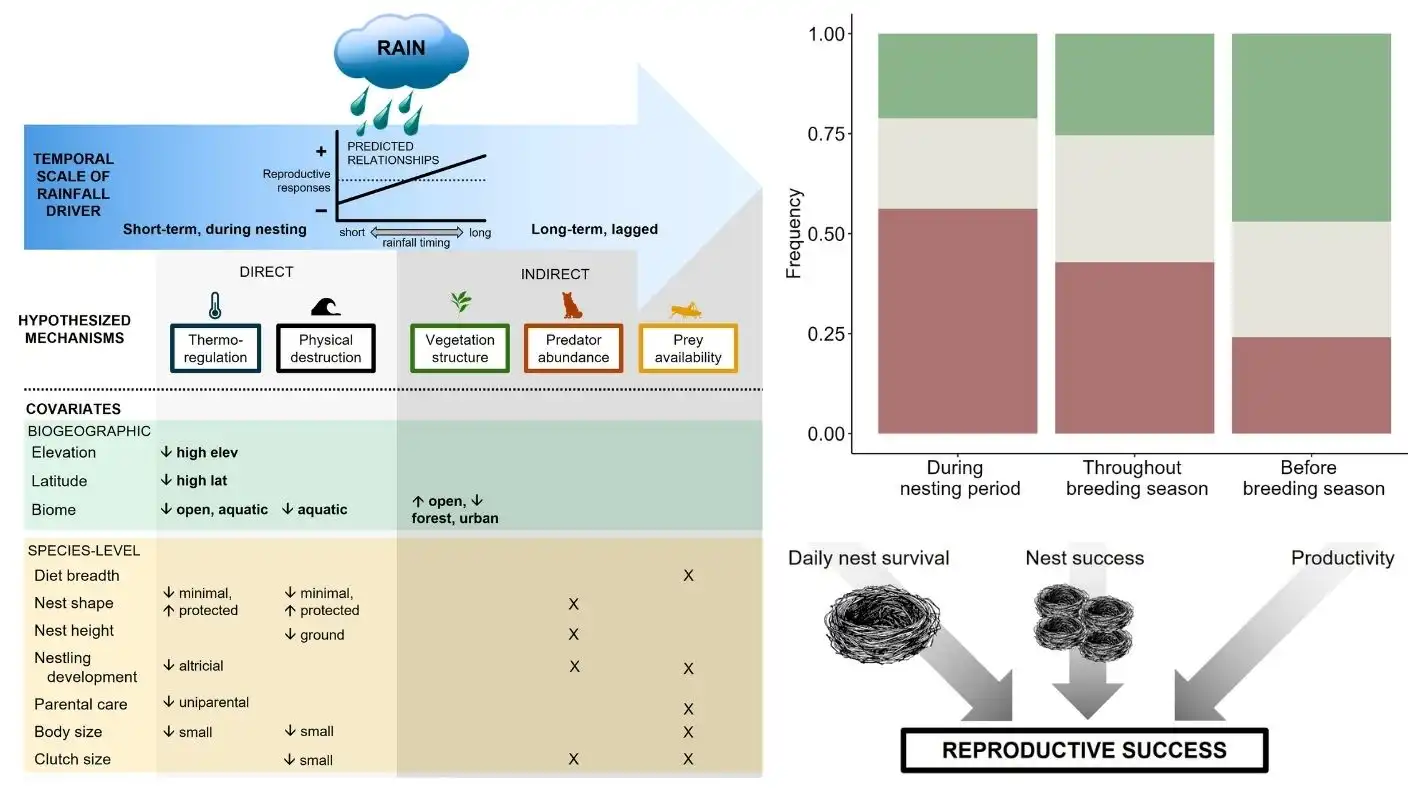
The researchers looked at decades of data across deserts, forests, and wetlands. They found a major difference between long-term weather patterns and sudden storms. Over long periods, rain helps dry environments by growing more plants and boosting the insect supply. This extra food gives birds the fuel they need to raise their young.
Sudden storms, on the other hand, spell disaster for breeding birds. When bad weather hits during nesting season, reproductive success drops sharply. Boyle explains that raising babies already drains a bird’s energy. Throwing a cold, heavy rainstorm into the mix pushes their physical stress levels over the edge.
The problem comes down to basic body heat. While bird feathers resist water, they are not completely waterproof. Just like humans, birds get cold much faster when they get soaked. A wet bird must burn a huge amount of energy just to maintain its internal temperature and stay alive.
This creates a terrible situation for birds sitting on eggs. They cannot simply leave the nest to find food and refuel. They must sit there, get drenched, and endure the freezing conditions to keep their unhatched chicks safe. This struggle proves especially deadly in colder, northern regions where chilling rains pull heat away even faster.
Boyle warns that climate change makes these findings incredibly urgent. Global warming does not just dry out the planet; it creates wild, unpredictable weather. As heavy storms become more frequent and intense, birds face a much tougher battle to raise the next generation.
Source: Proceedings of the National Academy of Sciences (2026).