Key Points:
- Researchers in China developed an incredibly precise strontium optical lattice clock.
- The device would lose or gain less than one second over 30 billion years.
- Optical clocks measure time using light emitted by moving electrons in atoms.
- The technology will improve satellite navigation and help detect dark matter.
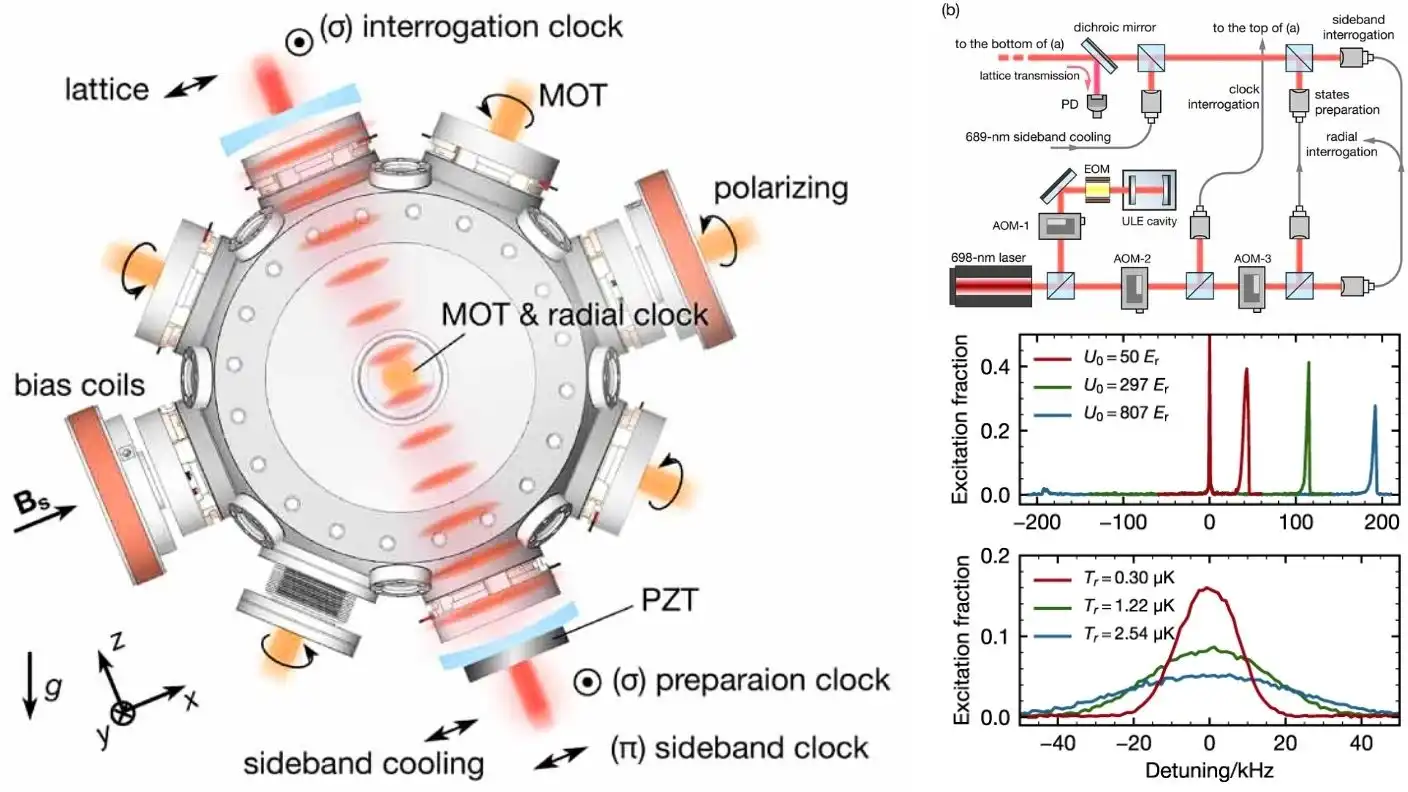
Scientists at the University of Science and Technology of China just broke a massive timekeeping record. They developed a new strontium optical lattice clock that takes accuracy to an entirely new level. According to their findings, published in the journal Metrologia, this clock is so precise it would take about 30 billion years to lose or gain a single second.
Optical clocks represent the cutting edge of measuring time. Instead of using swinging pendulums or quartz crystals, these devices look at the building blocks of the universe. They measure time by tracking the exact frequency of light that atoms emit when their electrons jump between different energy levels.
This level of precision is not just for keeping track of the hours in a day. Modern technology desperately needs accurate time references to function. Perfect timing is the backbone of global satellite navigation systems, complex telecommunications networks, and incredibly delicate scientific measurements.
Achieving this specific benchmark—stability and uncertainty past the 10⁻¹⁹ level—unlocks completely new scientific possibilities. For example, scientists can now use these clocks to measure gravity so accurately that they can detect millimeter-level changes in the Earth’s crust. This means they could use time to monitor shifting groundwater, predict volcanic activity, and map the planet to prevent disasters.
The physics world is particularly excited about the cosmic applications. This extreme sensitivity gives researchers a brand new tool to hunt for dark matter. The clock can potentially capture the tiny, low-frequency signals created when dark matter interacts with normal matter.
Until now, only a few elite labs in the United States and Germany had even come close to this level of precision. The Chinese team says their achievement finally provides a clear path to building smaller, portable optical clocks that we can eventually launch into space.
Source: Metrologia (2026).