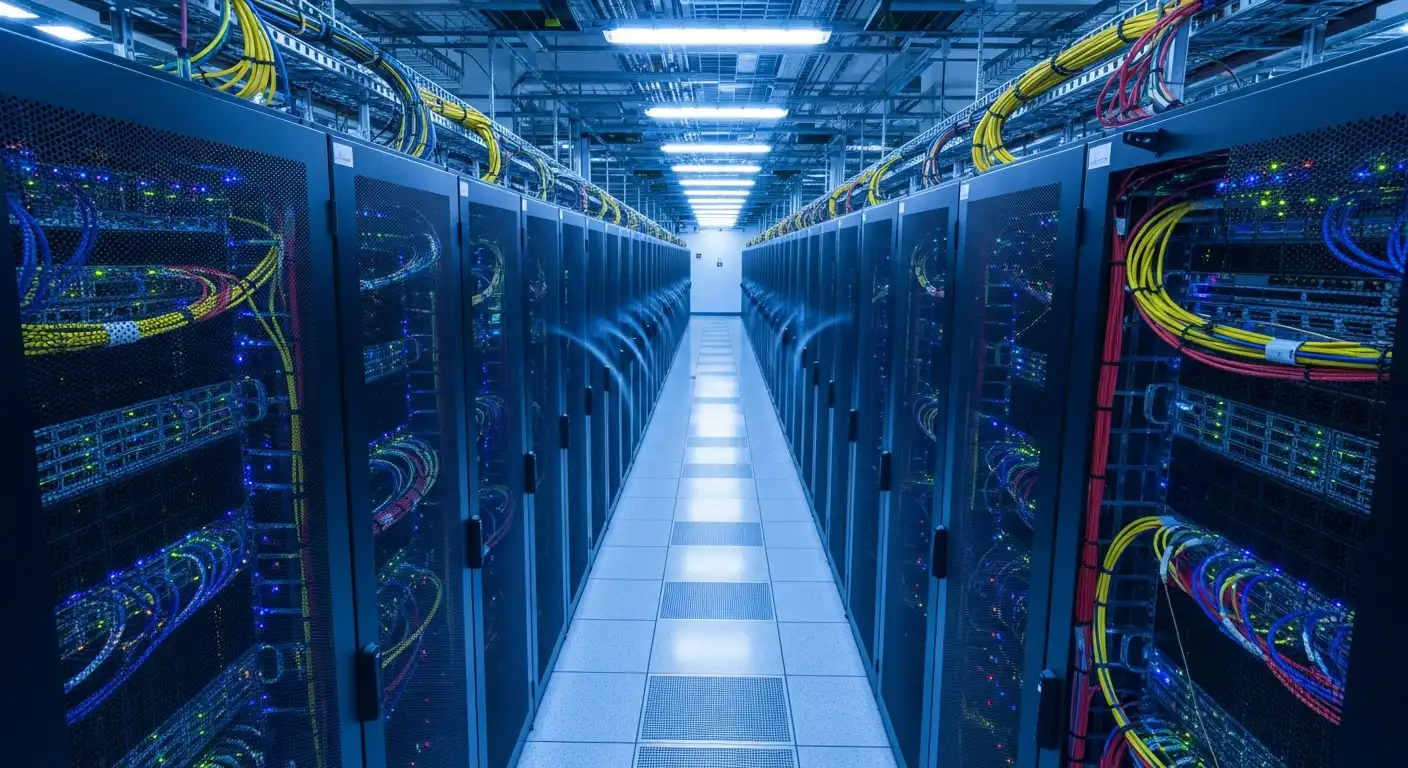
The data center landscape has been completely re-architected to meet the insatiable demands of generative AI, real-time analytics, and edge computing. By 2026, traditional server racks will have evolved into high-density, liquid-cooled powerhouses equipped with next-generation GPUs, CXL memory expansion, and PCIe Gen 6 architectures.
Selecting the right server hardware manufacturer is no longer just a procurement decision; it is a fundamental strategy that dictates an organization’s computational ceiling, energy efficiency, and AI readiness. The vendors leading this space have transitioned from simple box builders into comprehensive IT infrastructure partners. Here are the top 5 server hardware manufacturers dominating the global market in 2026.
Dell Technologies Inc.
Dell Technologies continues to dominate global server shipments in 2026 by offering an unmatched portfolio of enterprise-grade infrastructure. Their PowerEdge line has successfully pivoted to support dense AI workloads, offering seamless integration with advanced direct-to-chip liquid cooling solutions.
- AI-Optimized PowerEdge: Dell’s flagship servers are purpose-built to house the latest ultra-dense GPU accelerators from NVIDIA, AMD, and Intel, maximizing teraflops per rack unit.
- iDRAC Management: The Integrated Dell Remote Access Controller (iDRAC) remains the industry gold standard for out-of-band server management, automating deployment and security patching.
- Dell APEX: Their hybrid cloud and infrastructure-as-a-service consumption model allows enterprises to scale server capacity on demand, paying only for the compute they actually use.
- Supply Chain Resilience: Leveraging one of the world’s most sophisticated supply chains, Dell guarantees faster delivery times and better component availability than most competitors.
Best For: Global enterprises and IT departments looking for highly reliable, end-to-end IT solutions, robust management software, and AI-ready infrastructure.
Hewlett Packard Enterprise Company (HPE)
Hewlett Packard Enterprise has successfully transitioned from a traditional hardware vendor into a comprehensive platform-as-a-service provider with its powerful GreenLake ecosystem. In 2026, their ProLiant and Cray supercomputing lines are setting the global standard for sustainable, high-performance computing (HPC).
- HPE GreenLake: This platform delivers the cloud experience directly to on-premises servers, enabling organizations to manage all their compute, storage, and edge devices through a unified portal.
- Cray Exascale Leadership: HPE’s acquisition and integration of Cray technology makes it the undisputed leader in building the world’s fastest and most complex supercomputers for scientific research.
- Silicon Root of Trust: HPE builds security directly into the silicon of its servers, ensuring that a compromised firmware update cannot boot the system, providing ultimate zero-trust protection.
- Edge-to-Cloud Dominance: Their Edgeline server series is specifically ruggedized to process vast amounts of IoT data outside traditional data centers, such as on factory floors or oil rigs.
Best For: Hybrid cloud environments, edge computing deployments, and organizations seeking an infrastructure-as-a-service consumption model for on-premises hardware.
Super Micro Computer, Inc. (Supermicro)
Supermicro experienced a meteoric rise during the AI boom and remains the premier choice for custom, GPU-dense server architectures in 2026. Their proprietary “Building Block Solutions” enable unprecedented time-to-market, ensuring they are always the first to deploy the latest silicon technologies.
- First-to-Market GPUs: Because of their modular engineering and deep ties with chipmakers, Supermicro consistently delivers servers featuring the newest AI accelerators months ahead of legacy competitors.
- Rack-Scale Liquid Cooling: They are pioneers of plug-and-play rack-scale liquid cooling, enabling data centers to drastically reduce their carbon footprint and power consumption while running ultra-hot processors.
- Modular Building Blocks: Their unique engineering approach allows customers to highly customize motherboards, chassis, and power supplies to fit highly specific workload requirements.
- Green Computing Focus: Supermicro leads the industry in resource-saving architectures, utilizing titanium-level power supplies and optimized thermal designs to reduce the Total Cost of Environmental (TCE).
Best For: AI research labs, hyperscalers, and enterprises demanding the absolute fastest deployment of the newest GPU technologies and liquid cooling innovations.
Lenovo Group Limited
Lenovo’s ThinkSystem servers have captured significant global market share due to their remarkable hardware reliability, aggressive pricing, and massive global scale. By 2026, they will lead the industry in sustainable server technology, driven largely by their highly acclaimed Neptune water-cooling systems.
- Neptune Liquid Cooling: Lenovo’s 6th-generation Neptune warm-water cooling technology efficiently extracts heat from CPUs, GPUs, and memory, reducing data center power consumption by up to 40%.
- HPC and AI Leadership: Lenovo powers a large share of the TOP500 supercomputers globally, demonstrating its ability to scale clustered servers for the most demanding mathematical workloads.
- Global Supply Chain: As a global manufacturing powerhouse, Lenovo offers highly competitive pricing and localization, making it a favored vendor in both Western and Asian markets.
- XClarity Management: Their centralized resource management software provides a clean, intuitive, and mobile-friendly interface for provisioning and monitoring entire server fleets seamlessly.
Best For: High-performance computing (HPC) installations, highly sustainable “green” data centers, and global enterprises seeking cost-effective hardware scaling.
Cisco Systems, Inc.
Cisco approaches the server market through the lens of networking, offering a highly differentiated product with its Unified Computing System (UCS). In 2026, Cisco UCS serves as the ultimate backbone for composable infrastructure and for seamless multi-cloud and software-defined networking.
- Cisco Intersight: This cloud-based management platform utilizes AI and machine learning to proactively optimize UCS server health, troubleshoot issues, and manage infrastructure globally from a single pane of glass.
- UCS X-Series: Cisco’s modular, composable system blurs the lines between blade and rack servers, allowing IT teams to dynamically allocate compute, memory, and storage resources on the fly via software.
- Networking Synergy: Because Cisco servers are deeply integrated with Cisco’s dominant Nexus switches and networking fabric, they eliminate bandwidth bottlenecks that plague data-heavy AI applications.
- Hyperconverged Excellence: Through its HyperFlex platform, Cisco provides one of the most stable and network-optimized hyperconverged infrastructure (HCI) solutions available on the market.
Best For: Large-scale data centers that require deeply integrated networking, composable compute resources, and centralized, cloud-based infrastructure management.
Conclusion
The server hardware market in 2026 is defined by extreme computing density, the normalization of liquid cooling, and the relentless demand for AI accelerators. While Dell and HPE continue to offer the most comprehensive, enterprise-grade hybrid cloud ecosystems, Supermicro has carved out a massive niche for those requiring bleeding-edge AI speed. Lenovo offers unmatched cooling sustainability, and Cisco provides the ultimate networking-compute synergy. Ultimately, choosing the right manufacturer depends on whether your organization is optimizing for AI performance, energy efficiency, or hybrid-cloud simplicity.