Key Points:
- Major global currencies remain stable as traders await a high-stakes television speech from United States President Donald Trump.
- The United States dollar index sits at 99.56 after a 0.3% drop amid growing hopes for a ceasefire in the Middle East.
- Analysts warn that damaged infrastructure and blocks on the Strait of Hormuz will keep global energy supplies incredibly tight.
- Investors look ahead to a new jobs report expected to show a small increase of 60,000 jobs in March.
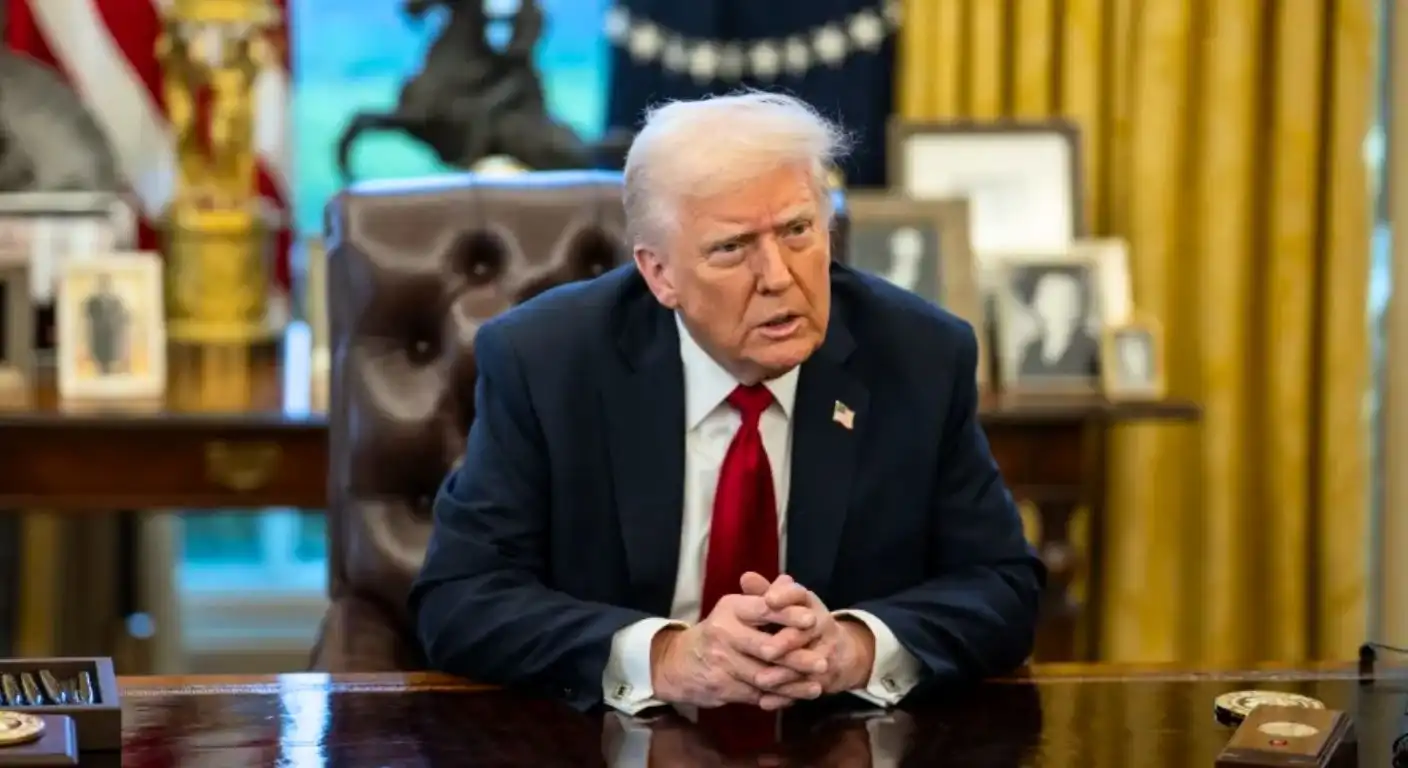
Global financial markets paused their frantic activity early Thursday morning. Traders around the world stepped back from their desks and waited for a major television event. United States President Donald Trump plans to deliver a high-stakes national address at 9:00 p.m. Eastern Daylight Time. Financial experts expect the president to share positive news about a possible ceasefire in the ongoing Gulf war. This crucial speech will likely set the immediate path for global markets and dictate how investors spend their cash over the next month.
Inside sources believe the president will declare that the United States military successfully achieved its primary wartime goals against Iran. Trump will likely announce firm plans to wind down the violent conflict over the next 2 to 3 weeks. Since the war started in late February, nervous investors have treated the United States dollar as a haven for their wealth. Now, the mere hint of regional peace has reversed many popular market trades. This sudden shift in sentiment forced the greenback into a noticeable two-day decline as traders moved their money into riskier assets.
During early Asian trading hours, major currencies showed almost zero movement. Trading volumes remained incredibly thin while brokers waited for official news. The euro held strong at $1.1592, while the British pound traded for exactly $1.3308. Both currencies kept their recent gains against the dollar without pushing any higher. Risk-sensitive currencies also maintained their ground. The Australian dollar traded at a steady $0.69265, and the New Zealand dollar sat quietly at $0.57495. Meanwhile, the broad dollar index, which tracks the American currency against a basket of global rivals, hovered right at 99.56. This flat reading followed a 0.3% drop during the busy Wednesday trading sessions.
Financial leaders watch these subtle price movements very closely. Kyle Rodda, a senior market analyst at capital.com, pointed out that everything now depends entirely on what the president says to the nation tonight. Rodda noted a quiet optimism spreading across trading floors worldwide. He explained that market participants desperately want to reshape the current economic narrative. They want to explain recent price shifts as clear proof of military de-escalation and a return to normal business conditions.
However, some seasoned strategists warn traders not to celebrate the end of the crisis too quickly. Carol Kong, a currency expert at the Commonwealth Bank of Australia, urged extreme caution. She explained that a simple United States military pullback will not automatically solve the looming global energy crisis. Iran still holds the power to block commercial access to the Strait of Hormuz. This narrow waterway serves as a massive logistical chokepoint, handling roughly 20.0% of all global oil and liquefied natural gas shipments. Kong added that broken transport networks and destroyed energy facilities mean global fuel supplies will not return to normal pre-war levels anytime soon.
Beyond the turmoil in the Middle East, currency traders also keep a watchful eye on the situation in Japan. The Japanese yen recently traded at 158.64 against the dollar. This price sits dangerously close to the 160.00 level. Financial experts view that specific number as a strict psychological boundary. If the currency crosses that invisible line in the sand, experts believe it will force Japanese authorities to intervene directly in the markets to prevent further collapse.
After the president finishes his prime-time speech today, Wall Street will immediately shift its entire focus to Friday morning. The government plans to release the latest non-farm payrolls report. Economists polled by Reuters currently expect employers to add exactly 60,000 new jobs in March. A weak labor market report could completely change how investors view the American economy.
If job growth fails to meet expectations, traders might revive their hopes for interest rate cuts from the Federal Reserve later this year. Recently, skyrocketing oil prices driven by the war led investors to forget about rate cuts, as they feared massive inflation. High fuel costs normally force central banks to keep interest rates high. Now, a poor jobs report, combined with a ceasefire in the Middle East, could easily bring cheaper borrowing costs back into the picture for everyday consumers and large businesses alike.