Key Points:
- NASA successfully launched the 32-story Artemis II rocket from Florida to send four astronauts on a 10-day lunar journey.
- The historic flight marks the first time human beings have traveled beyond low-Earth orbit in more than 50 years.
- The space agency spent roughly $3.2 billion developing the advanced Orion capsule that currently carries the international crew.
- Commander Reid Wiseman reported a beautiful moonrise just five minutes into the flight as the team headed toward their target.
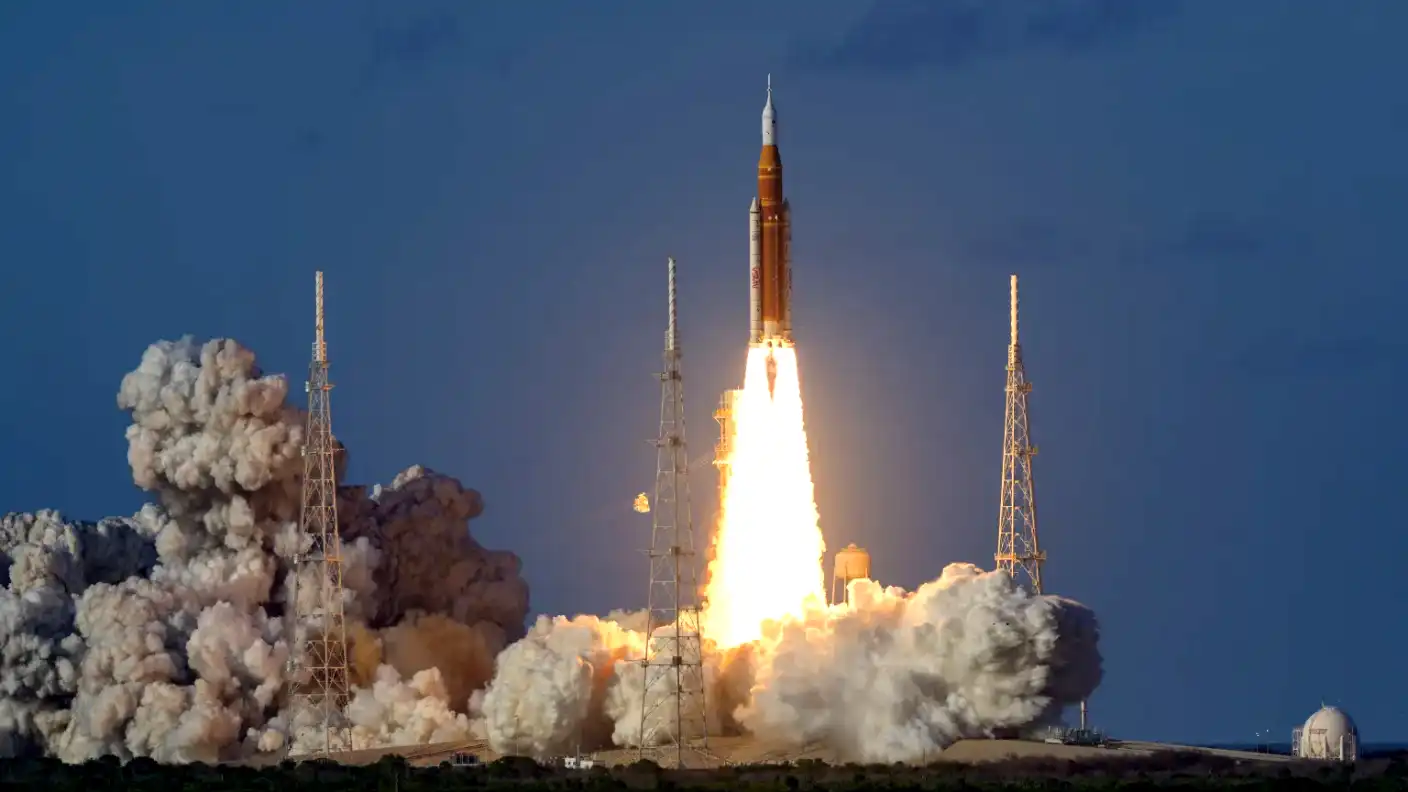
The Artemis II space mission officially began its journey on Wednesday. A massive rocket blasted off from the United States state of Florida, sending four astronauts on a historic trip around the moon. This launch marks an incredible milestone for space exploration. For the first time in more than 50 years, humans are finally traveling beyond low-Earth orbit. The mission represents a major step in NASA’s ongoing plan to return humans to the lunar surface and eventually send crews to Mars.
Tens of thousands of excited spectators gathered at the Kennedy Space Center to witness the event. They watched in pure awe as the 32-story rocket rose from the launch pad and tore through the bright morning sky. The roaring engines shook the ground for miles around the coastal facility. Local tourism boomed during the event, as families traveled from around the world to witness the liftoff. The demand grew so high that some nearby luxury hotels charged over $5,000 per night so guests could watch the rocket from their balconies. People desperately wanted to see history happen right in front of their eyes.
Four highly trained professionals make up the Artemis II crew. NASA astronauts Reid Wiseman, Victor Glover, and Christina Koch joined Canadian Space Agency astronaut Jeremy Hansen inside the tiny capsule. Together, they face a thrilling 10-day journey around the moon and back to Earth. This specific flight path takes them farther into the dark depths of space than any human has traveled in decades. The crew also represents a new era of spaceflight. Koch becomes the first woman to fly a lunar mission, Glover becomes the first person of color to do so, and Hansen becomes the first international partner to leave Earth orbit.
Getting this massive rocket off the ground required years of intense labor and substantial government funding. NASA spent roughly $3.2 billion just to develop and build the specific Orion crew capsule that currently protects the astronauts. Engineers also spent countless hours improving the main rocket engines. They successfully achieved a 2.4% increase in fuel efficiency compared to earlier test models. These crucial technological leaps ensure the crew can safely navigate the deadly, freezing environment of deep space without running out of power or air.
The atmosphere inside the control room felt electric just moments before liftoff. Launch director Charlie Blackwell-Thompson delivered a powerful message directly to the crew through the radio communication system. She told them they carried the heart of the entire Artemis team as they sat atop the rocket. She added that they took the American people’s daring spirit and the hopes of global partners with them. She finished her final speech by saying, “Good luck, Godspeed Artemis II. Let’s go.”
The massive rocket performed flawlessly as it pushed through the thick layers of the atmosphere. The solid rocket boosters separated exactly on time, and the core stage engines burned bright and hot. Just five minutes into the flight, the crew broke free from the sky and looked out their small windows. Wiseman, serving as the mission commander, immediately spotted their distant target glowing in the darkness. He radioed back to the control room, telling the team on the ground that they had a beautiful moonrise and were heading right at it.
Over the next week and a half, the astronauts will perform several critical tests. They will not land on the moon during this trip. Instead, they will fly thousands of miles beyond the far side of the moon before the gravity of Earth pulls them back home. The four crew members will check every single life support system, radiation monitor, and manual flight control inside the Orion capsule. They need to ensure the spacecraft can sustain human life during long trips.
This trip around the moon serves as a vital dress rehearsal for future landings. If this test flight succeeds, NASA plans to actually put boots on the lunar dust within the next few years. The space agency wants to build a permanent base camp near the Moon’s south pole. Astronauts will use that base to test new habitats, rovers, and scientific tools. Everything they learn on the moon will prepare them for the ultimate goal of launching a multi-year trip to Mars.
For now, the entire world watches and waits as the Artemis II crew drifts through the silent vacuum of space. Ground control teams in Texas monitor their health, speed, and trajectory every single second of the day. The astronauts carry the dreams of a brand new generation with them as they fly toward the moon and rewrite the history books. They will soon splash down in the Pacific Ocean, completing a journey that humanity will remember for centuries.