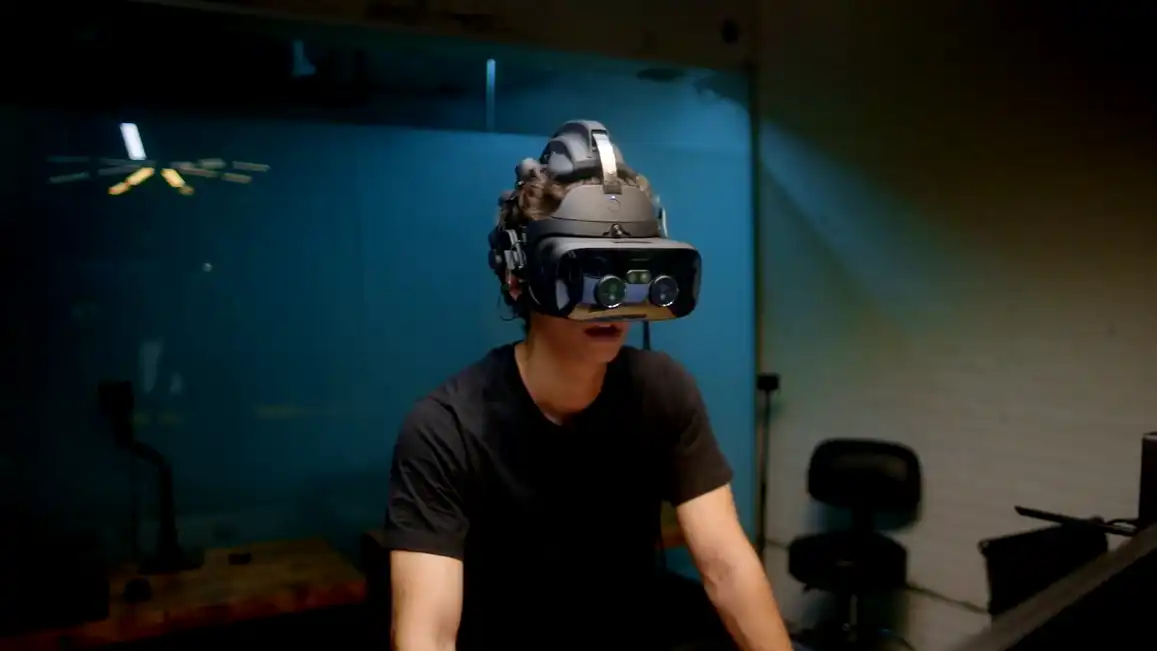
The boundary between the human mind and the digital realm is rapidly disappearing, thanks to remarkable advancements in brain-computer interfaces (BCIs). For years, researchers and developers have pieced together fragmented systems to measure physiological responses during immersive virtual reality experiences. The release of the OpenBCI Galea V2 fundamentally changes this paradigm, offering a fully integrated, research-grade headset that promises to redefine spatial computing.
Unveiling the OpenBCI Galea V2
OpenBCI has long been celebrated as the champion of the open-source neurotechnology community, democratizing access to brain-sensing hardware. The Galea project represents their most ambitious endeavor, combining immersive virtual and augmented reality with cutting-edge biometric sensors. In 2026, the Galea V2 prototype has arrived as the ultimate “prosumer” and enterprise BCI, boasting features that leave its predecessors in the dust.
Priced at approximately $28,000, this headset is clearly not intended for casual gamers looking for a weekend thrill. It is a highly sophisticated piece of scientific equipment deployed in over 800 laboratories worldwide for tasks ranging from real-time dopamine tracking to industrial safety monitoring. By merging XR (Extended Reality) with advanced neurological tracking, the Galea V2 enables developers to create environments that dynamically adapt to a user’s cognitive and emotional state.
The Evolution of Brain-Computer Interfaces
The journey from the original Galea beta to the V2 has been marked by significant improvements in sensor fidelity and user comfort. While early models proved the concept of multi-modal fusion, they often suffered from cumbersome preparation procedures and data synchronization hurdles. The V2 tackles these pain points directly, offering a streamlined experience that accelerates research and enterprise deployments.
Groundbreaking Features and Sensor Technology
The true value of the Galea V2 lies in its ability to capture a holistic snapshot of the human nervous system simultaneously. Rather than relying on a single data stream, it aggregates multiple physiological metrics to eliminate the guesswork from user state analysis. The OpenBCI Galea V2 integrates an unprecedented array of biometric sensors into a single unified platform.
This comprehensive approach allows researchers to gather multi-modal data with absolute precision:
- High-Density EEG: Captures detailed brainwave activity for monitoring cognitive load and emotional state.
- EMG and EOG: Tracks subtle muscle movements and eye activity for enhanced user intention prediction.
- EDA and PPG: Measures skin conductance and heart rate variability to assess stress and physiological arousal.
- fNIRS and fTCD Integration: Offers advanced hybrid capabilities for real-time tracking of dopamine and blood flow.
Comprehensive Biometric Tracking
By fusing these sensors, the Galea V2 provides a multidimensional view of the user’s mind and body. For instance, while eye-tracking (EOG) can show exactly where a user is looking in a virtual environment, EEG and EDA can reveal how they feel about what they are seeing. This level of insight is invaluable for training simulations, psychological research, and the development of responsive neuro-gaming experiences.
Practical Applications and Target Audience
The Galea V2 is already making waves across multiple high-stakes industries where human performance and safety are critical. In the industrial sector, offshore rigs use similar multimodal headsets to monitor worker fatigue and prevent catastrophic accidents. In education and training, researchers are correlating brainwave dips with attention loss, enabling virtual classrooms to adapt in real time.
Setup and Calibration Efficiency
Previous iterations of neurotechnology headsets required extensive preparation with messy conductive gels and long calibration times. The Galea V2 resolves these issues through innovative hardware design and streamlined software calibration:
- Dry Electrode Technology: Eliminates the need for gel, reducing total setup time to under three minutes.
- Real-Time Signal Validation: Instantly alerts users if a sensor loses contact, ensuring high-quality continuous data.
- Interoperable Framework: Supports open-source data protocols to prevent compatibility issues with third-party analytical software.
Advantages and Limitations
Despite its groundbreaking capabilities, the Galea V2 is a specialized tool that caters to a very specific market segment. It is crucial to understand where this device excels and where it currently falls short before allocating enterprise budgets. Making a twenty-eight thousand dollar investment requires a careful evaluation of the product’s strengths and weaknesses.
Here is a breakdown of the primary pros and cons associated with the Galea V2 system:
- Pro: Unmatched multi-modal sensor fusion provides a complete picture of human physiological responses.
- Pro: An open-source architecture empowers developers to customize software to highly specific enterprise needs.
- Pro: Drastically reduced setup times enable more efficient throughput for laboratory studies and field testing.
- Con: The steep $28,000 price point restricts access strictly to well-funded laboratories and large industrial sectors.
- Con: The hardware remains somewhat bulky, making it less suitable for casual consumer applications or extended continuous wear.
Final Verdict: Is It Worth the Investment?
The OpenBCI Galea V2 is a triumphant milestone in the evolution of non-invasive brain-computer interfaces. By successfully integrating EEG, EMG, EDA, PPG, and eye-tracking into a cohesive, developer-friendly XR headset, OpenBCI has essentially packaged a state-of-the-art neuroscience lab into a single wearable device.
For research institutions, high-end enterprise training programs, and spatial computing pioneers, the $28,000 price tag is easily justified by the depth and quality of the data it provides. It eliminates the need to synchronize disparate hardware systems, saving countless hours of technical troubleshooting. While we may still be a few years away from consumer-friendly BCIs hitting retail shelves, the Galea V2 remains the definitive gold standard for professionals building the mind-machine interfaces of tomorrow.