Key Points:
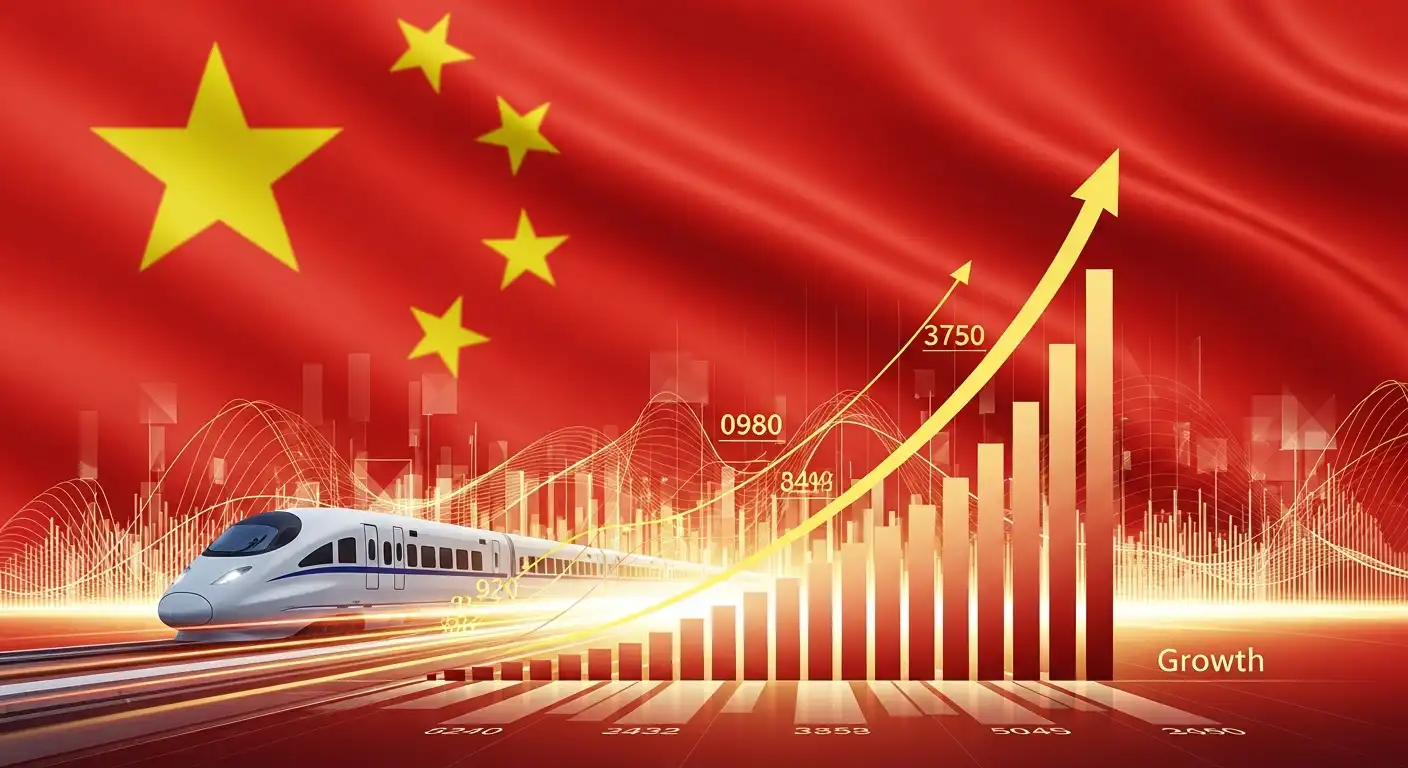
- China’s Q1 GDP grew 5%, exceeding expectations.
- Manufacturing and exports were the primary growth drivers.
- Consumer spending remains weak despite overall growth.
- Government likely to focus on boosting domestic demand.
China’s economy showed stronger-than-expected growth in the first quarter, largely due to robust manufacturing and exports. This expansion comes despite ongoing global uncertainties, including the war in Iran, which has had limited immediate impact on the nation’s economic trajectory so far.
The National Bureau of Statistics reported on Thursday that Gross Domestic Product (GDP) increased by 5% compared to the same period last year. This marks the fastest growth in three quarters, indicating a resilient economic performance. On a sequential basis, GDP also saw a healthy 1.3% gain from the previous quarter, the quickest since the final quarter of 2024.
A closer look at the economic data reveals a clear divergence between different sectors. Industrial output surged by 5.7% in March, exceeding forecasts and highlighting the strength of China’s manufacturing base. In contrast, retail sales lagged behind expectations, growing by only 1.7%, a decrease from the 2.8% expansion observed in the first two months of the year. This suggests that while production is strong, consumer spending within China remains subdued.
Hao Zhou, chief economist at Guotai Junan International, noted that manufacturing continues to be a crucial driver for China’s near-term growth. He anticipates that future economic policies will likely focus on addressing deflationary pressures and boosting domestic demand to achieve more balanced growth.
The ongoing conflict in Iran, now in its seventh week, has not significantly dampened China’s economic momentum. This can be attributed to the country’s proactive measures in recent years to enhance energy security and shield its economy from international disruptions. Additionally, years of deflation have helped cushion the potential impact of rising oil prices on consumer costs.
Despite the limited signs of improvement in domestic demand, the positive first-quarter results may reduce the immediate need for further economic stimulus from Beijing. The government has already adopted a more flexible approach to growth, setting its GDP target between 4.5% and 5%, the lowest since 1991.
Mao Shengyong, deputy commissioner at the NBS, emphasized the “precious” nature of the strong GDP expansion, especially considering the high base of comparison from a year ago when exports surged before new US tariffs took effect. He acknowledged that while overall indicators rebounded and new growth drivers emerged, the external environment remains complex, and the imbalance between strong supply and weak domestic demand persists.
Rapid advancements in technology sectors have been instrumental in driving both industrial production and exports, with the latter seeing a significant 15% increase in the first quarter compared to the previous year.