Key Points:
- Tesla plans to convert old assembly lines at its Fremont plant to build up to 1 million Optimus robots per year.
- Gigafactory Texas will eventually house a second-generation production line aiming to build 10 million robots annually.
- Elon Musk believes the company could make Optimus robots useful outside of Tesla factories sometime next year.
- Wall Street forecasts predict the global market for humanoid robots will reach 1.2 million shipments by 2030.
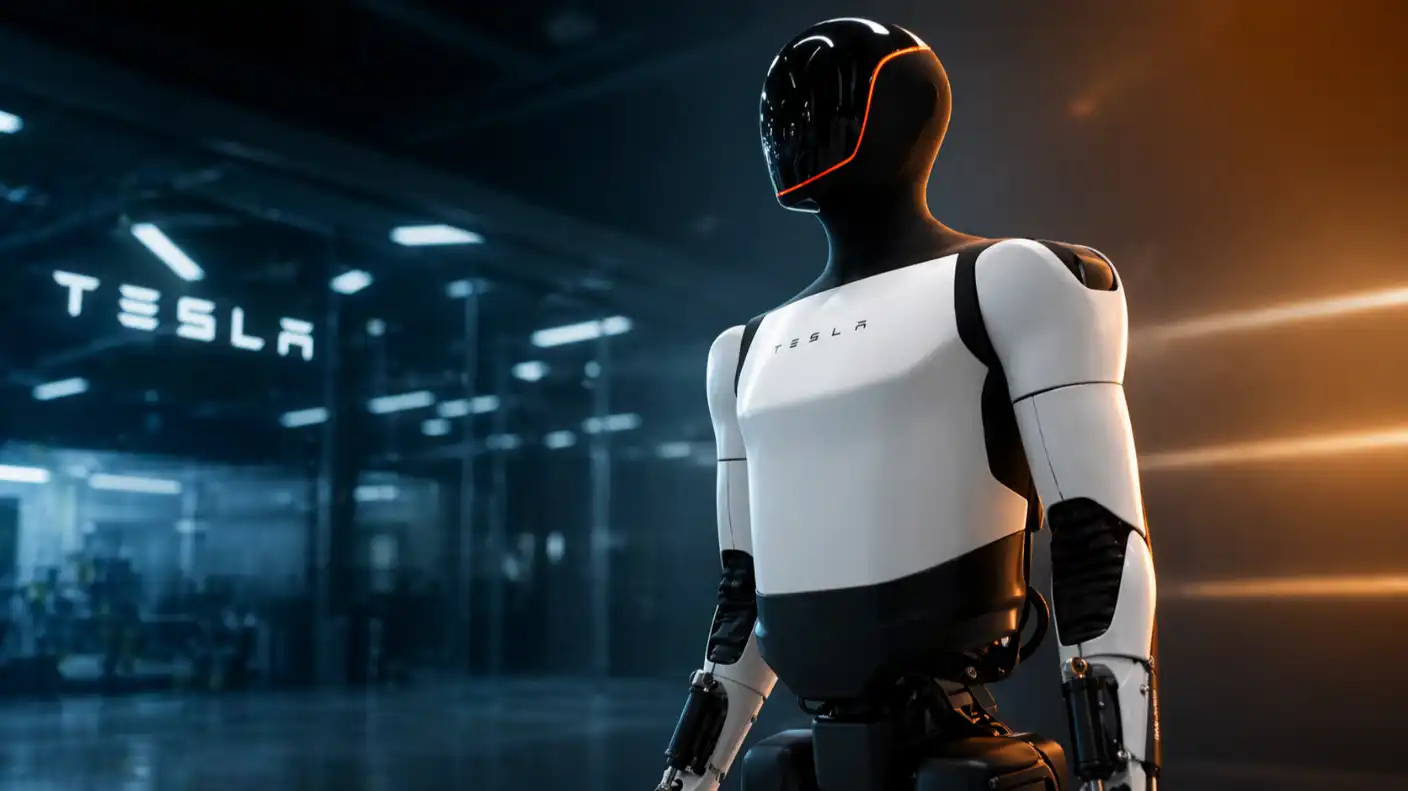
Elon Musk is moving closer to making his science fiction dreams a reality. Tesla announced in its first-quarter earnings report that it will soon begin building its famous Optimus humanoid robots at scale. The company confirmed that preparations for the first large-scale Optimus factory will officially begin shortly during the second quarter. This massive pivot highlights exactly how serious the electric vehicle maker is about dominating the emerging field of physical artificial intelligence.
The company chose its historic Fremont plant in California to house the very first generation of the Optimus production line. To make room for the new machines, Tesla plans to completely convert the older Model S and Model X assembly lines specifically for robot production. Tesla executives boldly stated that this new line could produce up to 1 million robots per year. This incredibly lofty target perfectly matches the type of massive, ambitious goals that Musk usually sets for his companies.
The Fremont plant is just the beginning of the plan. Tesla revealed that its massive Gigafactory Texas will eventually house a brand new, second-generation Optimus assembly line. For the Texas facility, Musk set an even more audacious long-term production target of building exactly 10 million robots a year. If Tesla hits these massive numbers, the company will completely flood the global market with its humanoid machines.
Musk has massive plans for how the world will actually use these robots. Initially, Tesla plans to use the Optimus robots directly on its factory floors to help with dangerous or repetitive tasks, such as complex battery construction. However, the billionaire CEO wants to sell these machines to everyone. During a recent call, Musk stated that Tesla will probably have the Optimus robots useful and working outside of the company sometime next year. He kept the exact timeline vague enough to give his engineering teams some breathing room if they ran into technical problems.
The race to dominate the robotics market is already heating up. Tesla desperately needs to establish a strong commercial beachhead before the field becomes entirely too crowded with rivals. Fierce competitors, ranging from American startups like Figure and Boston Dynamics to a massive raft of heavily funded Chinese manufacturers, are currently accelerating their own humanoid robot programs.
To beat the competition, Tesla relies on its deep experience with embodied artificial intelligence. The company spent years building massive AI data centers and complex training clusters just to train its Full Self-Driving software for cars. Now, Tesla uses that same robotics infrastructure to build physical robots powered by that very same software. Eventually, the company plans to power these robots using computer chips built entirely in-house. Tesla engineers often describe Optimus as a single, powerful AI layer that controls both its electric vehicles and its walking robots.
Despite the massive hype, plenty of doubts remain about the project. The Optimus robots that fans see at fancy Tesla events are still not actually working on the factory floors alongside human employees. Furthermore, Tesla has not yet shown the public the highly anticipated next-generation robot, officially dubbed the V3. The company originally slated the V3 for an April release, but that deadline came and went without an update.
Musk addressed the delay during the earnings call. He admitted that the Optimus V3 reveal will likely be pushed back to late July or August, which is much closer to the actual start of mass production. He explained that he intentionally delayed the reveal because he did not want to show the final design or leak any highly valuable intellectual property to his robotics competitors too early.
Musk firmly believes that Optimus represents a massive, multi-trillion-dollar financial opportunity for Tesla. He previously claimed that humans would eventually build one or two robots for every person currently living on Earth. While Wall Street analysts remain incredibly bullish on the future of robotics, they are definitely not as exuberant as the Tesla CEO. Bank of America analyst Alexander Perry recently wrote that, while his team does not expect any significant near-term financial contribution from Optimus, they do see massive long-term potential. The Bank of America team currently forecasts total global shipments of humanoid robots to reach roughly 1.2 million by 2030, and to grow to 10 million by 2035.