Key Points:
- NASA aims to launch the Nancy Grace Roman Space Telescope as early as September 2026, beating the original May 2027 deadline.
- The advanced telescope will pair a massive field of view with crisp infrared vision to scan deep space.
- Scientists expect Roman to collect a massive 20,000-terabyte data archive during its five-year primary mission.
- A SpaceX Falcon Heavy rocket will carry the telescope into space from the Kennedy Space Center in Florida.
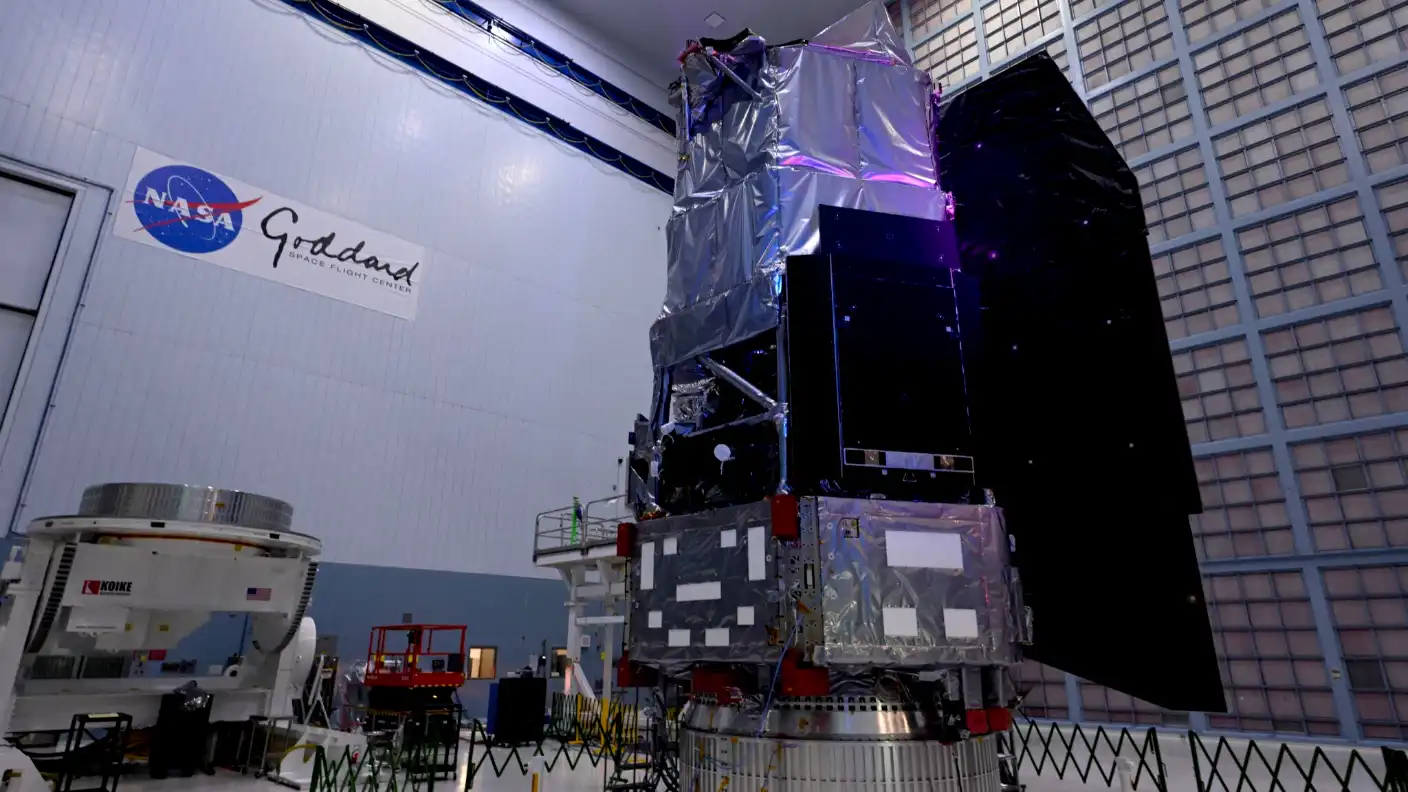
NASA is moving faster than anyone expected. The team behind the highly anticipated Nancy Grace Roman Space Telescope recently announced they are now targeting a launch date as early as September 2026. This aggressive new schedule puts the mission months ahead of the agency’s original commitment, which promised a flight no later than May 2027. This rapid progress proves that massive space projects can finish ahead of schedule when the right teams work together.
NASA Administrator Jared Isaacman proudly shared the exciting update during a special news conference on April 21. He stood before reporters at the agency’s famous Goddard Space Flight Center in Greenbelt, Maryland, to deliver the good news. Isaacman called Roman’s accelerated development a true success story. He noted that the project perfectly demonstrates exactly what humanity can achieve when smart public investment, deep institutional expertise, and agile private enterprise all come together to tackle near-impossible missions that ultimately change the world.
The Nancy Grace Roman Space Telescope represents a massive leap forward in space observation technology. Engineers designed the observatory to pair an incredibly large field of view with extremely crisp infrared vision. This unique combination allows the telescope to rapidly survey deep, vast swaths of the night sky much faster than older telescopes like Hubble.
Scientists originally designed the Roman mission with a few very specific, highly complex goals in mind. They built the telescope specifically to hunt for mysterious dark energy, map invisible dark matter, and search for distant exoplanets orbiting other stars. However, the telescope’s unprecedented observational capability means it will do much more than just hunt for dark matter. The massive observatory will offer astronomers practically limitless opportunities to explore a wide range of fascinating cosmic topics and deep-space mysteries.
The sheer volume of data this telescope will collect is staggering. By the time Roman finishes its scheduled five-year primary mission, NASA expects the observatory to amass an incredible 20,000-terabyte data archive. This massive digital library will remain completely open to the scientific community.
Astronomers from around the globe can draw on this massive archive to identify and carefully study up to 100,000 brand new exoplanets. The data will also allow scientists to map hundreds of millions of distant galaxies and catalog billions of individual stars. Researchers even hope to find incredibly rare cosmic objects and strange phenomena hiding deep in the data, including bizarre things that human astronomers have never actually witnessed before.
Getting this massive telescope into orbit requires a lot of raw power. NASA confirmed that Roman will launch strapped to the top of a massive SpaceX Falcon Heavy rocket. The launch will take place at the historic Launch Complex 39A, located right inside NASA’s Kennedy Space Center in sunny Florida. Both NASA and SpaceX plan to share more detailed information about the exact launch date as the mission gets closer. Meanwhile, the space agency promised to continue sharing regular public updates concerning all prelaunch preparations as the engineering teams finish building and testing the telescope.