Key Points:
- Joby Aviation executed the first point-to-point electric vertical takeoff and landing flight in New York City.
- The new aircraft will reduce a 120-minute drive to John F. Kennedy Airport down to just a 7-minute flight.
- The company plans to launch commercial passenger flights during the second half of 2026.
- Joby stock climbed 3 percent following the successful midday test flight in Manhattan.
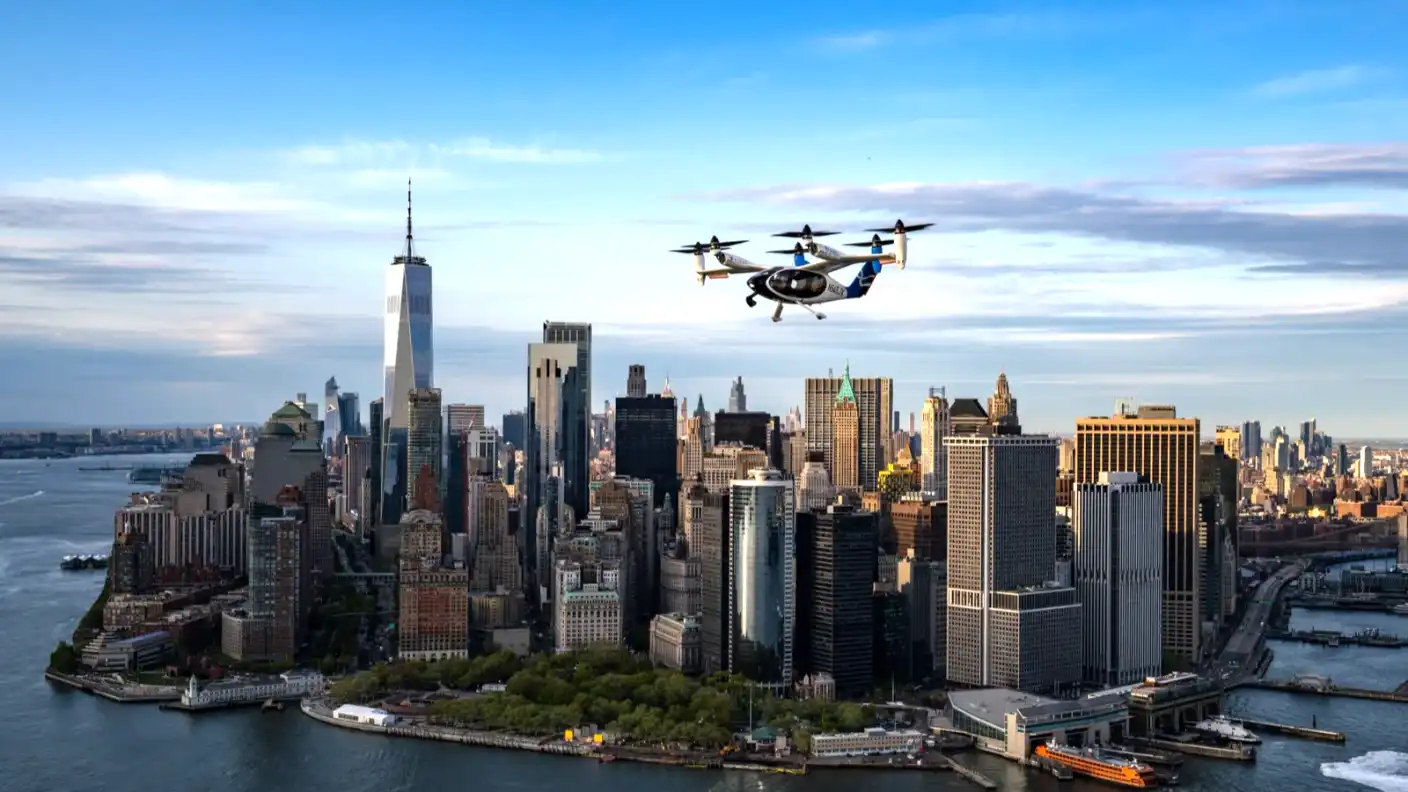
Flying air taxis just moved one massive step closer to becoming a daily reality over the busy streets of New York City. Joby Aviation completed the first point-to-point electric vertical takeoff and landing demonstration flights in the history of the city on Monday. This successful test marks a major turning point for urban air mobility in the country’s most congested metropolis. Commuters and tourists alike might soon skip the endless gridlock below.
The company flew its futuristic aircraft, officially named the N545JX, along several key routes. The pilot navigated between John F. Kennedy Airport and the existing heliport network in Manhattan. This network includes the Downtown Skyport and the Blade Air Mobility lounge located at the West 30th Street Heliport. During the demonstration, the aircraft showed how it could eventually shrink a brutal 60 to 120-minute drive to the airport into a quick 7-minute flight.
Investors reacted positively to the milestone. Joby stock rose about 3 percent during trading on Monday following the news of the successful test. The company now has a clear timeline to bring this service to the public. Eric Allison, the chief product officer at Joby, called the flight a critical proof of concept. He confirmed that the company targets the second half of 2026 for the start of official passenger flights.
Allison stood inside the Blade Air Mobility lounge and explained the broader vision to reporters. He described how the company plans to supercharge the transportation industry and scale its operations. He pointed out that the aircraft improves both the basic cost structure of flight and the overall environmental impact. The zero-emissions design allows the vehicle to fly from the airport to the city and back without polluting the air.
Reporters, company officials, and eager customers watched the midday test flight directly from the Midtown lounge. Joby currently operates traditional helicopter flights from this exact location, but it plans to replace them with the new electric aircraft. The noise advantage serves as a central pillar of the sales pitch. Unlike loud conventional helicopters, the Joby aircraft were designed by engineers to minimize noise.
Allison highlighted just how quiet the machine truly is. He noted that the team left the lounge door wide open when the electric aircraft landed outside. If a standard helicopter landed under those same conditions, the deafening noise would upset everyone inside the room. With the new electric design, the noise level remained incredibly low and did not bother the guests.
This quiet operation allows the company to fly into areas that normally ban loud aircraft. Allison argued that the silent all-electric propulsion system unlocks brand new markets. Many neighborhoods simply refuse to let traditional helicopters land near their homes and businesses. The new technology changes that conversation entirely.
The chief product officer emphasized the ultimate convenience of vertical flight. Customers will soon open the standard Uber application on their phones, book a quick trip, and fly at speeds up to 200 miles an hour straight to the airport. People want this level of convenience close to their homes and offices. Allison believes that placing these quiet landing pads near dense neighborhoods is critical to the long-term success of the business.
Joby secured a massive advantage in 2025 when it acquired the passenger business of the helicopter booking service Blade Air Mobility. This strategic purchase gave Joby direct access to a massive list of regular passengers. It also handed the company control of a valuable network of heliports scattered across Manhattan.
The excitement among current flyers is already palpable. Allison shared a story from earlier in the week when Blade customers waited for their traditional helicopter flight to the airport. They watched the new electric aircraft land and immediately asked the staff if they could cancel their helicopter ride and take the electric taxi instead. Allison said this interaction proves the massive public demand for the new technology.
Joby does face competition in the growing electric aviation market. A United Kingdom-based competitor, Vertical Aerospace, continues to develop its own Valo aircraft. That company targets similar urban mobility routes across Europe and has partnerships with major airlines such as American Airlines and Virgin Atlantic. Joby countered by building strong relationships with Delta Air Lines, Virgin Atlantic, and the Japanese airline ANA.
When asked about the competition, Allison kept his focus strictly on his own team. He stated that Joby has worked on this technology for a very long time and leads the entire space. He expressed total confidence that his engineers understand the technology better than anyone else in the industry. The company also confirmed that its aircraft continues to advance through the strict Federal Aviation Administration certification process, with the first conforming aircraft already undergoing rigorous testing.