Key Points:
- Micron and SanDisk shares jumped again on Monday as analysts predict strong demand for artificial intelligence memory through the decade.
- Micron stock climbed 5.6%, pushing its overall market cap near $600 billion, while Sandisk gained 8.1%.
- Consumers face a 17% increase in personal computer prices this year as basic memory components become scarce.
- Major technology buyers now sign three to five-year supply contracts to secure enough computer memory for their future servers.
Shares of major memory manufacturers Micron and Sandisk experienced massive jumps on Monday. The stock rally continues an incredible run for the technology sector. Melius Research published a new note telling investors that the massive demand for memory chips will likely last through the end of the decade.
A severe global shortage of microchips needed for artificial intelligence programs drives these incredible financial gains. Technology companies desperately need High Bandwidth Memory, often called HBM. Hardware makers bond these special memory chips directly to the advanced graphics processing units produced by companies such as Nvidia and Advanced Micro Devices. These powerful setups run almost every major artificial intelligence data center worldwide.
Ben Reitzes works as an analyst for Melius. He upgraded his firm rating on Micron to a strong buy on Monday. He noted the stock could easily gain another 41% over the next 12 months. Micron shares gained 5.6% on Monday alone, bringing its total rise to more than 550% over the past year. The company reached record trading levels and is now approaching a massive $600 billion market cap.
Reitzes explained to investors that the stock market will eventually pay a massive premium for these companies. He believes artificial intelligence creates an unusually durable demand profile for memory parts. He expects giant hardware makers like Nvidia to pour even more money into memory components very soon. He stated that the industry was just in the early innings of this massive artificial intelligence cycle.
Sandisk also rode the massive wave of investor excitement. The company’s stock gained 8.1% on Monday. This jump pushes its one-year gain over a staggering 3,000%. The massive surge pushed the market cap for Sandisk past $157 billion. Reitzes predicted this specific stock will rise another 36% over the next 12 months. The company plans to report its official quarterly results next week.
Mark Newman works as an analyst for Bernstein and currently holds a buy recommendation on Sandisk. He told investors that the basic financial numbers speak for themselves right now. He expects major earnings upgrades in the near future because the incredibly strong memory prices continue to climb higher every single week.
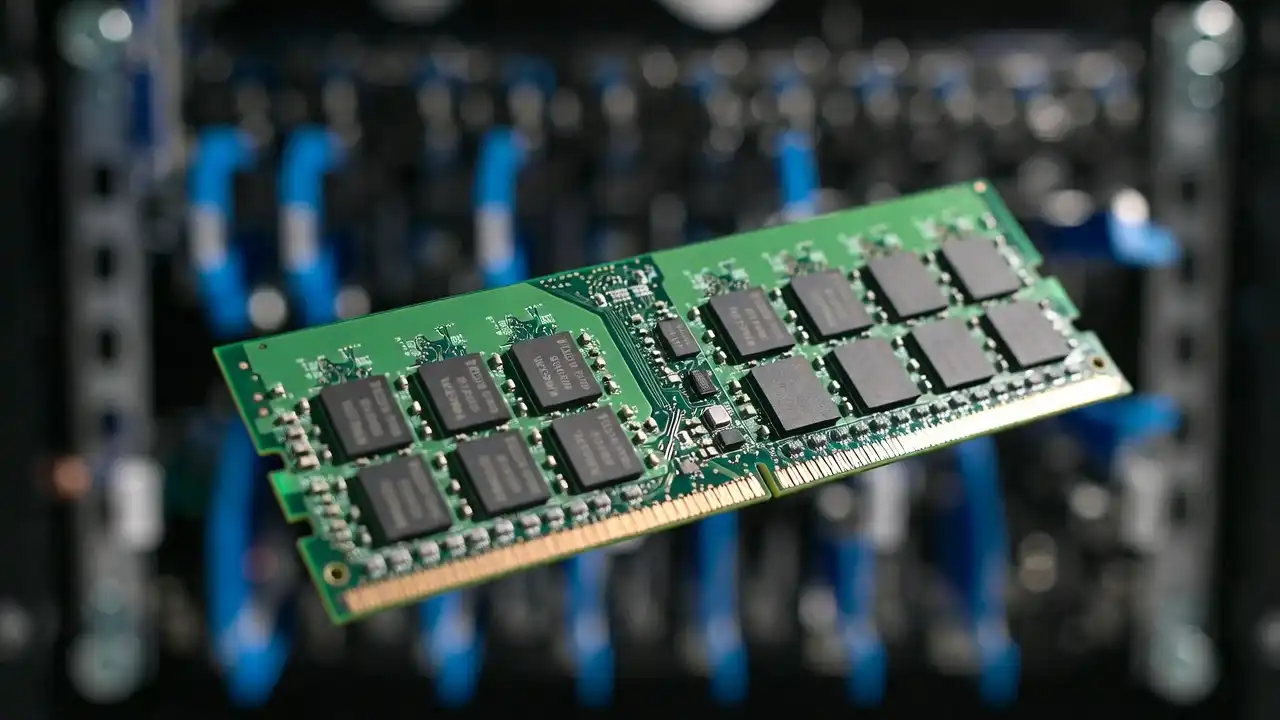
To build High Bandwidth Memory, companies stack standard memory chips called Dynamic Random Access Memory, or DRAM. These chips store temporary data extremely quickly, allowing the main processor to handle multiple complex tasks at once. Micron, Samsung, and SK Hynix rank as the top memory makers in the world. They recently diverted almost all their DRAM supply to build High Bandwidth Memory instead.
This massive shift created a severe shortage of general-purpose memory chips. Counterpoint Research reports that the standard DRAM market recorded a massive 30% quarter-over-quarter growth over two consecutive periods, driven solely by skyrocketing prices. Every day, consumers now pay the price for this massive corporate shift. Gartner predicts personal computer prices will rise by a painful 17% this year alone. Solid-state drives in normal computers now cost two or three times as much as they did just last December.
SanDisk produces large numbers of these solid-state drives. These drives rely on a different technology called NAND memory. This type of flash memory stores data permanently, even when users turn off their devices. NAND memory is now experiencing a similarly massive surge in corporate demand. Artificial intelligence servers need massive amounts of permanent data storage to train their complex language models.
The brutal market conditions force desperate memory buyers into signing massive long-term contracts. Companies now lock in deals for three or even five years. SK Hynix and Micron executives confirmed that large tech companies gladly sign these extreme agreements to block their rivals from getting any memory chips. For example, chip design giant Broadcom recently locked in its entire memory supply through the year 2028.
Newman explained that memory makers love these long-term deals because they provide reliable cash flow. They need this guaranteed funding before they spend billions building new factories. Companies usually need about two and a half years just to build a new factory before production can even start.
Micron currently spends an eye-watering $24 billion to expand its massive NAND manufacturing facility in Singapore. The company also builds huge new chip factories in New York and Idaho. SK Hynix recently broke ground on its first American packaging plant in Indiana. The South Korean company is also expanding its massive production operations back home to meet the extreme global demand.