Key Points:
- CSSC Engine delivered China’s first ammonia-fueled marine engine by partnering with over 130 international companies.
- The Chinese manufacturing sector accounted for 30% of the global total in 2025, holding the top spot for 16 years.
- Tractor manufacturer YTO Group now builds overseas assembly plants instead of just exporting finished products.
- China operates a massive logistics network linking inland cities to over 140 global destinations via freight trains.
China continues to strengthen its position at the center of global supply chains. The country is moving far beyond its history as a basic factory hub. Today, Chinese companies integrate advanced technology with international networks to build a more stable global economy. From zero-carbon shipping engines to massive agricultural tractors, Chinese manufacturers lead the way in modern industrial cooperation.
A breakthrough recently happened in the eastern port city of Qingdao. CSSC Engine delivered the very first ammonia-fueled low-speed marine engine in China. This new engine represents a massive step forward for zero-carbon ocean shipping. To make this happen, CSSC Engine teamed up with more than 130 different companies from Japan, South Korea, Switzerland, Germany, and Italy. They combined advanced technology and high-quality parts to build commercial engines that run on clean fuels like ammonia, methanol, and liquefied natural gas.
Chen Yifang, a deputy general manager at the company, explained how this teamwork pays off. She noted that coordinating closely with international supply chain partners allows them to maintain high production standards. This reliable teamwork ultimately attracts more lucrative orders from shipping clients worldwide. Companies like CSSC Engine prove exactly why China remains so crucial to the global industrial network.
The numbers clearly show China’s absolute dominance in global manufacturing. In 2025, China accounted for nearly 30% of the global manufacturing industry’s total value added. Furthermore, the Chinese manufacturing sector has held the title of the world’s largest for 16 consecutive years. China is also the only nation on Earth to cover every industrial category listed by the United Nations. This unique status gives the country an unmatched ability to respond quickly to global market demands.
You can see this massive scale in action at the China YTO Group factory in Luoyang. Heavy tractors roll steadily off the busy assembly lines. Building just one 180-horsepower wheeled tractor requires workers to assemble more than 1,300 individual parts. To gather all these pieces, the company relies on a vast network of more than 700 different suppliers. Su Wensheng, a deputy manager at the company, noted that a single machine depends entirely on this massive, interconnected supply chain.
YTO Group does not just sell its products locally. The company currently exports its heavy machinery to more than 100 different countries and regions across Central Asia, Eastern Europe, South America, and Africa. However, the business model is actively changing. Su explained that the company no longer wants to ship finished tractors overseas alone. Instead, YTO now builds globalized supply chains by establishing overseas assembly plants in countries such as Kazakhstan and Serbia. They even opened a research and development center in Belarus to design better equipment.
This shift highlights a broader trend across the Chinese economy. Chinese businesses trade more intermediate goods than ever before. Intermediate goods are parts and materials that other countries buy to build their own finished products. By selling these essential parts, China helps drive new industrial growth in developing regions like Southeast Asia and Africa. Wang Jun, a deputy head at the General Administration of Customs, pointed out that this specific type of trade drove major export growth in 2025 and supported global industrial cooperation.
Global reliance on Chinese intermediate goods reached an impressive 16% in 2023. This statistic demonstrates that China serves as the heart of the global manufacturing value chain. The national government plans to push this advantage even further. In its 15th Five-Year Plan, which covers 2026 to 2030, China officially promised to expand its trade in intermediate goods. The government will also help domestic companies set up orderly, efficient supply chains in foreign markets.
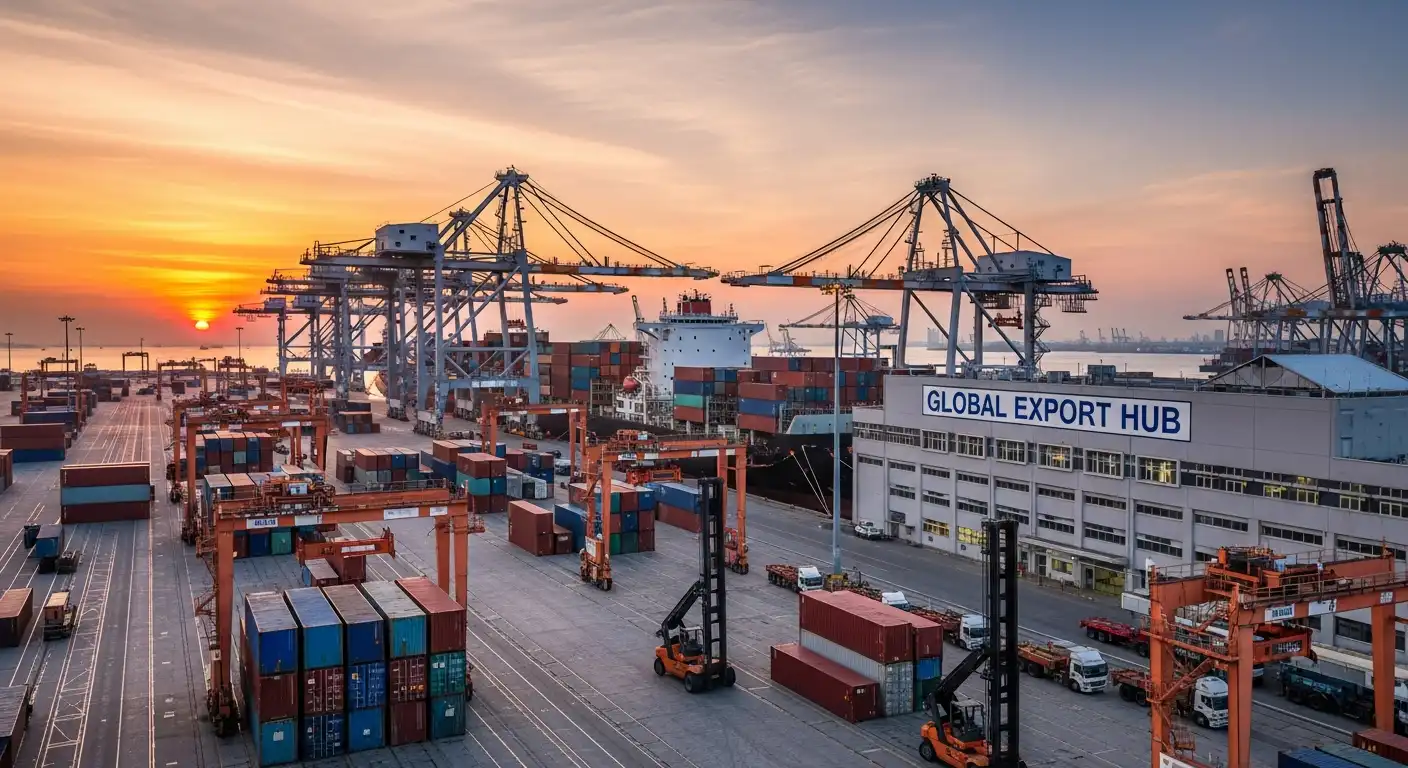
None of this industrial growth works without a massive logistics network. China rapidly developed its transport systems to keep goods flowing smoothly. Zhengzhou, the capital of Henan Province, has transformed into a massive inland transport hub. Freight trains leave this city and travel directly to more than 140 cities across 40 different European and Asian countries. At the same time, cargo planes take off from Zhengzhou to reach 73 cities in 32 nations.
The Zhongyu Aviation Group operates a highly successful dual-hub model connecting Zhengzhou to Luxembourg. The company chairman, Zhang Mingchao, stated that this specific model helps stabilize global supply chains, especially when shipping high-value or time-sensitive products. Now, the aviation group plans to copy this exact system across all other main trade regions by the year 2030.
Lan Qingxin, a professor at the University of International Business and Economics, noted that these developments make China the core hub for the movement of global goods. He explained that this highly connected logistics system allows China to participate in global trade with extreme reliability. When businesses need fast delivery and efficiency, they turn to Chinese networks. This constant reliability firmly locks China into its position as the key pivot of the global supply chain.