Key Points:
- Researchers at the University of New England invented a new process to extract 6 common types of microplastics from agricultural dirt.
- The optimized laboratory method successfully recovers over 92% of tiny plastic pieces from contaminated soil samples.
- Scientists can process each dirt sample for just $5.47, making the system highly affordable globally.
- The research team will soon test the new method on real soil samples collected from rice farms in Sri Lanka.
Microplastics pose a massive threat to human health and global food security. These tiny pieces of plastic pollute farm dirt all over the world, but scientists struggle to measure exactly how much plastic hides underground. Now, a research team at the University of New England has solved this major problem. Led by doctoral student Nivetha Sivarajah, the team created a new framework that acts as a global gold standard for soil analysis and microplastic extraction.
For decades, farmers have unknowingly added plastic pollution directly to their crop fields. The contamination comes from various everyday farming tools and fertilizers. Agricultural soils absorb plastics from protective mulching films, shade nets, raw sewage sludge, and human waste products. Over time, sunlight and weather break these large plastic items down into microscopic fragments. These tiny particles stay stuck in the dirt and create long-term environmental nightmares.
Once microplastics enter the farm soil, they cause serious damage to the local ecosystem. The tiny plastic shards degrade overall soil health, stunt plant growth, and reduce crop yields at harvest. Worse yet, the plastics wash deeper into the earth and poison underground water supplies. Sivarajah warns that these hidden plastics easily travel straight up the natural food chain. When crops absorb the plastic or animals drink the polluted water, the toxic materials eventually reach human dinner plates and directly threaten human health.
Before this breakthrough, environmental scientists lacked a universal method to extract plastics from soil. Different laboratories used different techniques, making it completely impossible to compare global pollution levels. Sivarajah explained that establishing a standard method allows researchers everywhere to understand the massive scale of agricultural plastic pollution truly. The team recently published their complete step-by-step extraction guide so scientists around the world can use it immediately.
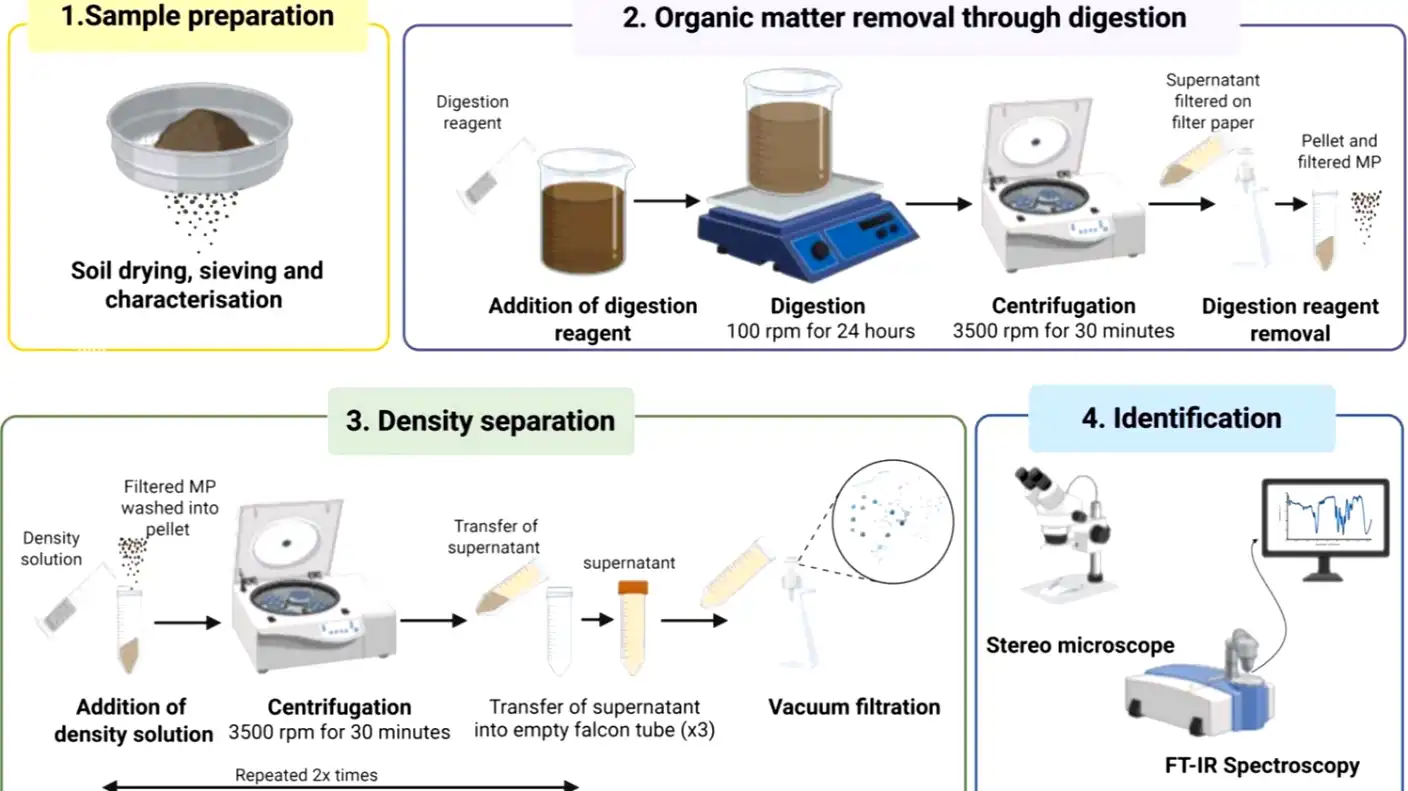
The new procedure targets 6 common types of plastic found across various soil textures. The team designed an optimized extraction process that relies on 2 simple steps. First, the scientists digest the organic plant matter inside the dirt sample using specific chemicals. Second, they use density separation techniques to cause the heavy dirt to sink while the lighter plastic pieces float to the surface.
This two-step process delivers incredibly accurate results in the laboratory. During testing, the research team successfully recovered more than 92% of the microplastics hidden inside their dirt samples. The procedure also keeps the physical and chemical structure of the plastics perfectly intact. This allows scientists to easily identify exactly what type of plastic they pulled from the ground using specialized laboratory scanners.
Beyond raw accuracy, the researchers focused heavily on keeping the process cheap and accessible. Testing a single dirt sample using this new method costs roughly $5.47. Sivarajah emphasized that low costs play a crucial role in fighting global pollution. If a testing method is too expensive, laboratories in poorer countries simply cannot afford to use it. By keeping the price tag under $6 per sample, the team guarantees that environmental scientists in low-income regions can easily adopt the framework.
The team also prioritized environmental safety when designing their new laboratory test. Some older extraction methods forced scientists to use harsh, dangerous chemicals that created toxic waste. The new University of New England method strictly uses chemical reagents with very low environmental impact. The entire testing process moves very quickly, allowing laboratories to process hundreds of soil samples in a fraction of the normal time.
While the initial study provides a solid foundation for global testing standards, Sivarajah already plans to take her research into the real world. She currently applies her new extraction method to actual dirt samples collected directly from Sri Lanka. Sivarajah wants to study the exact abundance of microplastic pollution hiding inside traditional Sri Lankan rice paddy fields.
During this next research phase, the team will track exactly how microplastics move deep underground. Sivarajah wants to understand how plastic particles migrate through different layers of soil over several years. She plans to focus on farming areas that use compost made from municipal solid waste, as this fertilizer often contains high levels of hidden garbage.
Sivarajah expressed extreme excitement about her ongoing work with the University of New England Pollution Science Research Group. She hopes her cheap, fast, and highly accurate testing method will help countries quickly identify heavily polluted areas. By equipping scientists with the right tools to detect hidden plastics, this groundbreaking research takes a massive step toward protecting global food security and keeping harmful toxins out of the human body.
Source: Soil Advances (2026).