Key Points:
- Sinopec officially confirmed a new shale gas field in Sichuan containing over 235 billion cubic meters of fuel.
- The massive discovery marks the first time Chinese engineers successfully tapped into ultra-deep layers exceeding 4,500 meters.
- Drill crews overcame extreme underground heat and intense pressure to extract gas from a 540-million-year-old rock formation.
- Energy officials plan to produce over 50 billion cubic meters of shale gas annually by the year 2030.
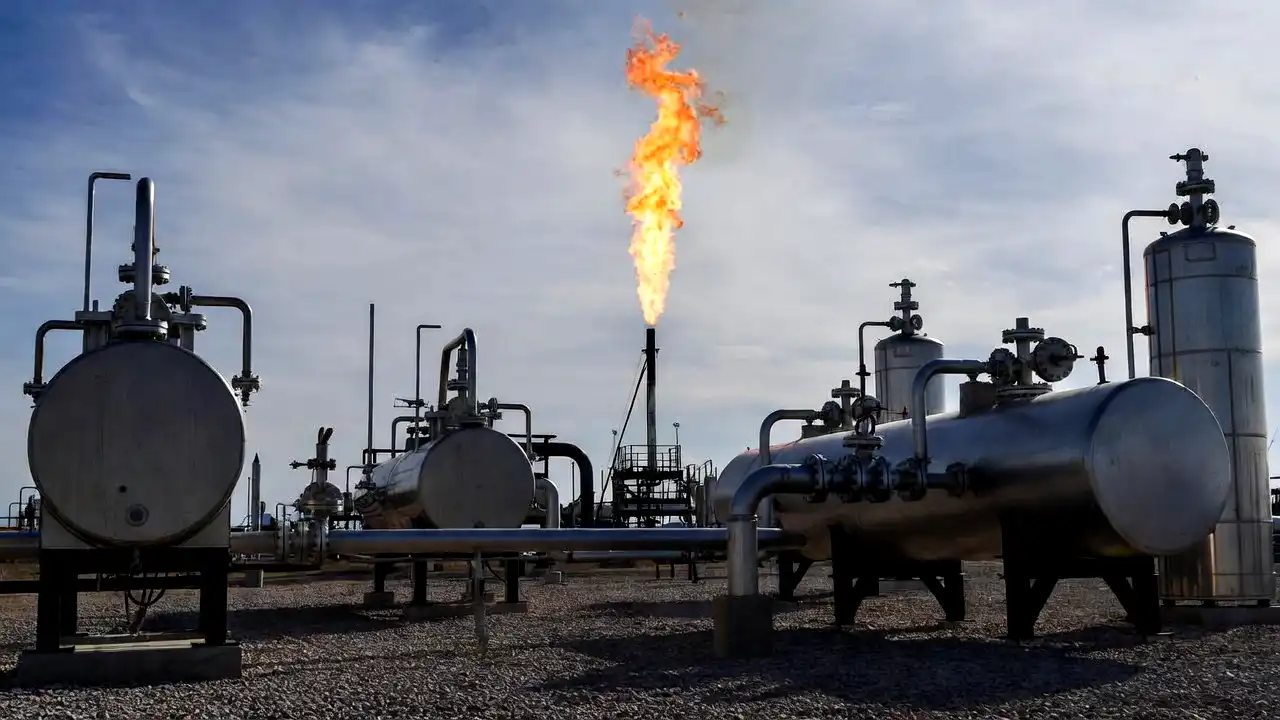
China took a massive leap in its energy sector this week. The national energy giant Sinopec officially confirmed the discovery of a gigantic new shale gas field in southwestern Sichuan Province. Located near Ziyang City, the Ziyang Dongfeng field has proven geological reserves of 235.687 billion cubic meters. The Ministry of Natural Resources gave the project its official stamp of approval on Wednesday. This massive find transitions the country from drilling standard deep wells to exploring extreme ultra-deep rock formations.
The sheer depth of this new gas field sets a historic milestone. Engineers must drill down between 4,500 and 5,200 meters below the surface to reach the trapped energy. Before this project, drilling operations on such a massive scale had never successfully reached such extreme depths in China. The discovery proves that energy companies can successfully navigate these incredibly deep and challenging geological layers to pull up usable fuel.
Success did not happen overnight. In 2024, exploration teams focused on a specific test site, the Ziyang-2 well. During their tests, they recorded a daily industrial gas flow of 1.257 million cubic meters. This incredible flow rate represented a massive breakthrough for the Cambrian Qiongzhusi Formation. This specific underground rock layer dates back 540 million years and ranks as the oldest commercial shale layer on Earth.
Following that initial breakthrough, technical teams intensified their exploration efforts. They steadily increased their test production and carefully evaluated the surrounding land. Their hard work ultimately revealed a massive, continuous gas field stretching far beneath the Sichuan Basin. However, reaching this ancient fuel source posed extreme engineering challenges for the drill crews.
The underground environment behaves like a pressure cooker. Drillers faced thick, incredibly hard rock formations that easily destroyed standard equipment. They also had to survive extreme high-temperature and high-pressure conditions lurking miles below the surface. To overcome these harsh realities, researchers developed entirely new geological theories and built a new series of core-drilling technologies.
Through these technological upgrades, the scientists finally mapped out exactly how the gas accumulated inside the ancient Cambrian Qiongzhusi Formation. They accomplished this deep mapping for the very first time in history. Their success lays a permanent strategic foundation for all future ultra-deep energy exploration across the country. As technology advances, shale gas continues to emerge as a critical driver of sustainable production growth.
China has a relatively short but highly successful history with this type of energy. Commercial development began in 2012, when crews discovered the Fuling shale gas field. That specific discovery made China the third nation in the world, right behind the United States and Canada, to achieve commercial success in the sector. By 2017, the Fuling site had broken records, reaching a production capacity of more than 10 billion cubic meters.
Since that initial boom, exploration teams have systematically expanded the nation’s deep and ultra-deep reserves. In 2018, the Weirong field earned recognition as the first deep project to exceed 100 billion cubic meters in size. Just last year, in 2025, the Yongchuan and Hongxing fields added even more volume to the national total. The geology of China remains incredibly complex, but the engineers continue to unlock its secrets.
The total energy numbers show a rapidly growing industry. So far, the country boasts proven shale gas reserves exceeding 4 trillion cubic meters. Annual production currently surpasses 27 billion cubic meters. This massive fuel stream accounts for over 8% of the nation’s total natural gas output.
Government planners want to push those numbers even higher over the next decade. By the year 2030, energy officials expect annual shale gas production to exceed 50 billion cubic meters. If they hit that ambitious target, ultra-deep drilling projects will supply roughly 15% of the total natural gas needed to keep Chinese cities running.