Key Points:
- China launched a Long March 8 rocket from Hainan on Sunday, May 17, 2026.
- The rocket successfully deployed 18 communications satellites for the Spacesail Constellation.
- The launch brings the total number of satellites in the Spacesail network to 162.
- The Spacesail Constellation aims to have over 10,000 satellites in low Earth orbit by the end of 2030 to provide global broadband.
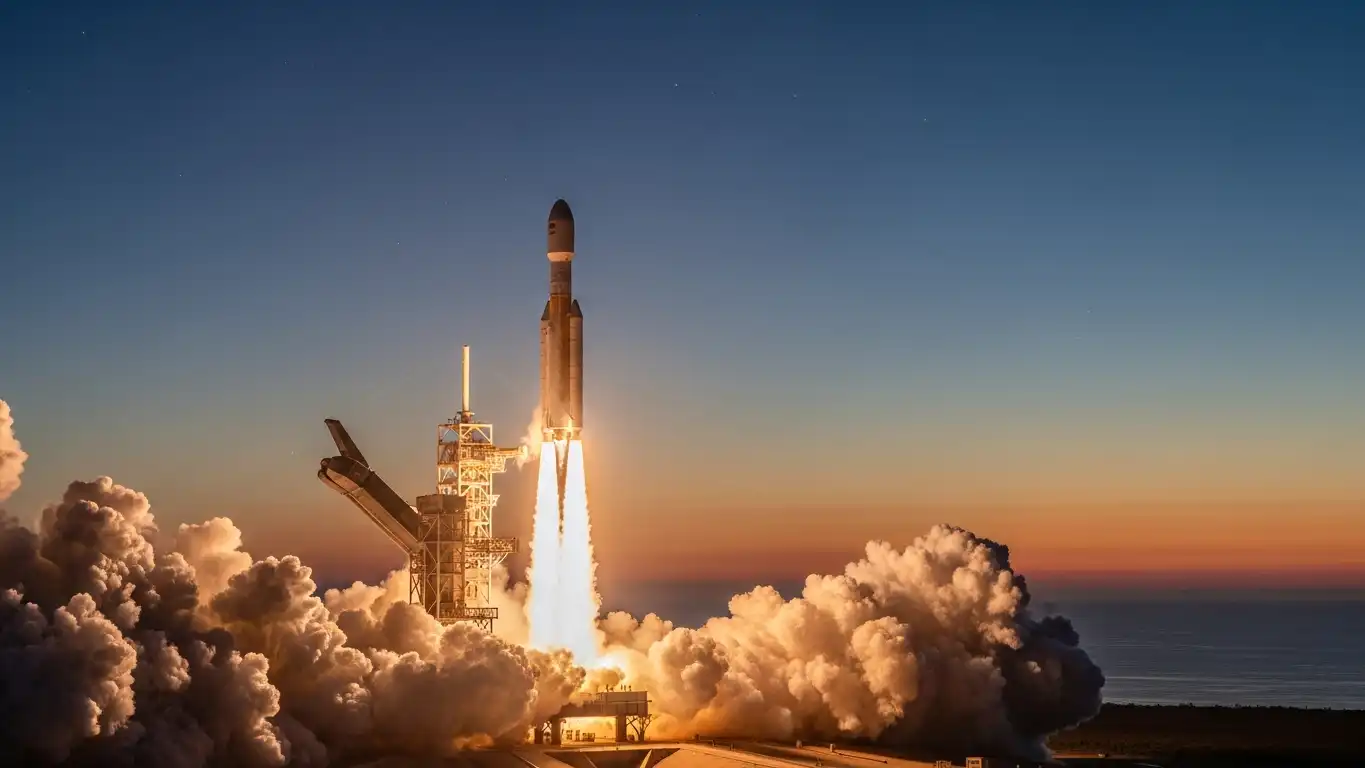
China successfully launched a Long March 8 carrier rocket on Sunday, May 17, 2026, delivering a new batch of 18 communications satellites into space. The rocket lifted off at 10:42 p.m. Beijing Time from the Hainan International Commercial Aerospace Launch Center, located in the coastal city of Wenchang within the southern island province of Hainan. This launch marks the deployment of the ninth batch of space-based assets for the ambitious Spacesail Constellation.
The payload for this mission consisted of 18 satellites, built by the Shanghai-based Innovation Academy for Microsatellites for the satellite operator Spacesail. Following a successful ascent, the Long March 8 rocket deployed the satellites into their preset orbital positions. With this latest addition, the Spacesail Constellation now boasts a total of 162 satellites in orbit, following the commencement of its construction on August 6, 2024.
The Spacesail Constellation, formerly known as the G60 network, represents China’s major push into the commercial low Earth orbit satellite internet market. The project’s ultimate goal is to provide high-speed, secure, and reliable broadband internet services to users across the globe. To achieve this level of global coverage, the constellation is eventually designed to consist of over 10,000 satellites orbiting at low altitudes. The project’s operator, Spacesail, has targeted the end of 2030 to reach this massive deployment milestone.
The launch vehicle utilized for this mission, the Long March 8, is a medium-lift rocket designed and built by the China Academy of Launch Vehicle Technology. The rocket features two core stages and two side boosters, powered by six engines that use a combination of liquid oxygen, liquid hydrogen, and kerosene. Standing at 50.3 meters tall and 3.35 meters wide, the Long March 8 has a liftoff weight of 356 metric tons. With a thrust of nearly 480 tons, it can carry payloads of up to 7.6 tons to low Earth orbit.
This launch from Hainan represents another step forward for China’s commercial aerospace sector. The Hainan International Commercial Aerospace Launch Center, where the launch took place, is China’s first spaceport dedicated exclusively to facilitating commercial operations. As a joint venture involving the Hainan provincial government and state-owned space conglomerates, the facility highlights the growing integration of commercial interests within China’s space program. Sunday’s launch marked the 33rd space mission for China in 2026 and the 643rd flight overall for the Long March rocket fleet.