Key Points:
- Russia shipped $129 billion in discounted fossil fuels to China in 2024 while buying billions in machinery and electronics.
- Chinese companies accounted for 90% of restricted-technology imports to Moscow in 2025 to sustain the Russian war effort.
- The two nations now settle over 99% of their bilateral trade in Chinese yuan and Russian ruble.
- President Vladimir Putin wants to finalize the massive Power of Siberia 2 gas pipeline during his visit to Beijing.
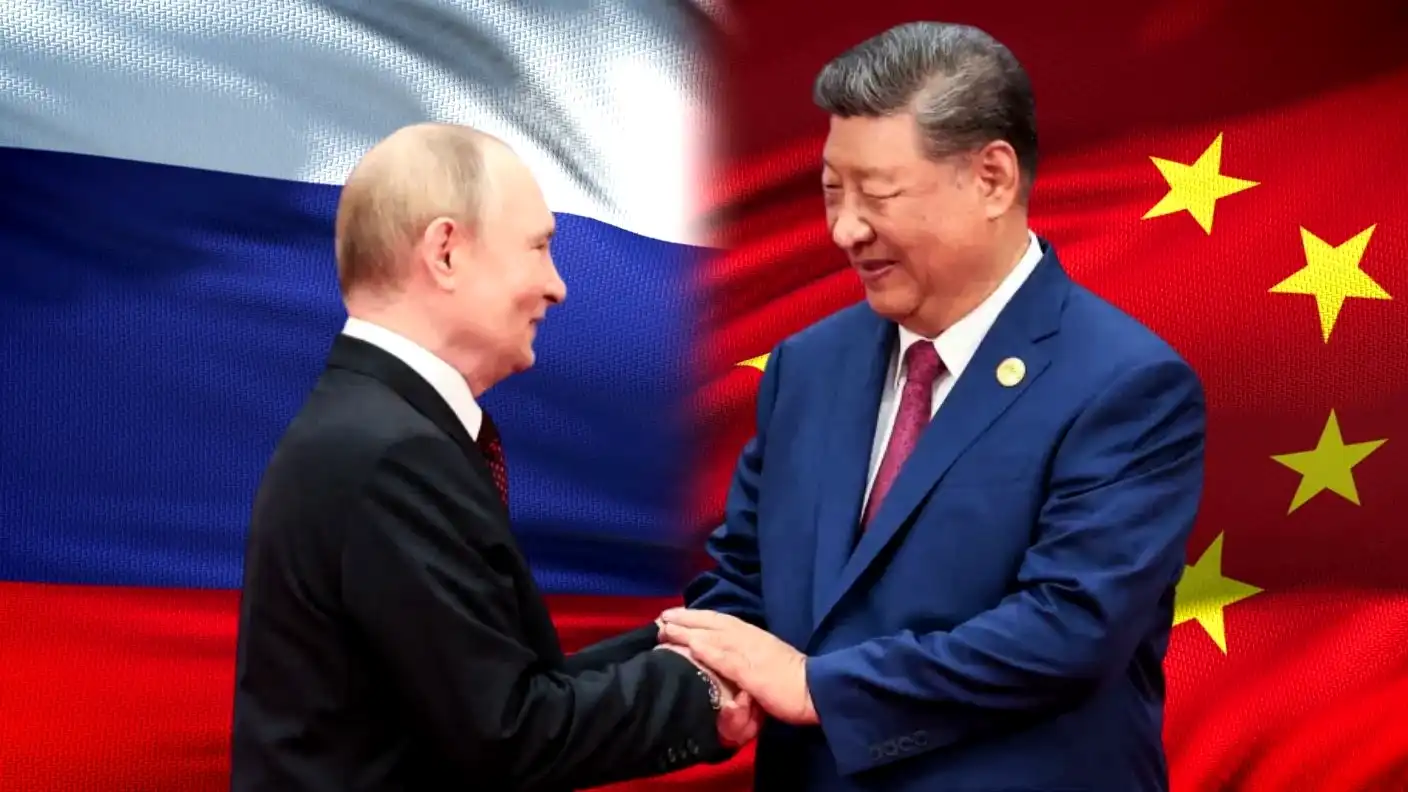
Russian President Vladimir Putin and Chinese leader Xi Jinping coined their famous “no limits” partnership just before the war in Ukraine began. As the two men prepare to meet in Beijing this week to mark the 25th anniversary of their cooperation treaty, that relationship looks increasingly one-sided. Moscow now relies heavily on Beijing for economic survival, advanced technology, and diplomatic support.
Trade numbers reveal a growing imbalance between the two countries. In 2024, Russia shipped roughly $129 billion worth of goods to China. Russia sold the overwhelming majority of these goods as crude oil, coal, and natural gas at steep discounts. The Centre for Research on Energy and Clean Air calculated that China bought more than $372 billion in Russian fossil fuels since the conflict began. This massive cash flow gives Moscow the vital hard currency it needs to fund its military against Western sanctions.
On the flip side, China exported nearly $116 billion worth of goods to Russia in 2024. Chinese manufacturers supplied the machinery, electronics, and vehicles that Russia desperately needed after Western companies abandoned the Russian market. Beijing officially stops short of selling finished military hardware directly to Moscow. However, China sells billions of dollars in dual-use goods. These civilian products and technologies possess military applications that sustain the Russian defense industry.
Western nations severed Russian access to advanced technology starting in 2022. The United States, the European Union, the United Kingdom, and their allies banned the export of semiconductors, microelectronics, and precision machine tools. These export bans created severe shortages across the Russian manufacturing sector. Moscow quickly turned to China for help. According to Bloomberg, China supplied roughly 90% of all sanctioned technology imports to Russia in 2025. This figure jumped from 80% the previous year.
Buying restricted items like machine tools for missile and drone assembly costs Russia far more today than it did before the war. Russian procurement officers utilize complex evasion networks hidden in third countries to secure these parts. Russia often pays massive premiums, sometimes reaching 90% above pre-war prices, to get the technology it needs. Beijing also provides Russia with earth observation intelligence, satellite imagery for military strikes, and specialized drones. Chinese technology directly enables Russia to expand its weapons production and keep its war economy running.
Financial sanctions also forced Russia to change how it conducts global business. As the Ukraine war escalated, the United States and its allies expelled major Russian banks from the SWIFT global payment system. The West also froze approximately $300 billion in Russian central bank reserves held outside the country. This move essentially weaponized the dollar-dominated financial system against the Kremlin. Using dollars or euros became incredibly risky or totally impossible for Russian companies. The rules also exposed foreign banks and individuals to secondary sanctions if they chose to work with Russian entities.
Moscow and Beijing reacted by accelerating a massive shift away from the US dollar. Russian Finance Minister Anton Siluanov reported that by late last year, the two countries had settled over 99% of their bilateral trade using rubles and yuan. The broader BRICS group of emerging economies reinforces this trend. The nearly dozen members of BRICS actively promote local-currency settlements and even discuss launching a single shared currency in the future.
This heavy reliance on the Chinese yuan creates brand new problems for Moscow. Russia regularly faces yuan shortages and pays higher borrowing costs. More importantly, Vladimir Putin must tolerate Beijing holding the upper hand in all bilateral negotiations. China does not expect to replace the US dollar overnight. However, pushing the yuan into wider circulation increases Beijing’s global economic influence. Whenever countries hold or borrow in yuan, they tie themselves closer to Chinese economic policies.
Top political analysts believe Beijing will only increase its leverage over Moscow in the coming years. During his visit to Beijing this week, Putin expects to push for progress on new pipeline deals. He wants to expand energy infrastructure to boost Russian export revenues. The Kremlin desperately wants to finalize the construction of the Power of Siberia 2 gas pipeline. This massive project could deliver up to 50 billion cubic meters of natural gas to China through Mongolia every single year. Right now, severe pricing disputes and technical arguments stall the project.
China holds out for a better deal, but Beijing still wants reliable overland energy supplies. Disruptions in the Strait of Hormuz during the Iran war showed Chinese leaders the danger of relying entirely on sea shipments for oil. Joseph Webster, a senior fellow at the Atlantic Council, wrote that boosting Russian pipeline capacity directly enhances Chinese oil security. If China invades Taiwan, the West could launch a naval blockade and stop ships from delivering oil to Chinese ports. Overland pipelines from Russia bypass that threat entirely. Still, building these new pipelines will only lock Russia deeper into a subordinate role.
The timing of the Putin-Xi summit complicates matters for Russia. The meeting happens just days after US President Donald Trump visited Beijing. Trump and Xi sought to stabilize their ties on trade, technology, and global issues after several rocky years. A diplomatic thaw between the United States and China hurts Putin. If Beijing stabilizes relations with Washington, China has less incentive to align fully with Russia against the West. Ultimately, Beijing will always prioritize protecting its massive economic interests in the United States and Europe over helping Moscow.