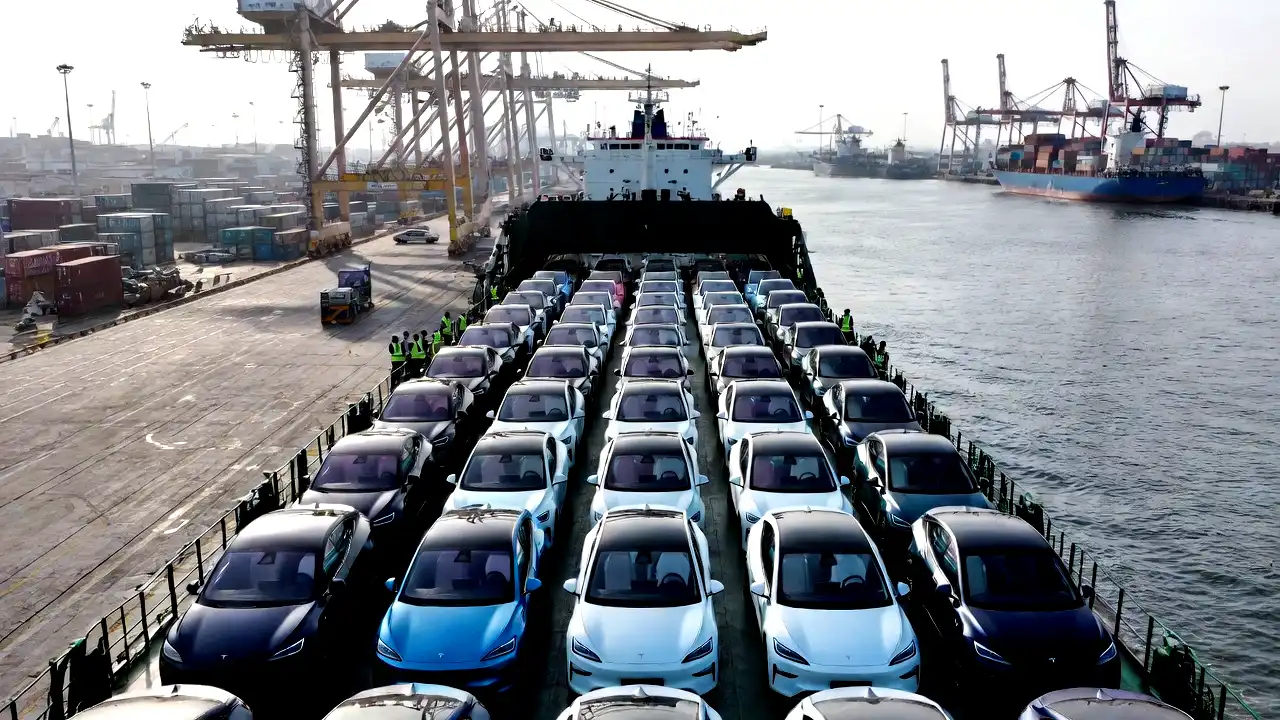
The commercial automotive industry is witnessing its deepest structural crisis in a decade. For over a generation, European carmakers dominated the global market, exporting high-purity internal combustion engines to emerging economies and generating record-breaking revenues. However, the rapid, highly disruptive transition to electric vehicles has completely shattered this traditional business model. Facing soaring local energy costs, a sluggish domestic EV transition, and an aggressive, profit-killing price war in Asia, Europe’s legacy giants are finding themselves increasingly uncompetitive.
In response to this existential threat, the region’s largest carmakers are executing a highly controversial and risky strategy. Rather than trying to beat their faster, cheaper Chinese competitors, they are actively choosing to join forces with them.
The ongoing expansion of Stellantis and Volkswagen partnerships with Chinese electric vehicle manufacturers has reshaped the global automotive landscape. By purchasing strategic equity stakes, launching joint ventures, and even preparing to manufacture Chinese cars on European assembly lines, these legacy giants are attempting to absorb China’s advanced battery technologies and cheap software.
However, Wall Street is highly skeptical of this pro-China pivot. As prominent hedge funds launch massive short-selling campaigns against European auto debt, analysts warn that these risky partnerships could ultimately turn Germany and Europe into mere contract manufacturing bases for their Chinese rivals, leaving legacy brands as hollowed-out shells of their former selves.
The Collapse of the Import Model and Europe’s Auto Crisis
The physical and financial strain on European automakers is visible across their primary balance sheets. For nearly thirty years, China functioned as the undisputed profit engine for German manufacturers, with millions of Chinese consumers eagerly purchasing imported Volkswagen and Audi sedans to signal their middle-class status.
But as the Chinese domestic market transitioned rapidly to smart, connected electric vehicles, local brands like BYD and Geely completely captured the market, leaving legacy foreign brands priced out and technologically outclassed.
The internal financial assessments of these European giants paint a highly alarming picture. The corporate board of Volkswagen recently conceded the complete “collapse of the import model” in China, admitting that its traditional business of exporting cars from Germany is no longer viable.
The monthly sales metrics from China illustrate the speed of this collapse:
- The 71% Year-on-Year Plunge: In January, Volkswagen’s total electric vehicle sales in China plummeted by a sharp 71% year-on-year, dropping to a mere 4,552 units.
- The ID.7 Electric Sedan Collapse: Sales of the company’s flagship ID.7 electric sedan, which was designed to lead the brand’s premium electric transition, collapsed from 2,269 units in the previous year to only seven individual units in January, demonstrating that Chinese consumers have completely rejected the legacy platform.
- The Overcapacity Burden: Because domestic sales are shrinking, many of Europe’s largest auto factories are operating far below their optimum efficiency levels, leaving companies with massive overhead expenses and forcing them to consider closing historic plants.
To survive this operational crisis, European carmakers are turning directly to Chinese innovation. Since 2018, European manufacturers—including Volkswagen, Stellantis, Mercedes-Benz, and the BMW Group—have established technology partnerships with at least 38 Chinese companies and research institutions, covering essential areas like software, hardware, advanced batteries, and in-vehicle connectivity.
Key Components of Europe’s Chinese Alliance Strategy
The physical and financial execution of this controversial, hardware-led integration strategy relies on several critical technical components:
- Minority Equity and Joint Ventures: Purchasing strategic stakes in younger Chinese EV startups (like VW’s 4.99% stake in Xpeng) to co-develop localized models.
- Outsourced Contract Manufacturing: Utilizing European assembly lines to build cars for Chinese brands (such as Stellantis, preparing to build Leapmotor’s B10 SUV in Spain).
- Software and Autonomous Integration: Partnering with highly agile Chinese autonomous driving and software startups (like ZYT) to upgrade lagging digital dashboards.
- The “Made in Europe” Lobbying Push: Demanding that EU policymakers enforce a 70% local content requirement to block purely imported Chinese cars.
- Hedge Fund Credit Shorting: Massive short-selling campaigns by Wall Street funds targeting European auto bonds and junior perpetual debt.
Stellantis’s Contrarian Bet: Inviting the Enemy In
Stellantis, the massive multi-brand conglomerate that owns Jeep, Ram, Dodge, Chrysler, Fiat, and Peugeot, is executing the most aggressive and highly controversial China partnership strategy in the industry. Under CEO Antonio Filosa, the company has decided that the most practical survival strategy is to open the “back door” to the European and North American markets, partnering directly with the very Chinese competitors that are threatening its business.
The $1.6 Billion Leapmotor Acquisition
The primary pillar of this contrarian strategy is Stellantis’s landmark partnership with Chinese electric vehicle startup Leapmotor. Stellantis purchased a strategic 20% equity stake in Leapmotor for approximately $1.6 billion and established a 51/49 joint venture called Leapmotor International, giving Stellantis exclusive global rights to manufacture and distribute Leapmotor’s cheap electric vehicles outside of China.
The physical execution of this joint venture has officially begun. Stellantis announced plans to manufacture Leapmotor’s advanced B10 electric SUV at its Zaragoza assembly plant in Spain, allowing the Chinese-designed vehicle to bypass the heavy import tariffs recently imposed by the European Union.
Furthermore, the company is in active talks with state-owned Dongfeng Motor and FAW Group to potentially outsource the production of its iconic luxury brand, Maserati, through a similar joint-venture structure, potentially turning its historic European factories into contract assembly plants for Chinese technology.
Volkswagen’s Double Play: Xpeng and the ZYT Software Integration
Volkswagen is taking a similarly risky, multi-billion-dollar path, betting that partnering with Chinese firms is the only way to quickly upgrade its lagging software capabilities and protect its declining market share in Asia.
The $700 Million Xpeng Stake
The first major leg of this strategy is Volkswagen’s partnership with Chinese EV startup Xpeng. VW purchased a 4.99% equity stake in Xpeng for $700 million to co-develop two mid-sized electric vehicles designed specifically for the Chinese market.
By utilizing Xpeng’s advanced, low-cost platform architecture and battery management systems, VW hopes to rapidly bring competitive electric cars to market, reversing its recent sales declines.
The ZYT Software Partnership
More importantly, the German automaker has recently signed a landmark partnership agreement with Chinese autonomous driving and software startup ZYT to integrate advanced digital and intelligent features into its global vehicle lineup.
The geography of this agreement is highly symbolic. ZYT’s new research and development office is located in Wolfsburg, Germany—less than 30 kilometers from Volkswagen’s global corporate headquarters.
This proximity highlights a profound, humbling reality for the German auto industry: even inside its own backyard, Europe’s largest automaker must rely on Chinese software developers to design the connected, intelligent cockpits that modern consumers demand.
The Paradox of Protectionism: Lobbying for the “Made in Europe” Plan
The aggressive pivot toward Chinese partnerships has created a highly controversial paradox in European trade policy. While Stellantis, Volkswagen, and Renault are actively signing massive agreements to import Chinese technology and assemble Chinese cars on their own production lines, they are simultaneously lobbying European Union policymakers for strict protectionist barriers to block imported Chinese cars.
In mid-June, Stellantis, Volkswagen, and Renault—which together represent over 60% of all vehicle production in the European Union—submitted a joint proposal to EU policymakers calling for a strict “Made in Europe” framework within the bloc’s upcoming Industrial Accelerator Act.
The carmakers want the EU to mandate that 70% of a vehicle’s components must be sourced locally within the European bloc to be eligible for public procurement and subsidies.
This protectionist plan is designed to create a massive regulatory barrier to entry. By forcing auto companies to source 70% of their components locally, European carmakers hope to block purely imported, low-cost Chinese vehicles from entering the market.
At the same time, because their own joint ventures (like Stellantis’s Leapmotor partnership) will assemble cars inside European plants using a mix of local labor and Chinese technology, these legacy carmakers can comfortably comply with the local content rules. This allows them to utilize cheap Chinese technology under their own, locally managed brands while legally locking out their independent Chinese rivals.
The Wall Street Backlash: Hedge Funds Shorting Legacy Auto
While European auto bosses insist that these partnerships represent a highly successful, win-win strategy for both sides, the international financial community is adopting a highly skeptical, bearish outlook. Global hedge funds are aggressively betting against European automakers, predicting that these risky partnerships are a desperate sign of surrender that will ultimately erode their long-term brand equity and financial independence.
According to research data from Bank of America, Volkswagen was ranked as the third-most shorted investment-grade bond issuer in Europe at the end of May.
Institutional short positions against the company’s riskier junior perpetual bonds jumped from under 9% at the start of the year to a massive 16.2% in June.
Furthermore, prominent hedge funds like Marshall Wace and Citadel Advisors are aggressively shorting BMW’s €750 million 2035 bond and Mercedes-Benz’s €300 million 2030 bond, as short bets on Mercedes debt rose from 5.5% to 9.2%.
This high-volume short-selling shows that the market views these partnerships as highly risky gambles. Investors fear that by inviting Chinese manufacturers into their factories and supply chains, European automakers are accelerating their own technological obsolescence.
Once Chinese carmakers successfully establish their manufacturing networks and brand recognition inside Europe, they will no longer need their legacy European partners, leaving companies like Volkswagen and Stellantis with empty, expensive factories and massive, unsustainable debt loads.
Conclusion
The rising wave of partnerships between European legacy automakers and their Chinese rivals represents a highly volatile, high-stakes gamble for the future of the global automotive industry. By purchasing strategic stakes in younger firms like Xpeng and Leapmotor, and preparing to manufacture Chinese-designed electric vehicles inside historic European plants, Volkswagen and Stellantis are attempting to absorb the low-cost manufacturing and advanced software capabilities needed to survive the clean energy transition. However, as global hedge funds aggressively short their debt, and as local unions warn of massive job losses, the risk of this strategy is immense. While the proposed “Made in Europe” lobbying push attempts to build a protective regulatory wall, the reality is that European carmakers are quickly becoming dependent on Chinese innovation. Until European manufacturers can develop their own, competitive software and battery supply chains, these risky partnerships will remain a double-edged sword, threatening to permanently turn Germany and Europe into mere contract assembly bases for the rising technological giants of the East.