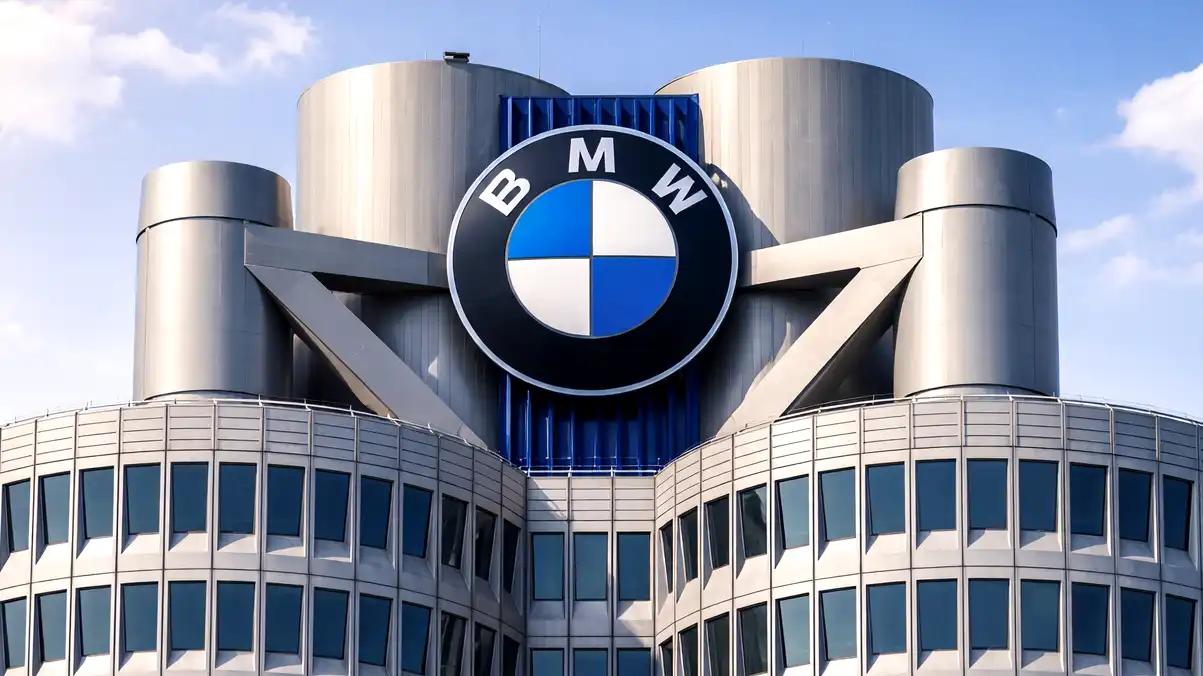
The structural crisis hitting the European automotive industry recently reached the gates of its most resilient player. BMW and its powerful general works council are preparing for intense negotiations. This announcement came shortly after the Munich-based premium carmaker shocked financial markets by slashing its profit targets for the year. Vowing to ramp up cost-cutting measures, the company’s new leadership is working to find a balance between financial survival and protecting its massive workforce.
This crisis represents the first major trial for Milan Nedeljković, who became CEO and Chairman of the Board of Management in mid-May, succeeding long-time leader Oliver Zipse. For years, BMW managed to navigate global supply chain disruptions and volatile electric vehicle demand better than its domestic rivals, Volkswagen and Mercedes-Benz. However, accelerating market weakness in China and rising global energy costs have finally broken BMW’s defense. The upcoming talks will shape how the company restructures its operations as it transitions to next-generation electric mobility.
The Magnitude of BMW’s Profit Downgrade
The financial adjustments announced by BMW highlight the severity of the pressures mounting on the company. The automaker lowered its closely watched automotive segment earnings before interest and taxes (EBIT) margin to a range of 1% to 3%. This is a steep drop from its previous guidance of 4% to 6%, which was already conservative compared to the double-digit margins the brand enjoyed in peak years.
Furthermore, BMW expects its consolidated pre-tax profit to show a significant decline this year, defined by the group as a drop of more than 15%. This is a much gloomier outlook than the moderate decline the company had previously forecast from last year’s pre-tax profit of €10.2 billion. Delivery projections have also been downgraded; instead of keeping vehicle sales stable compared to last year’s 2.5 million cars, BMW now expects a slight decrease in overall volume. The return on capital employed in the automotive division is now estimated to land between 1% and 5%, down from the previously predicted range of 6% to 10%.
The market reaction to this profit warning was swift and brutal. Shares of BMW plummeted by more than 11% intraday on the Frankfurt Stock Exchange, hitting their lowest levels since late 2020. The sell-off wiped billions of euros off the company’s market capitalization, dragging down shares of its German peers as well. Analysts described the scale of the downgrade as a wake-up call for the entire premium automotive sector, exposing the fragility of export-reliant business models in a fracturing global economy.
The Double Whammy: China’s Darwinian Market and Geopolitical Storms
BMW blamed its sudden guidance cut on two main factors: a sharp downturn in its largest single market and widening geopolitical instability. For decades, the rising middle class in China fueled record-breaking profits for German luxury automakers. However, that reliable growth engine has stalled, leaving European brands highly exposed.
The Brutal Price War in China
The situation in China has deteriorated rapidly, especially for traditional internal combustion engine vehicles. Domestic Chinese electric vehicle manufacturers have launched a relentless price war, offering advanced technology and luxurious features at heavily subsidized prices. Brands like BYD, Zeekr, NIO, and Xiaomi are aggressively eating into the market share of established foreign players.
This highly competitive environment has forced global carmakers to slash prices, destroying their profit margins in the process. BMW noted that the negative trends in China accelerated further in the second quarter of the year. While the company recorded solid sales gains in Europe and the United States, these regional successes were simply not enough to offset the massive decline across the Asia-Pacific region. Because BMW still relies heavily on the Chinese market to fund its expensive transition to electric cars, this sudden loss of high-margin sales has left a massive hole in its balance sheet.
Geopolitical Friction and Rising Energy Costs
Beyond the struggles in Asia, BMW is also grappling with the economic fallout from the conflict in the Middle East. The war involving Iran has disrupted global supply chains and kept energy prices elevated. For a manufacturer with a massive production footprint in Germany, high energy costs directly impact factory operations and raise the price of raw materials.
Furthermore, the lack of geopolitical stability has severely dented global consumer sentiment. When consumers face high inflation and economic uncertainty, they delay major luxury purchases like high-end cars. BMW originally hoped that the Middle East conflict would have a limited impact on its business, but the prolonged nature of the war has forced the company to revise its operating assumptions. With energy costs remaining high and consumer confidence low, the carmaker has no choice but to adjust its structures to these harsh market realities.
What’s on the Table: Labor Talks and Job Protection
As BMW moves to implement its accelerated efficiency program, the general works council is stepping in to protect employees. Under Germany’s co-determination system, major structural changes and cost-cutting initiatives require the approval of employee representatives. The upcoming negotiations will decide how the carmaker will reduce its structural costs without triggering a full-blown labor dispute.
Staff Slashes vs. Natural Fluctuation
Unlike its competitors, BMW has avoided announcing sweeping redundancy programs or mass layoffs. Volkswagen and Mercedes-Benz have already launched major restructuring initiatives that include thousands of job cuts to preserve cash. In contrast, BMW’s workforce fell only slightly in 2025, and the company has historically preferred to manage staff reductions through natural fluctuation and early retirement packages.
However, the depth of the current profit squeeze has led analysts to speculate that more drastic actions may be necessary. Some investment researchers suggest that BMW could aim to reduce its global workforce of just under 155,000 employees by up to 5% by the end of 2026. This would represent roughly 7,700 job losses worldwide. The general works council has emphasized its commitment to finding viable solutions through constructive dialogue, but it will fiercely oppose any mandatory redundancies. Finding a compromise that satisfies both cost-conscious executives and protective union leaders will be a delicate task.
Adapting Germany’s Traditional Export Model
Another central topic in the upcoming talks will be the future of BMW’s manufacturing footprint. Historically, the company has operated on an export-focused business model, building highly profitable internal combustion engine vehicles in Germany and shipping them to global markets. This model is facing severe pressure due to high domestic manufacturing costs, rising energy prices, and increasing trade tariffs.
Analysts suggest that BMW may need to speed up its efforts to localize production in North America and China. By building vehicles closer to where they are sold, the company can avoid high shipping costs, import duties, and currency fluctuations. However, moving production away from home plants in Munich, Dingolfing, and Regensburg threatens German jobs. The works council will likely demand firm commitments regarding production volumes and job security at domestic factories before agreeing to any expansion of overseas manufacturing facilities.
Accelerating the Electric Pivot: The Neue Klasse Promise
To weather this crisis, BMW is not just cutting costs; it is also reorganizing its product strategy. The carmaker plans to discontinue several older, China-made electric models that are no longer competitive in the local market. This move will allow the company to concentrate its financial and engineering resources on its highly anticipated next-generation electric vehicle platform, known as the Neue Klasse.
The Neue Klasse represents the most significant investment in BMW’s history. Built on an advanced 800-volt architecture, these vehicles promise faster charging times, longer driving ranges, and lower production costs. Under the previous leadership of Oliver Zipse, the company pursued a flexible strategy, building combustion engines, hybrids, and electric vehicles on the same production lines. This approach kept BMW profitable while others struggled with electric vehicle transitions.
Now, under CEO Milan Nedeljković, the pressure to make the Neue Klasse a commercial success is immense. Production of the first Neue Klasse model, the iX3 electric SUV, has already ramped up at a new, highly digitalized plant in Debrecen, Hungary, with early orders exceeding expectations. The success of this rollout is critical for BMW. If the company can successfully transition its customer base to these new models while lowering production costs, it can restore its margins to their historical levels.
However, the transition requires massive upfront capital. This makes the immediate structural cost-cutting program even more vital. BMW needs to free up cash to fund the Neue Klasse ramp-up, meaning the upcoming labor negotiations are directly linked to the company’s long-term survival.
The Path Forward for BMW’s Management
The coming months will test BMW’s collaborative corporate culture. The company has scheduled its half-year interim report for late July, which will provide the first clear picture of the financial damage caused by the downturn in China and high energy costs. This will be followed by a highly anticipated Capital Markets Day in September, where CEO Milan Nedeljković is expected to present a refreshed long-term strategy to investors.
The outcome of the talks with employee representatives will be a crucial component of that strategy. If management and the works council can reach an agreement that reduces operational expenses without causing major labor disruptions, it will reassure nervous investors and stabilize the share price. However, if the negotiations stall, BMW could face strikes and internal resistance at a time when it can least afford operational delays.
Ultimately, BMW’s challenges are a reflection of a wider industrial shift. The era of easy profits from exporting internal combustion engines to a growing Chinese market is over. To survive, European luxury automakers must reinvent themselves as agile, electric-first companies. The success of BMW’s labor talks will show whether one of the world’s premier carmakers can make this transition smoothly, or if the road ahead will be far more turbulent.