In the search for renewable energy, humanity faces a paradox. We need clean, sustainable fuels, but the technologies we rely on—solar, wind, and batteries—struggle to power heavy industries like aviation, shipping, and trucking. You cannot fly a jumbo jet on a battery; the energy density just isn’t there yet. We need liquid fuel.
For decades, the answer seemed to be biofuels like corn ethanol or palm oil. However, these “first-generation” biofuels come with heavy baggage: they compete with food crops for land and water, driving up food prices and encouraging deforestation.
Enter the humble algae. These microscopic, single-celled organisms, the slime you see on a pond, might just be the most potent energy source on the planet. Algae Biofuel represents the “Third Generation” of renewable energy. It promises high yields, zero competition with food supplies, and the ability to grow in wastewater or salt water.
This comprehensive guide dives into the science of turning green slime into green gasoline, the technological hurdles that have stalled its progress, and why recent innovations might finally make algae the fuel of the future.
Why Algae? The Biological Advantage
To understand the hype, you have to look at the biology. Algae are essentially tiny solar panels. They use photosynthesis to convert sunlight and carbon dioxide (CO2) into energy stored as oil (lipids).
Unmatched Oil Yield
Traditional oil crops are inefficient. Soybeans produce about 50 gallons of oil per acre per year. Palms, the current king of oil crops, produce about 650 gallons of oil.
Algae? Under optimal conditions, algae can theoretically produce up to 5,000 to 10,000 gallons of oil per acre per year. That is an order of magnitude higher than any terrestrial plant.
Non-Arable Land and Water
Algae are not picky eaters. They do not need fertile soil. You can build algae farms in the desert, on rocky terrain, or on top of old industrial sites. Furthermore, they do not need fresh water. Many strains thrive in brackish water, seawater, or even wastewater. This means fuel production doesn’t have to drain our precious freshwater aquifers.
Carbon Capture
Algae are voracious consumers of CO2. Producing 1 ton of algae biomass absorbs roughly 1.8 tons of CO2. This makes algae farming a potential “carbon sink.” Some pilot projects even pump exhaust gas from power plants directly into algae ponds, feeding the algae with the pollution we are trying to eliminate.
How It Works: From Pond to Pump
Turning algae into fuel is a multi-step process that mimics how fossil fuels were created millions of years ago, but accelerates it from eons to days.
Cultivation
There are two main ways to grow algae:
- Open Ponds: These are shallow, raceway-style tracks where a paddlewheel circulates the water. They are cheap to build but susceptible to contamination from wild algae strains, bugs, and evaporation.
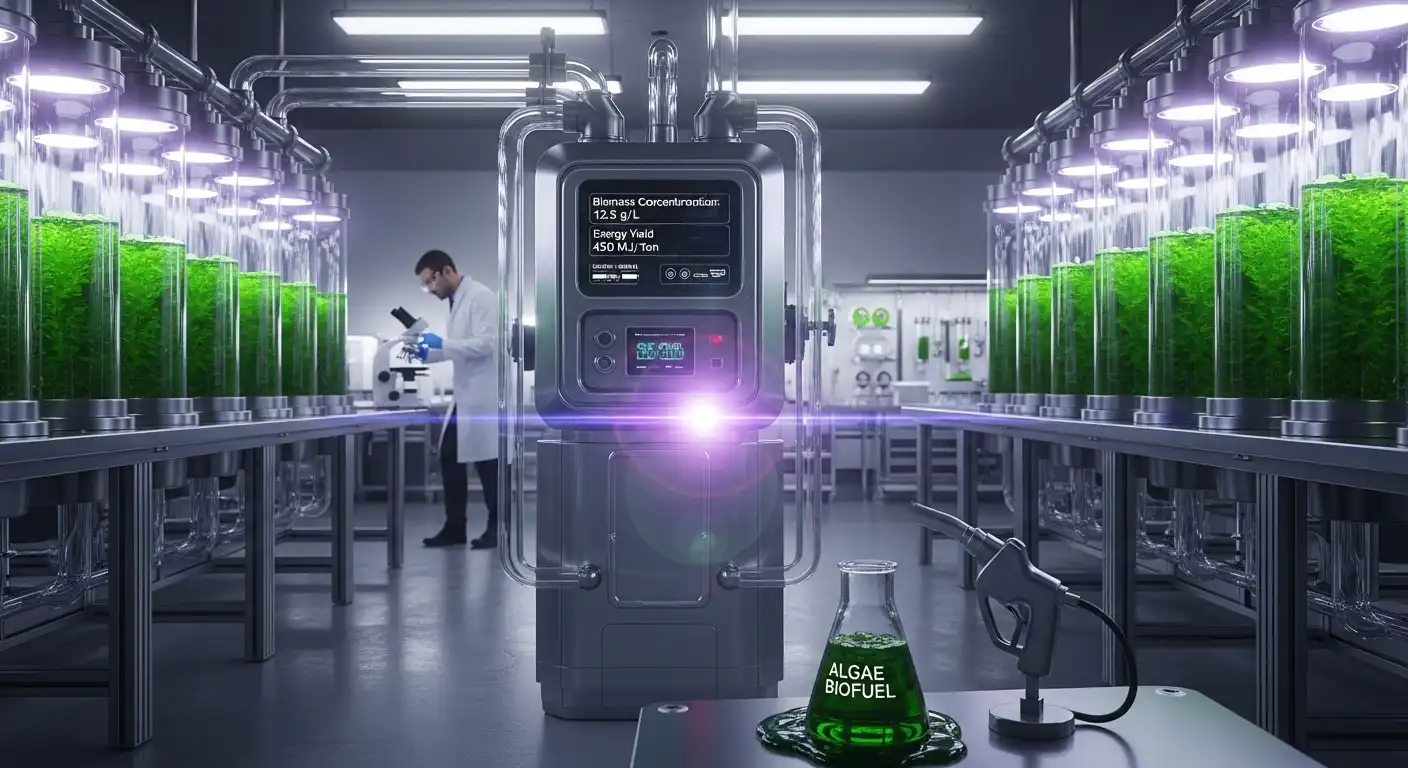
- Photobioreactors (PBRs): These are closed systems, often in the form of clear tubes or bags. They offer perfect control over the environment, preventing contamination and maximizing light exposure. However, they are significantly more expensive to build and operate.
Harvesting
Once the algae bloom is thick, it must be harvested. The water is removed, leaving a thick green paste. This is surprisingly difficult because algae cells are tiny and suspended in vast amounts of water. Methods include centrifugation (spinning it), flocculation (adding chemicals to make it clump), or filtration.
Extraction
The oil is locked inside the algae’s cell walls. To get it out, the cell walls must be ruptured. This can be done using solvents (like hexane), sound waves (ultrasonic extraction), or mechanical pressing.
Conversion
The extracted oil (lipids) is remarkably similar to vegetable oil. It can be converted into biodiesel via transesterification (mixing with alcohol). Alternatively, the entire biomass can be subjected to Hydrothermal Liquefaction—basically a pressure cooker that turns the wet algae into “biocrude” oil, which can then be refined into jet fuel, diesel, or gasoline using standard oil refinery equipment.
The Crash: Why Aren’t We Driving on Algae Yet?
In the late 2000s and early 2010s, algae was the darling of the clean tech world. ExxonMobil promised to spend $600 million on it. Startups like Sapphire Energy and Algenol raised hundreds of millions of dollars.
Then, the bubble burst. Why?
The Cost of Water Removal
The biggest killer was the energy balance. Algae grow in water. To get the oil, you have to move millions of gallons of water. Pumping, filtering, and drying the algae requires massive amounts of energy. In many early trials, it took more energy to process the algae than the resulting fuel provided.
The “Collapse” Problem
In open ponds, maintaining a monoculture (just the one high-oil strain you want) is fighting nature. Invasive species, such as rotifers (microscopic predators), can infect a pond and wipe out the entire crop in a matter of days, destroying the harvest.
Cheap Fracking
Just as algae tech was maturing, the fracking boom hit. Natural gas and oil prices plummeted. Algae fuel, which costs 8-10 per gallon to produce, simply couldn’t compete with $3 fossil fuel. Exxon withdrew its funding, and many startups went bankrupt.
The Renaissance: New Tech and High-Value Products
But algae didn’t die. The industry pivoted, and recent technological breakthroughs are bringing it back to life.
CRISPR and Genetic Engineering
We are no longer relying on wild strains. Scientists are using CRISPR gene editing to create “super-algae.”
- Viridiom: Companies like Viridos (formerly Synthetic Genomics) have engineered algae that are twice as productive. They modified the algae’s “sun dimmer switch,” forcing it to continue photosynthesis even in blindingly bright sunlight, doubling the growth rate.
- Disease Resistance: Geneticists are engineering strains that are immune to the common predators that plague open ponds.
The Biorefinery Concept
The industry realized that selling fuel alone is hard. But algae contain more than oil; they contain valuable proteins, Omega-3 fatty acids, and pigments (like astaxanthin).
Modern algae farms operate as biorefineries. They first extract the high-value Omega-3s ($30/kg) and proteins. The remaining biomass is then turned into fuel. The profits from the high-value products subsidize the fuel production, making the economics work.
Carbon Taxes and Aviation
The game is changing for the airline industry. With new regulations demanding “Sustainable Aviation Fuel” (SAF), airlines are desperate for low-carbon liquid fuels. Unlike cars, planes cannot go electric anytime soon. This creates a guaranteed market for algae jet fuel that is willing to pay a premium over fossil fuels, reviving investment in the sector.
Conclusion
Algae biofuel is not a quick fix. It is a long-term scientific project that is slowly maturing. While it may never replace the sheer volume of cheap petroleum pumped from the ground, it acts as a critical piece of the renewable puzzle.
For heavy transport, aviation, and shipping, algae offers the only scalable, low-carbon liquid fuel that doesn’t compete with the world’s food supply. As genetic engineering improves yields and carbon taxes make fossil fuels more expensive, the economics will eventually tip in favor of renewable energy. The green crude is coming; it’s just taking a little longer to bloom.