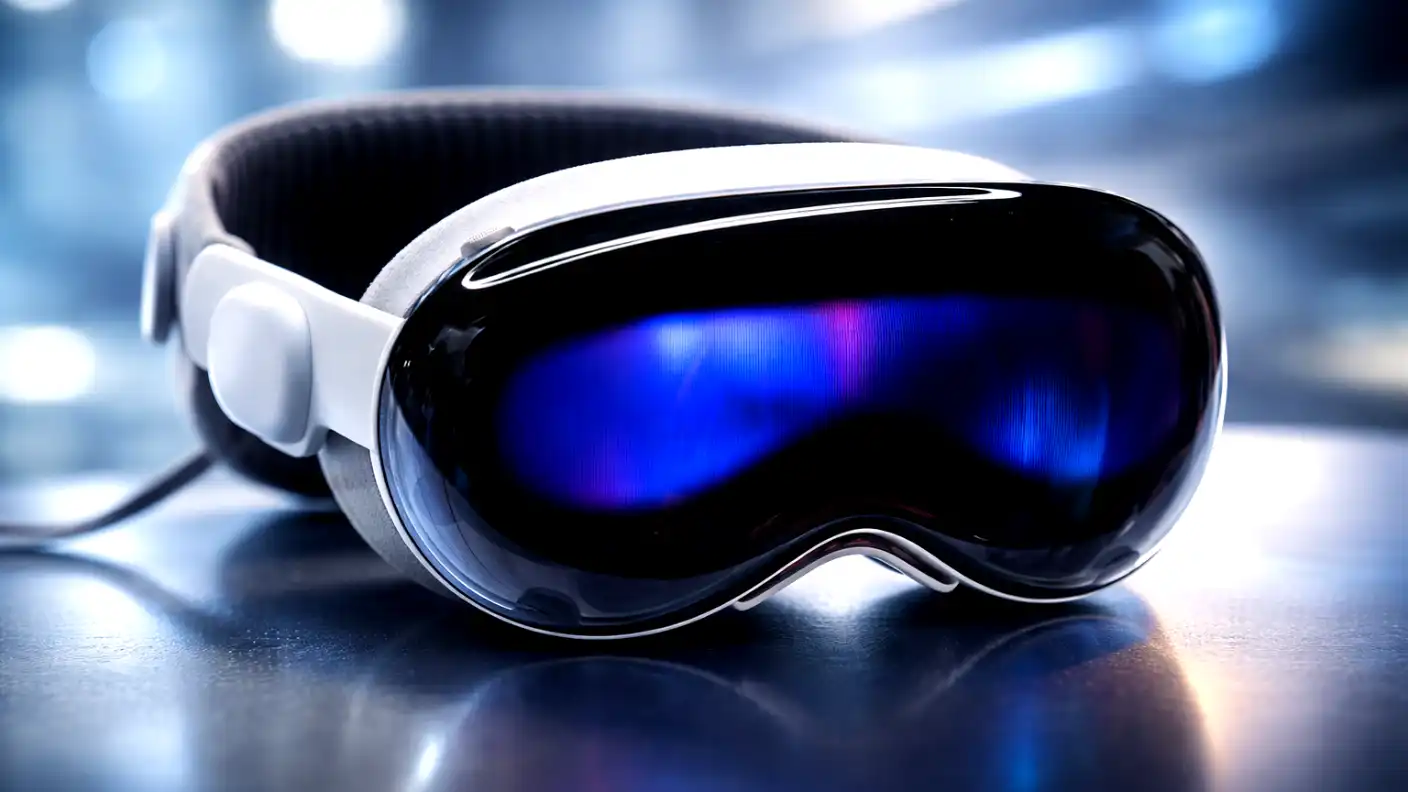
The marketing for the Apple Vision Pro is a masterpiece. It shows a sleek, magical device that seamlessly blends the digital and physical worlds. We see people reliving cherished memories, working in stunning virtual offices, and watching movies on colossal screens visible only to them. It is a vision of a technologically advanced, frictionless future. It is also one of the most terrifying, isolating, and dystopian futures I have ever seen, and it’s being sold to us as the next great leap forward.
A Spectator in Your Own Life
One of the key selling points is the ability to capture and relive “spatial” memories. The ad shows a father at his child’s birthday party, wearing the headset. He is not at the party. He is a one-man film crew, experiencing the moment through a screen so he can capture it perfectly for posterity. Viewing. The children don’t see their father’s eyes; they see a dark ski mask. He has chosen to remove himself from a precious, fleeting human moment and to digitize it perfectly. This isn’t a tool for enhancing memory; it’s a tool for turning your life into content, and turning you into a spectator.
The Horror of the Digital Eyes
Apple knows that wearing a face-computer is inherently isolating. Their solution, called EyeSight, is a masterclass in creepy, uncanny valley technology. It projects a ghostly, low-resolution digital rendering of your eyes onto the front of the headset. It’s a tacit admission that the device creates a barrier, and this is their attempt to poke a hole in it. But it’s not a window; it’s a screen. It’s not a human connection; it’s a digital facsimile. The same goes for the “Personas,” the haunting, AI-generated avatars that represent you on video calls. We are being asked to replace our real faces with digital masks, to interact with AI ghosts instead of people.
The World Becomes Your Wallpaper
The Vision Pro promises to let you work and play anywhere, placing your apps in the world around you. This sounds great, until you realize what it means for your relationship with the world itself. A walk in the park is no longer just a walk in the park; it’s an opportunity to pin a spreadsheet to a tree. A quiet moment on the couch is a chance to have a hundred-foot-tall movie screen block out your living room. It encourages us to treat the real, physical world as a mere background, a wallpaper for our digital lives. It is the ultimate tool for disengaging from your immediate surroundings.
A Solution to a Problem We Don’t Have
For all its technological brilliance, the Vision Pro seems to be a solution designed for a world where we want to be alone. The primary experiences—immersive movies, focused work, reliving memories—are all fundamentally solitary. The iPhone, for all its faults, was primarily a device about connecting us to people who were physically far away. The Vision Pro feels like a device designed to disconnect us from the people who are in the same room. It is the ultimate personal entertainment device, engineered for one person and one person only.
The Lonely Future is Here
The Apple Vision Pro is a technological marvel. There is no question about that. But it is a marvel that points us toward a profoundly lonely future. It is a future where we choose to experience life through a screen, where we interact with digital ghosts instead of real people, and where the world around us is just a canvas for our apps. It is a future where we are more connected than ever to our content, and completely disconnected from each other. It is a beautiful, elegantly designed cage, and we are being asked to weep inside.