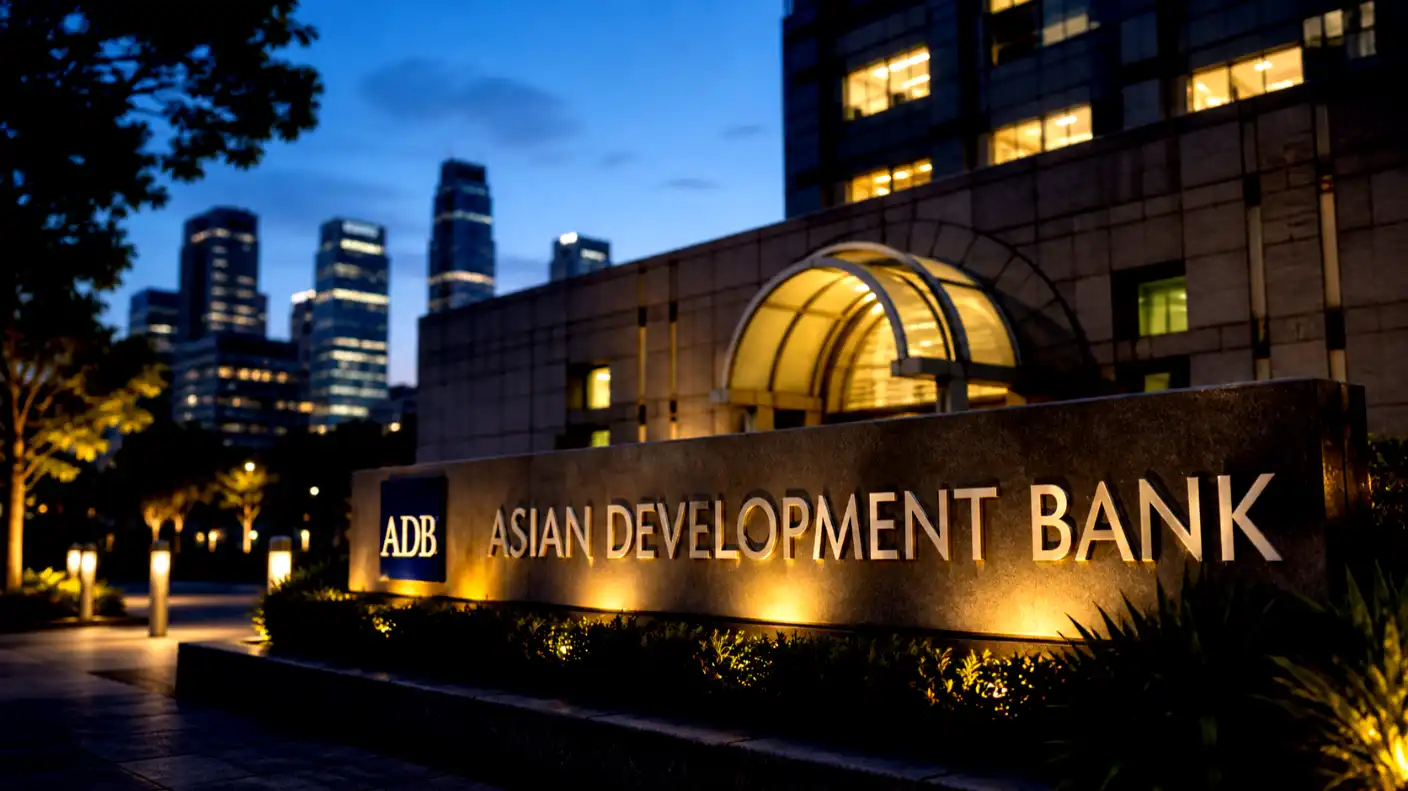
Key Points:
- The Asian Development Bank announced a massive $70 billion infrastructure package to modernize the Asia-Pacific region by 2035.
- The plan dedicates $50 billion to build the Pan-Asia Power Grid Initiative, connecting borders with 22,000 circuit-kilometers of transmission lines.
- Another $20 billion will fund the Asia-Pacific Digital Highway, providing fast broadband access to hundreds of millions of people.
- Bank leaders expect these combined projects to cut regional carbon emissions by 15% and create up to 4 million new jobs.
The Asian Development Bank just revealed a massive $70 billion spending program. The bank wants to completely upgrade the energy and digital infrastructure across the Asia-Pacific region. Officials plan to finish this massive project by the year 2035. The ambitious plan aims to strengthen local power grid links, boost electricity trade between neighboring countries, and dramatically increase high-speed broadband internet access for everyday citizens.
Bank President Masato Kanda announced the new initiative on Sunday. He explained that reliable energy and strong digital connectivity will serve as the absolute foundation for long-term economic growth in the region. He noted that consumer demand rises every day, while technological change happens faster than ever before. Kanda believes the region must act now to keep up with the rest of the world.
Kanda shared his vision through an official statement. He said that linking power grids and digital networks across borders allows countries to lower their operating costs and expand business opportunities. Most importantly, he stressed that this massive financial package will bring reliable electricity and digital access to hundreds of millions of people who currently lack these basic modern necessities.
The massive $70 billion budget splits into two distinct categories. The bank will pour exactly $50 billion into a brand new project called the Pan-Asia Power Grid Initiative. This energy project will address the severe electricity shortages that still plague many rural and developing communities across Asia.
Under this power grid initiative, the Asian Development Bank set some very specific targets. The bank aims to integrate roughly 20 gigawatts of clean, renewable energy across international borders. To move all this new power, construction crews will build 22,000 circuit-kilometers of heavy-duty transmission lines. By 2035, the bank expects these new power lines to significantly improve daily access to electricity for at least 200 million people.
This energy project also tackles the growing problem of climate change. Many Asian nations currently rely heavily on burning dirty coal to keep their cities bright. By sharing renewable energy across borders, countries can turn off their oldest and dirtiest power plants. The bank estimates that this new grid initiative will reduce regional power-sector carbon emissions by around 15%.
Finding $50 billion requires some creative financial partnerships. The Asian Development Bank plans to finance exactly half of the power grid initiative using its own internal resources. To cover the remaining $25 billion, the bank will rely heavily on co-financing agreements. Officials plan to recruit private investment firms and outside financial partners to help cover the massive construction costs.
The second half of the massive program focuses entirely on the internet. The bank will mobilize the remaining $20 billion to build the Asia-Pacific Digital Highway. This technology-focused initiative will directly fund the construction of massive fiber-optic networks and deep subsea communication cables. The money will also support new satellite internet links and massive regional data centers to process digital information locally.
This digital program sets out to change the daily lives of countless families. The bank wants to provide first-time broadband internet access to 200 million people who currently live completely offline. Furthermore, the project will upgrade and improve internet connectivity for another 450 million users by the 2035 deadline.
Better internet access brings massive economic benefits to isolated communities. The bank expects the new digital highway to reduce internet connection costs in remote areas by roughly 40%. When small business owners and students can get online cheaply, local economies grow much faster. Because of this rapid digital expansion, officials estimate the project will create up to 4 million brand-new jobs across the region.
Just like the energy project, the bank will not pay for the entire digital highway alone. Out of the $20 billion total budget, the Asian Development Bank expects to provide exactly $15 billion from its own accounts. Outside partners and private technology companies will need to step up and supply the remaining $5 billion to make the digital dream a reality.
As the Asia-Pacific region continues to grow its population and its economic power, reliable electricity and fast internet will determine which countries succeed. The Asian Development Bank wants to ensure that no community gets left behind in the dark. If workers can lay the cables and build the transmission towers on schedule, the year 2035 will mark a massive turning point for hundreds of millions of people.