Key Points:
- Researchers found that packed polymer chains move forward spontaneously.
- An entropic tug of war propels these molecules like snakes.
- The discovery explains how DNA organizes inside living cells.
- High density makes the chains move much faster than expected.
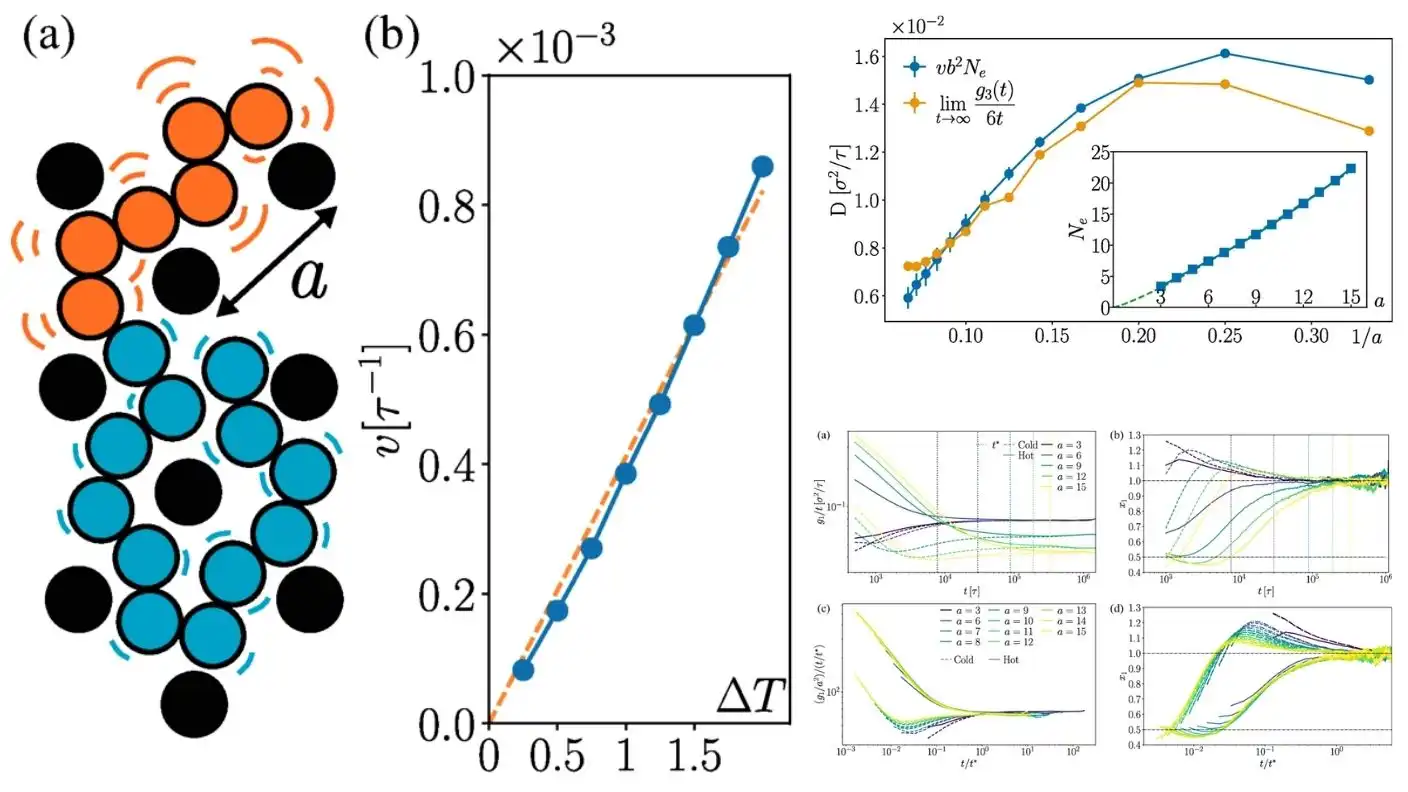
Scientists in Austria just solved a major puzzle about how giant molecules move. Researchers at the University of Vienna discovered that densely packed polymer chains, like DNA, can spontaneously travel in a specific direction. They do this even when no outside force tells them where to go.
Lead author Jan Smrek compares the process to a long chain threaded through a dense forest. If you shake one end of the chain much harder than the other, you might think it would just wiggle in place. Instead, the uneven shaking pushes the entire chain forward through the trees.
The team published their findings recently in Physical Review X. They used computer simulations to prove that this movement happens purely because of physical space limits. Since the chains cannot pass through one another, the parts that vibrate the strongest act like the head of a snake, pulling the rest of the molecule forward. The scientists call this an entropic tug of war.
Density plays a huge role in this process. The study reveals that when you pack the chains tighter, they move even faster. Individual sections of the chain actually travel much quicker than standard random motion would predict.
This discovery directly applies to biology. Inside cell nuclei, DNA and proteins form a complex called chromatin. Cellular tasks like copying genetic code or repairing DNA create highly active, shaking regions along the molecule. The researchers proved that these simple differences in vibration alone can drive the organized movements we see inside living cells.
The breakthrough connects biology with materials science. Smrek points out that the exact same physics rule both natural DNA and synthetic polymers. Engineers can use this new understanding to design futuristic smart materials. Soon, creators might build synthetic materials that spontaneously transport microscopic cargo or automatically heal their own damage.