

Key Points:
- Scientists discovered that salamanders, mice, and zebrafish share specific genes that control limb regeneration.
- More than 1 million limb amputations occur globally every year due to diseases and traumatic injuries.
- Researchers used CRISPR technology to delete the SP8 gene, demonstrating that it is essential for bone regrowth.
- A new experimental viral gene therapy partially restored the regenerative effects in mice missing the crucial SP genes.
A massive scientific breakthrough could eventually help humans regrow lost limbs. Researchers from three different universities teamed up to investigate a common gene shared by salamanders, mice, and zebrafish. By studying how these three very different species regenerate their bodies, the scientists discovered the potential for a brand new gene therapy. They recently published their exciting findings in the Proceedings of the National Academy of Sciences.
The collaboration brought together three distinct laboratories to compare how different organisms heal. Josh Currie, an Assistant Professor of Biology at Wake Forest, led a team that studies the Mexican axolotl, a unique type of salamander. He worked alongside David A. Brown, a plastic surgeon who studies digit regeneration in mice at Duke University. The final member of the team, Kenneth D. Poss, studies how zebrafish regenerate their fins at the University of Wisconsin-Madison.
The medical need for this research is massive. According to annual Global Burden of Disease statistics, more than 1 million limb amputations occur around the world every single year. These amputations usually result from severe vascular diseases like diabetes, traumatic physical injuries, aggressive cancer, or deep infections. Medical experts expect this terrifying number to rise even higher as the global population ages and diabetes diagnoses continue to climb.
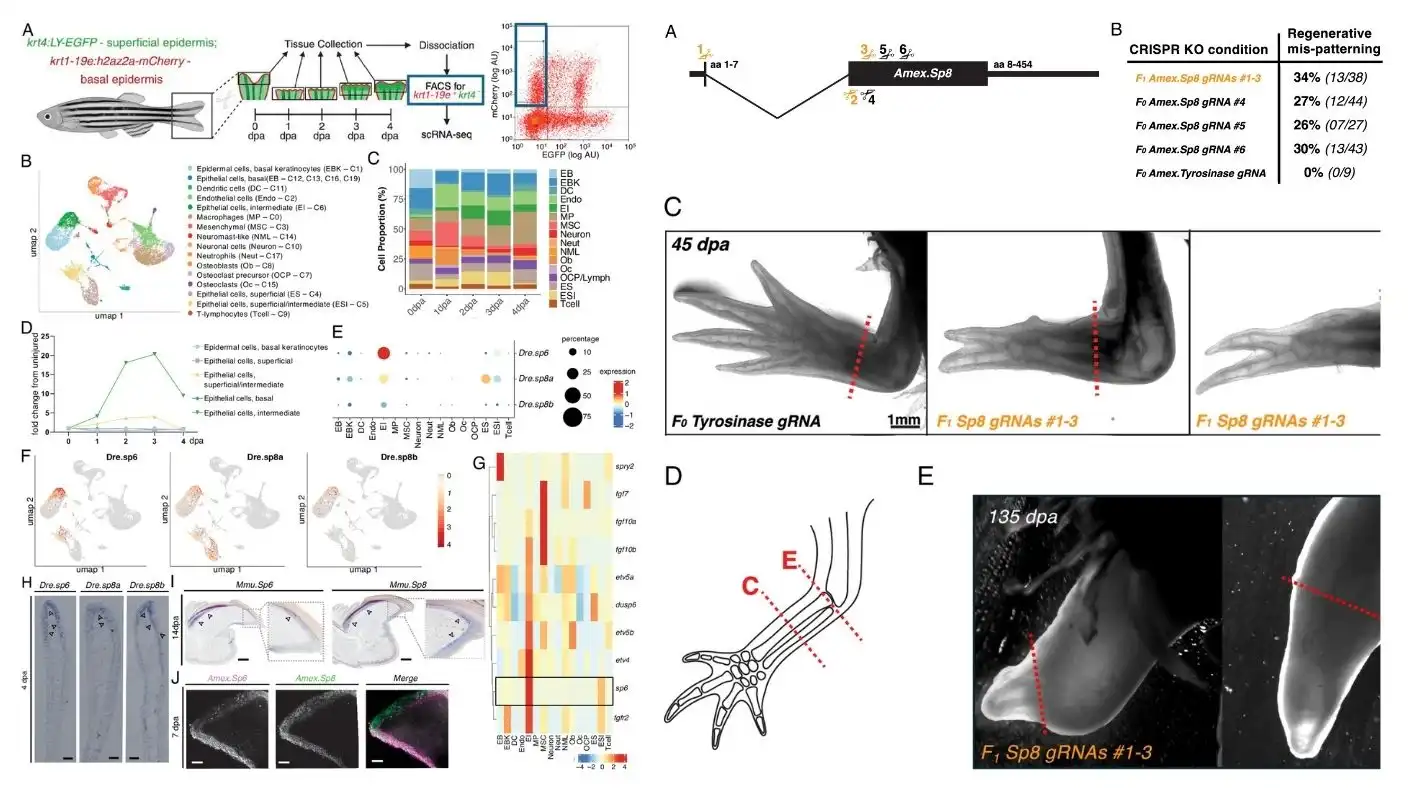
This looming health challenge inspired the three scientists to look far beyond modern prosthetics. They wanted to find a biological treatment that could eventually replace the complex senses and fine motor skills of a real human limb. They found the start of a solution hiding inside something called SP genes. The scientists discovered that the mouse, zebrafish, and axolotl all share these specific genes, which play a vital role in limb regeneration.
The scientists chose to study these three specific animals for very good reasons. The axolotl excels at regeneration, possessing the incredible ability to completely regrow lost limbs, tails, spinal cords, and even parts of its heart and brain. Zebrafish offer another great model because their tail fins regrow rapidly and possess an unlimited capacity for regrowth. Finally, mice represent mammals like humans. They already possess the natural ability to regenerate the very tips of their digits. Humans share this trait, as we can regrow our fingertips if an injury preserves the underlying nail bed.
Once the scientists determined that the regenerating skin of all three species expressed the same SP6 and SP8 genes, they set out to test exactly how these genes work. In salamanders, the SP8 gene does the heavy lifting when regenerating a lost limb. To test this, Currie’s lab used advanced CRISPR gene-editing technology to remove the SP8 gene from the axolotl genome completely. Without that specific gene, the axolotl could not regenerate its limb bones properly. The same failure occurred when the team removed the SP6 and SP8 genes from the mice.
With that critical information in hand, Brown’s lab went to work building a cure. The team used a special tissue-regeneration enhancer originally found in zebrafish to develop a brand-new viral gene therapy. This experimental therapy successfully delivered a secreted molecule, FGF8, directly into the tissue. The SP8 gene usually turns this molecule on naturally. By delivering the molecule artificially, the therapy promoted digit bone regrowth and successfully restored regenerative effects in mice missing the SP genes.
Human limbs obviously do not have that kind of natural regenerative power right now. However, Currie believes they might someday, provided scientists can perfect a therapy that emulates the incredible abilities of these SP genes. He explained that this successful animal trial serves as a powerful proof of principle. It shows that science might be able to deliver specialized therapies to replace this regenerative approach to skin, eventually allowing doctors to regrow complex tissue in humans.
While the results are incredibly promising, Currie admitted that it will require much more research to translate these findings from tiny mouse digits to full human limbs. He called this current study foundational in the long search for therapies to regrow limbs after a devastating injury or disease. Currie noted that the scientific community is currently pursuing various solutions for limb replacement, including bioengineered scaffolds and complex stem cell therapies. He views this new gene-therapy approach as a brand new avenue that will likely complement those other treatments.
Currie believes the decision to collaborate across different animal species made all the difference in this research. He pointed out that scientists often work in completely isolated silos, studying just one animal for their entire career. By breaking down those walls and working across different organisms, the team found a universal genetic program that drives regeneration.
Source: Proceedings of the National Academy of Sciences (2026).






