Key Points:
- China Automotive Technology and Research Center broke ground on a 67-hectare test facility in Inner Mongolia.
- The massive base will open in 2028 and feature an indoor snow-making system for vehicle testing.
- Car companies will use the site to address cold-weather battery drain and performance drops in electric vehicles.
- Chinese manufacturers produced 16.626 million new energy vehicles and sold 16.49 million units in 2025 alone.
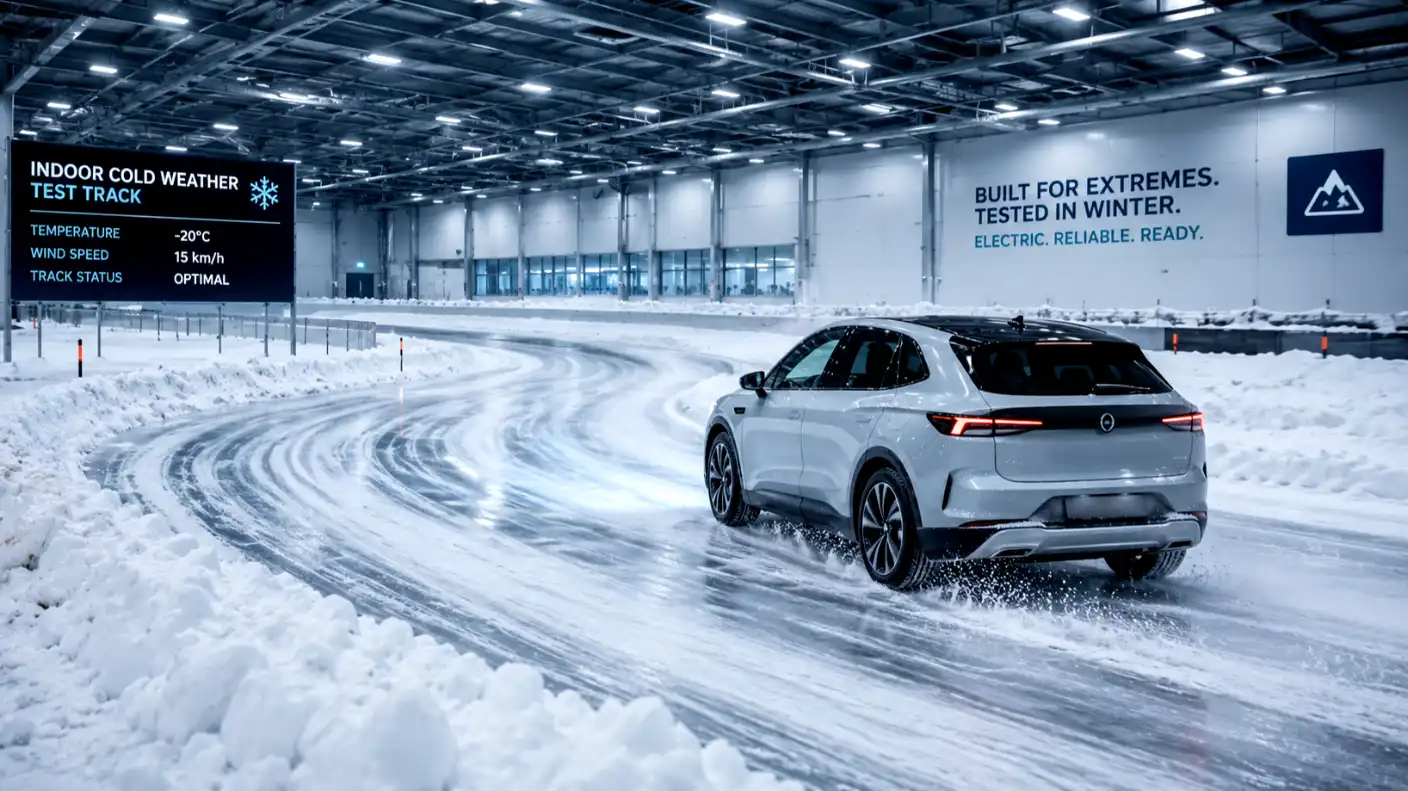
China Automotive Technology and Research Center has just broken ground on a major project in the northern part of the country. The group is building the world’s largest ice and snow test base. They designed this specific site to test intelligent connected new energy vehicles. Planners chose the Inner Mongolia Autonomous Region to host this sprawling new facility due to its naturally cold climate and wide open spaces.
The automotive industry refers to these modern cars as ICNEVs. These machines combine standard electric power with advanced internet connectivity, self-driving features, and smart computer systems. Car companies essentially want to turn traditional sedans and trucks into smart devices on wheels. However, putting these highly advanced computers on the road requires rigorous physical testing in incredibly harsh environments.
The new facility covers 67 hectares of land. Planners expect the front doors to open for business in 2028. When construction is complete, this site will offer something no other test track currently offers. The builders will include a massive indoor space capable of making artificial snow. This unique setup allows engineers to test cars under simulated, perfectly controlled blizzard conditions. Science and Technology Daily first reported these initial project details on Sunday.
Designers split the large base into several specific functional zones. One main area will focus solely on testing the three key electrical components of an electric car. Engineers will run physical tests on the main battery pack, the electric motor, and the electronic control units. They need to see how these critical parts handle freezing temperatures over long periods. Another zone will push traditional chassis systems to their absolute limits on slippery, icy roads.
The facility will also push the boundaries of future transportation ideas. Beyond normal passenger cars, the site includes specific testing grounds for flying cars. Designers want to evaluate how these airborne vehicles operate when snow and ice cover their delicate sensors and spinning rotors. The indoor snow-making zone will allow technicians to simulate specific types of heavy winter weather on demand to see exactly how these flying vehicles react in the air.
Electric vehicles notoriously struggle when the temperature drops. Cold weather drains batteries quickly, reduces driving range, and can cause electronic sensors to glitch or fail. Li Wei serves as the vice president of the research center. He stated that this new project directly attacks the biggest bottleneck in the automotive industry today. Automakers currently struggle to validate how their extreme cold-weather technology actually works in the real world.
Li explained that once builders complete the facility, it will completely change how car companies design winter features. Automakers will no longer have to wait for actual winter to arrive to test their cabin heating and battery warming systems. They can break the constraints of the usual testing cycle and improve industry standards much faster than before. Li believes this world-class platform will give China a massive advantage in extreme-environment vehicle testing.
Local government officials also see big economic opportunities for their region. Wen Jinlei works as the vice mayor of Hulunbuir, the specific city hosting the new test base. Wen pointed out that this large facility will merge the local winter economy with high-end automotive technology. He wants to accelerate the adoption of a new business model that combines snow and ice with tech innovation. This project will bring high-paying engineering and research jobs to a city normally known just for its harsh winters.
The timing of this massive construction aligns perfectly with the booming growth of China’s electric car market. The China Association of Automobile Manufacturers recently released its official sales data for the year 2025. The numbers show a highly profitable industry breaking new records. Chinese automotive factories rolled out 16.626 million new energy vehicles in 2025 alone. During that same year, dealerships sold 16.49 million units to drivers across the country.
These figures represent a massive jump from previous years and show no signs of slowing down anytime soon. Production jumped by 29% compared to the previous year. Total sales grew at a very similar pace, climbing 28.2% year-over-year. As more daily commuters buy these electric cars, automakers face increasing pressure to ensure the vehicles actually work during massive winter storms. Drivers expect their cars to start and drive safely regardless of the temperature outside.
Testing vehicles outside in the real world introduces too many variables to yield strict scientific data. A sunny afternoon might melt the ice on an outdoor test track, or a real blizzard might dump too much snow, completely ruining a very expensive test run. Real weather remains entirely uncontrollable and unpredictable. This new indoor test base solves that weather problem completely.
By moving the snow and ice indoors, automotive engineers gain total control over their testing environment. The research center stated that technicians will precisely control the exact volume of falling snow from the ceiling. They will also adjust the friction levels on icy road surfaces to the exact decimal place. This controlled, indoor environment gives car companies a highly stable, scientific way to test their vehicles, ensuring tomorrow’s electric cars can safely handle the absolute worst winter weather.