
Key Points:
- China’s dominant solar manufacturers have quietly established the China Solar Space Alliance to explore commercial space-based solar power (SBSP).
- A major margin-crushing domestic supply glut and overcapacity of solar panels on Earth prompt the transition to space-based energy.
- Recent breakthroughs by Xidian University’s “Sun Chasing” project successfully transmitted 1,180 watts of wireless power with 20.8% efficiency.
- Operating under China’s “military-civil fusion” policy, the new alliance has kept its corporate members and specific project details highly opaque.
China’s dominant solar panel manufacturers are looking beyond the Earth’s atmosphere to secure their long-term technological leadership. On Tuesday, June 2, 2026, Bloomberg reported that the nation’s top clean energy companies have quietly launched a new corporate coalition under the name of the China Solar Space Alliance. While organizers have released very few specific details regarding the group’s legal structure, budget, or direct corporate members, industry analysts view the move as a major step toward commercializing space-based solar power (SBSP) systems. This strategic pivot occurs as Chinese solar manufacturers face an intense, margin-crushing supply glut on Earth, forcing them to explore highly speculative new frontiers in low Earth and geostationary orbits.
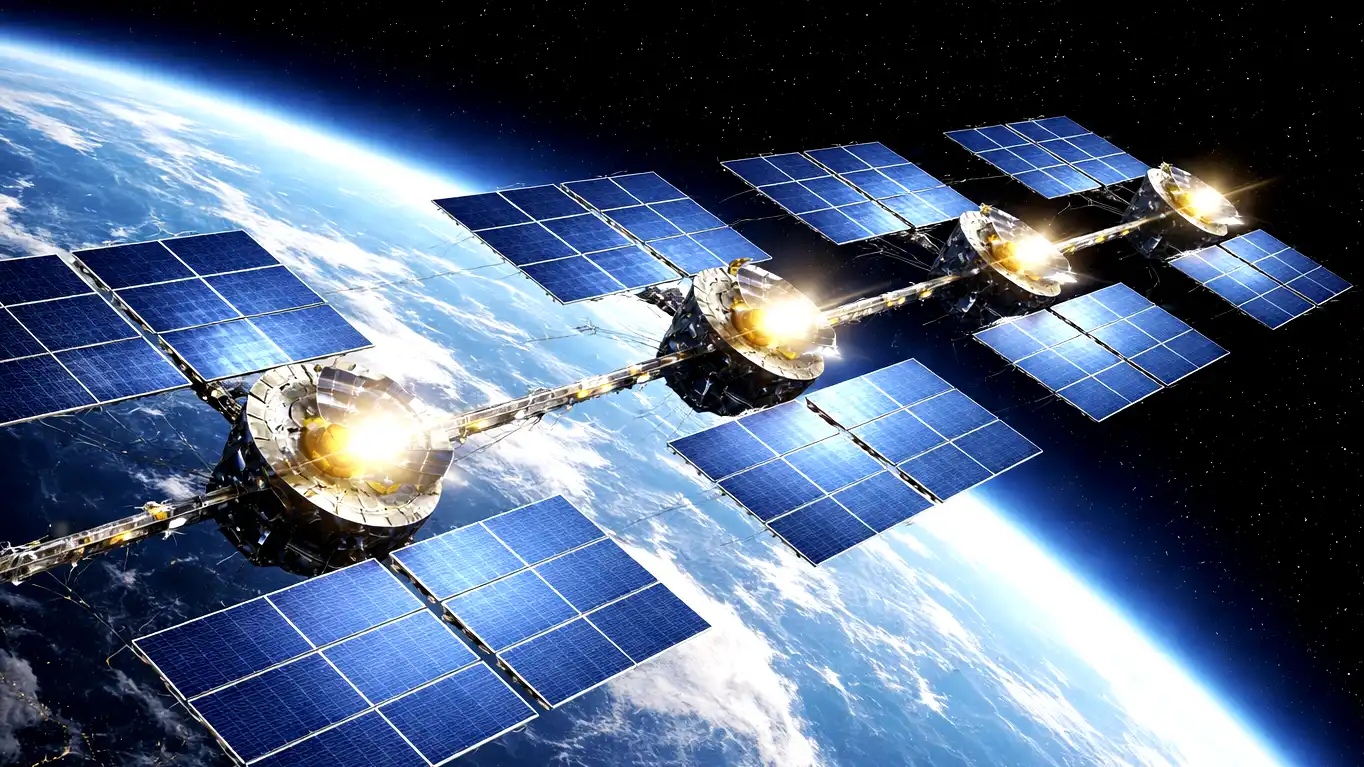
The physical and economic logic of space-based solar power has fascinated scientists for more than five decades, but technology is finally catching up to the theory. Unlike terrestrial solar panels, which suffer from day-night cycles, cloud cover, and atmospheric interference, solar arrays in geostationary orbit can harvest sunlight constantly. At an altitude of roughly 36,000 kilometers above Earth’s surface, space-bound panels can operate with up to 10 times greater energy efficiency than ground-based systems. Once collected, these orbital satellites convert solar energy into microwave radiation or laser beams, sending a continuous stream of clean power down to receiving stations on Earth or directly to active spacecraft.
This secretive corporate alliance follows a series of major, real-world technological breakthroughs in wireless energy transmission. In mid-May 2026, researchers at Xidian University in Shaanxi Province achieved a landmark milestone under the “Sun Chasing” (Zhuri) project, led by senior engineer and academician Duan Baoyan. The research team successfully built and tested a ground-based wireless power transmission system capable of beaming kilowatt-level energy to multiple moving targets simultaneously. During the live tests, the system achieved a direct-current-to-direct-current wireless transmission efficiency of 20.8% over a distance of 100 meters, delivering 1,180 watts of stable power.
The Xidian University team also demonstrated the practical military and commercial applications of this wireless energy technology. In a separate test, the researchers used a circular active phased-array antenna measuring 1.2 meters in diameter to beam microwave power to an active drone flying at 30 kilometers per hour. The drone successfully received 143 watts of stable, continuous power from a distance of 30 meters, demonstrating that precise beam steering and control can overcome relative motion. This breakthrough represents a critical step toward wirelessly powering low-altitude logistics drones, military surveillance craft, and orbital satellite networks.
This sudden interest in space-bound technology is occurring as China’s terrestrial solar industry suffers from severe, self-inflicted economic pain. Over the past three years, massive overcapacity and intense local price wars have crashed solar panel prices to record lows, wiping out profit margins for the country’s top manufacturers. Despite these financial losses, the overall pace of clean energy investment remains highly aggressive. While these highly speculative outer-space pilot projects currently account for less than 1.5% of the industry’s total research and development spend, the long-term potential of orbital energy capture has captivated corporate strategists, allowing these manufacturing giants—who currently produce over 80% of the world’s solar panels—to repurpose their immense budgets toward building a highly premium, un-commoditized market.
However, establishing a functional, kilometer-wide solar array in space presents truly monumental logistical and financial hurdles. The single biggest obstacle facing space-based solar power has always been, and remains, the astronomical cost of rocket launches. To construct a solar power satellite of this scale, space agencies must transport tens of thousands of tons of structural materials and delicate silicon wafers into geostationary orbit. While Chinese private launch companies are rapidly developing reusable, liquid-methane rockets to cut launch costs, many engineers argue that a true space-based energy economy will eventually require in-space manufacturing using raw materials mined from the Moon.
The complete lack of specific details surrounding the China Solar Space Alliance aligns with Beijing’s broader “military-civil fusion” industrial policy. Under this national strategy, the Chinese government actively encourages private technology firms and state-owned military enterprises to share research, patents, and manufacturing capabilities. Because space-based solar power relies on high-power microwave beaming—a technology that can easily double as a potent directed-energy weapon to disable enemy satellites—the program carries massive national security implications. This dual-use capability explains why the alliance is operating in a highly opaque manner, keeping its exact membership and technical roadmaps secret.
This secretive Chinese alliance will also likely intensify the growing geopolitical technology race with the United States. During recent congressional hearings in Washington, NASA’s newly appointed leadership warned that America risks falling permanently behind if it fails to beat China to key lunar and orbital milestones. While NASA continues to assemble a coalition of international partners under the Artemis program, China is co-leading its own space alliance to establish a long-term presence on the Moon and to establish space-based energy grids. If Beijing successfully deploys the first operational space solar satellite, it will secure a massive strategic and public relations victory over the West.
Ultimately, the launch of the China Solar Space Alliance marks a bold, highly speculative new chapter for the global renewable energy transition. By attempting to bridge the gap between terrestrial solar manufacturing and orbital aerospace engineering, Chinese tech giants are proving that they are willing to bet on the next frontier of energy security. While the technical and financial hurdles of space-based solar power remain incredibly steep, the rapid progress of the Sun Chasing project shows that the technology is steadily moving from science fiction into physical reality. As the global energy war continues to shift from Earth’s oil fields to orbital pathways, the alliance’s secretive efforts will likely define who controls the ultimate energy high ground of the 21st century.