Key Points:
- The Tianzhou-9 cargo spacecraft safely re-entered the atmosphere at exactly 7:49 a.m. Beijing Time on Thursday.
- Flight controllers guided the falling ship so all surviving debris splashed down into a remote, designated ocean zone.
- Ground crews originally launched the supply vessel from the coastal Wenchang facility on July 15, 2025.
- The ship delivered more than 7 tons of food, fuel, and science tools to astronauts before becoming a disposal unit.
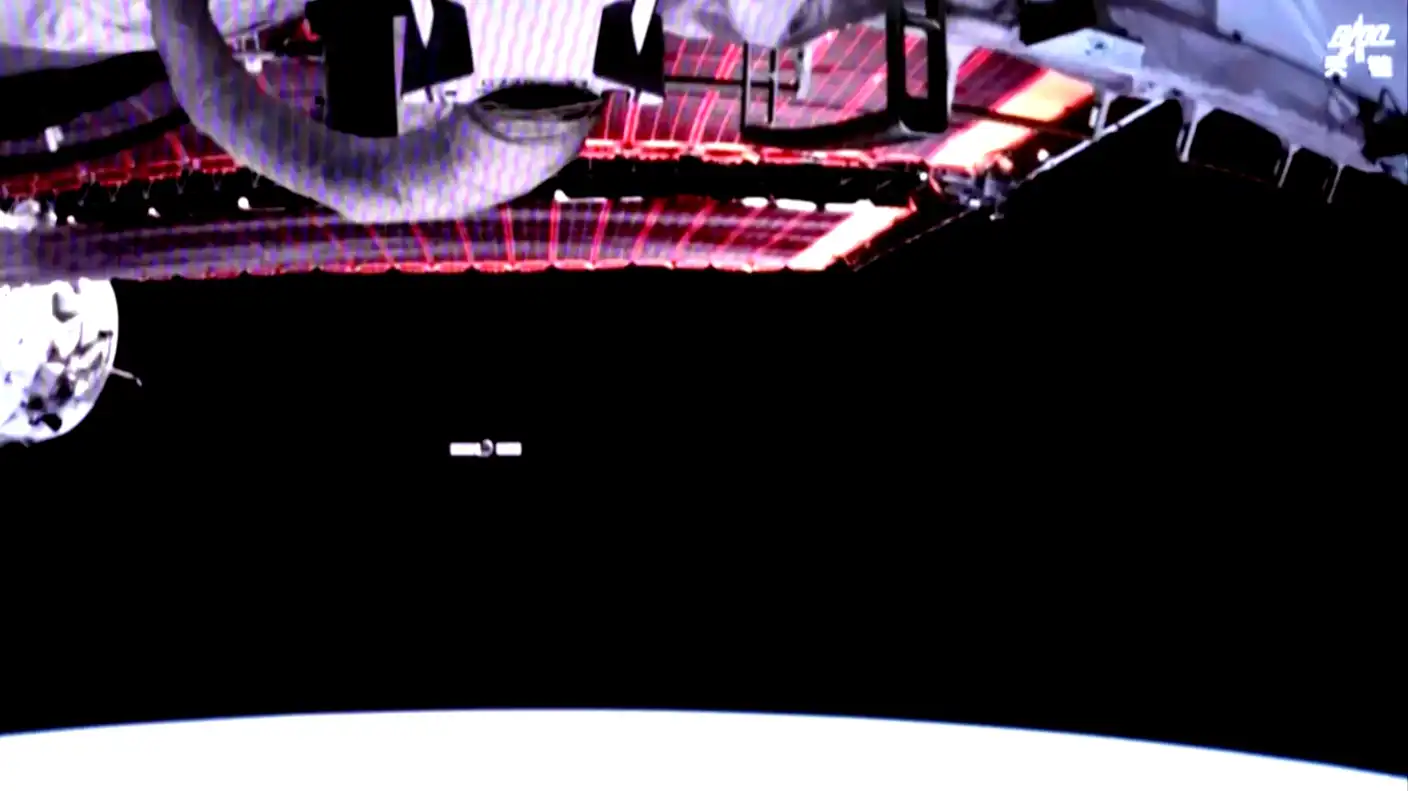
The China Manned Space Agency successfully guided the Tianzhou-9 cargo spacecraft back to Earth on Thursday morning. Flight controllers executed a precise, controlled re-entry maneuver that brought the massive supply ship safely through the upper atmosphere at exactly 7:49 a.m. Beijing Time. This final fiery plunge marked the complete success of a vital supply mission for the permanent Chinese orbital outpost.
As the spacecraft entered the thick atmosphere at more than 17,000 miles per hour, friction generated intense heat. This extreme temperature burned up roughly 95% of the vehicle structure. Only a small amount of heavy metal debris survived the violent descent. The flight dynamics team plotted the trajectory perfectly, ensuring these final surviving pieces splashed down into a remote, designated safe zone in the open ocean. This deliberate targeting protects populated areas and shipping lanes from falling hazards.
The life cycle of Tianzhou-9 started many months prior. Ground crews launched the heavy supply ship on July 15, 2025. The rocket lifted off from the modern Wenchang Spacecraft Launch Site, located on the shores of the southern island province of Hainan. The coastal location allows rockets to drop their empty booster stages harmlessly into the sea rather than over inland villages.
Shortly after reaching orbit, the cargo vessel chased down the massive China Space Station. It performed a complex, automated docking sequence and locked firmly onto the primary module. This flawless connection established a vital lifeline for the crew living and working 250 miles above the planet’s surface.
The Tianzhou series operates as a heavy-duty delivery fleet. This specific spacecraft carried more than 7 metric tons of essential supplies to keep the astronauts healthy and productive. The dense payload included critical daily consumables. The crew unpacked hundreds of gallons of fresh drinking water, months’ worth of specialized space food, and clean clothing to last their entire orbital shift.
Human necessities only made up part of the manifest. The ship also transported heavy propellant tanks. The space station uses this chemical fuel to fire its thrusters and push itself back up into a higher orbit when atmospheric drag slows it down. Without these regular fuel deliveries, the entire station would eventually fall back to Earth.
Furthermore, the cargo hold contained delicate application experiment equipment. The Chinese space program heavily emphasizes zero-gravity research. The astronauts used these newly delivered tools to run scientific tests in biology, physics, and material sciences. Many of these experiments simply cannot take place in standard laboratories on the ground.
After the astronauts emptied the cargo hold, Tianzhou-9 took on a new and equally important role. The empty aluminum hull became the primary garbage can for the space station. Over several months, the crew filled the vehicle with daily trash, broken components, used clothing, and human waste. They packed the module tightly to maximize the space.
When the ground team decided to end the mission, the astronauts closed the heavy hatches. The space station released its mechanical grip, and Tianzhou-9 slowly backed away into the dark. A few days later, the ship fired its own engines to slow its orbital speed. This braking maneuver dropped the vehicle out of orbit, turning it into a high-speed incinerator that safely destroyed months of station waste.
Managing orbital waste represents a major priority for modern space programs. If agencies simply disconnected empty supply ships and left them floating, low Earth orbit would quickly become a dangerous junkyard. Dead spacecraft can collide with active satellites, creating massive fields of hazardous debris. By actively driving the Tianzhou-9 back into the atmosphere, China keeps the orbital pathways clear and safe for everyone.
The permanent occupation of the China Space Station demands a relentless logistical supply chain. Because the agency keeps a crew of 3 to 6 astronauts in space 365 days a year, it relies entirely on the Tianzhou program to survive. With the Tianzhou-9 mission finished, engineers and launch crews already look toward the next flight. The space agency will soon roll out the next cargo ship to keep the orbital pantry full.