

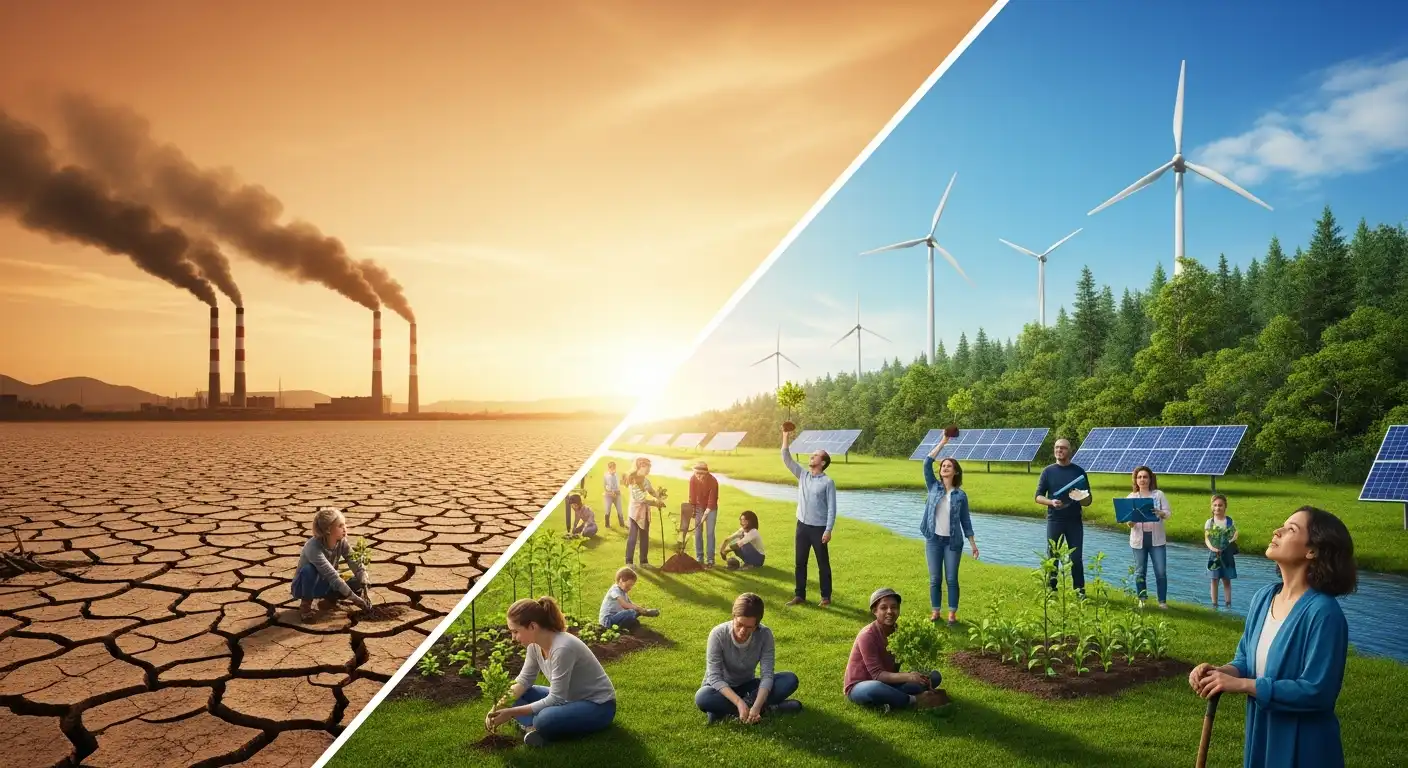
For decades, we treated the health of our planet as an optional luxury. We built factories, grew our economies, and consumed massive amounts of energy while hoping someone else would clean up the mess later. We treated carbon emissions like a free waste product. That age of ignorance has officially ended. We now live in a world where the planet’s physical limits dictate the rules of business. Every major corporation, every government, and every startup now operates inside a policy-driven economy. In this new world, climate technology is not just a moral choice; it is the absolute foundation of future growth. Policies that once felt like suggestions have become the iron laws of global trade.
The End of Cheap and Dirty Energy
We spent a century addicted to cheap, dirty coal and oil because nobody made us pay for the damage they caused. The math has finally changed. Governments across the globe now impose heavy carbon taxes on companies that emit greenhouse gases into the air. This creates a powerful new incentive for business leaders. If your factory runs on dirty fuel, your product becomes too expensive to sell. If you switch to solar, wind, or green hydrogen, the government hands you a massive tax break. We essentially forced the global market to put a price on the air we breathe. This simple, brilliant policy shift triggers a massive wave of innovation, pushing every industry toward clean, renewable sources.
Regulations That Demand Perfection
We see a rapid rise in strict environmental mandates. In the past, companies simply promised to “do better” regarding their waste. Today, we demand proof. New laws require major corporations to report every ton of carbon they emit across their entire supply chains. They cannot hide behind subcontractors or messy accounting anymore. This radical transparency creates a huge demand for climate tech. Businesses now buy specialized sensors and satellite-tracking software to map their environmental footprint in real time. They use these tools to prove compliance with regulators. We turned environmental responsibility from a vague marketing slogan into a hard, measurable data requirement.
Rewriting the Rules of Finance
Money sits at the center of this transition. For years, investors blindly poured cash into any project that promised a quick profit, even if that project destroyed a forest or polluted a river. Now, the global financial system demands “ESG” reporting, which stands for Environmental, Social, and Governance. A startup that wants to raise money today must prove it contributes to a greener future. If your business model relies on polluting the atmosphere, you will find no bank willing to lend you cash. Capital now flows only toward businesses that can prove their long-term resilience in a warming world. We harnessed the power of the global stock market to fight for the survival of the planet.
Scaling Up the Green Laboratory
A clever idea for a solar battery in a basement does absolutely nothing to cool the planet. To make a real difference, a green technology must scale to serve millions of people. Policy-driven economies help this process by funding the “valley of death”—the dangerous period where a startup has a working prototype but lacks the money to build a factory. Governments now provide massive grants, low-interest loans, and specialized research facilities to green tech firms. They treat climate innovation as a national security priority. By lowering the financial risk for inventors, we see a flood of new inventions hitting the market every single month.
The Global Battle Over Green Minerals
This transition creates a brand new, high-stakes competition. Electric cars, advanced solar panels, and wind turbines require massive amounts of rare earth minerals like lithium, cobalt, and nickel. We currently face a global scramble to secure these materials. Nations that control these resources suddenly find themselves in a position of massive power. We see a new kind of “green geopolitics” emerge. Responsible policy must ensure that we mine these minerals without destroying local communities or fueling new wars. We must balance our hunger for green energy with a deep commitment to human rights and land protection in the places where we extract these vital resources.
Building Cities That Fight Back
We traditionally designed our cities to be massive heat traps, covered in black asphalt that soaks up the summer sun. Climate policy now forces urban planners to use “cool” technologies. We see new building codes that mandate white, reflective roofs and green, plant-covered facades. We see mandates for “sponge city” designs that capture floodwater rather than letting it wreak havoc on our streets. Smart software now manages energy use across entire districts, ensuring we never waste a single watt of power. We are essentially retrofitting the entire human experience to live in harmony with the local climate rather than fighting it.
The Circular Economy as the New Standard
We finally realize that the old “take, make, waste” model is physically impossible on a finite planet. Policies now require companies to own their products even after the customers finish using them. This is the “circular economy.” If a company makes a smartphone, they are legally responsible for recycling it when the user throws it away. This regulation creates a massive boom for the climate tech sector. Startups now invent machines that can automatically rip apart old electronics to harvest the gold, silver, and rare earth metals inside. We move from a world of toxic waste to a world of endless material recovery.
Turning Farming into a Carbon Sink
Agriculture has always been a major source of carbon, but policy now positions it as our biggest solution. Governments pay farmers to adopt “regenerative” practices that store massive amounts of carbon in the dirt itself. We use satellite imagery and soil sensors to measure exactly how much carbon a farm captures. Farmers receive credits for this carbon storage, which they can sell to polluting companies on a regulated market. We turned the simple, ancient act of growing food into a high-tech tool for healing the atmosphere. Farmers are no longer just food producers; they are the planet’s primary carbon janitors.
Investing in Human Adaptation
We must admit that we have already changed the climate too much. Even if we stopped emissions today, we would still face storms, droughts, and heatwaves. Policy must focus on both mitigation—stopping the damage—and adaptation—surviving the new reality. We see massive public investment in climate tech that helps us adapt. We build advanced seawalls, develop heat-resistant crop varieties, and design buildings that withstand extreme weather. We cannot ignore the fact that the planet is changing. We must invest in the tools that protect our homes and our families from the unpredictable weather of the next few decades.
Conclusion
The policy-driven economy creates a hard reality for business, but it also creates our only path to survival. We successfully linked the health of the global markets to that of the natural world. By taxing pollution, rewarding clean energy, and mandating transparency, we forced the global economy to work for the planet instead of against it. The green transition is no longer a dream for the future; it is the daily operational reality of every successful business on Earth. If we continue to strengthen these policies, we will not just save our current standard of living; we will build a stronger, cleaner, and more resilient future for everyone.






