In the hyper-connected global ecosystem, our world runs on a constant, invisible torrent of data. Every financial transaction, every confidential business plan, every whispered conversation over a messaging app, every command sent to a smart factory or a power grid—all of it is data in motion. This data is the lifeblood of our modern economy, the engine of innovation, and the very fabric of our digital lives. But this total reliance has also created an unprecedented landscape of vulnerability. In a world where our most valuable assets are intangible streams of ones and zeros, the question of trust becomes the single most critical challenge we face. How do we ensure that our communications are private? Is our data authentic? Does our digital world have integrity?
The answer to these existential questions is not found in a piece of hardware or a single software program. It is found in a silent, ancient, and profoundly powerful branch of mathematics: cryptography. For centuries, cryptography was the arcane art of spies and generals, used to conceal secret messages. Today, it has become the invisible, load-bearing foundation of our entire digital civilization. As we navigate the complexities, cryptography itself is undergoing a revolution, a once-in-a-generation paradigm shift driven by the looming specter of quantum computing, the insatiable demand for data privacy, and the rise of a decentralized internet. This is no longer just about stronger locks; it is a fundamental re-architecting of trust itself. This definitive guide will explore the sophisticated threats driving this evolution and provide a roadmap to the new cryptographic arsenal that will secure our global communications today and beyond.
The Fading Fortress: Why Yesterday’s Cryptography is Insufficient for Tomorrow’s Threats
To understand the urgent need for a new cryptographic paradigm, we must first acknowledge the cracks in the foundations of our current digital security. The cryptographic standards that have served us well for the last three decades were designed for a simpler, less hostile, and less data-intensive internet. They were brilliant in their time, but they are now being pushed to their breaking point.
The Legacy of Public Key Infrastructure (PKI) and Its Cracks
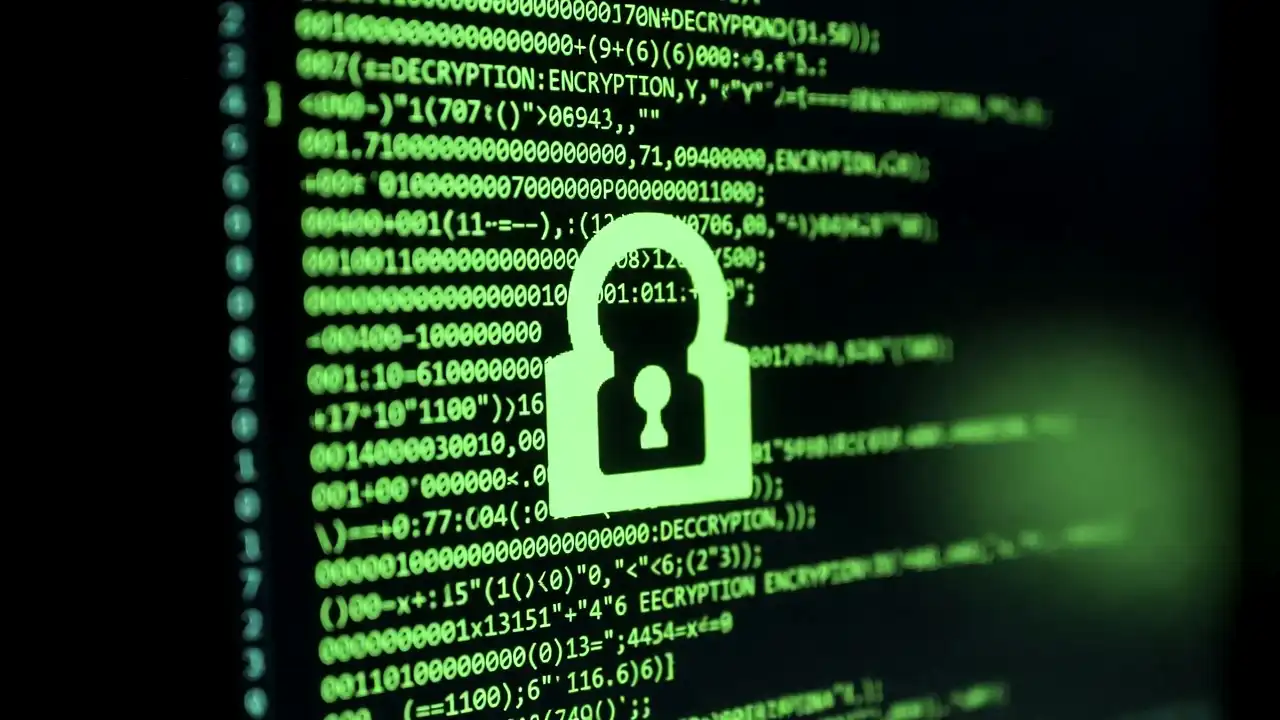
The modern internet as we know it was built on the revolutionary invention of public-key cryptography, most notably the RSA algorithm. This created the Public Key Infrastructure (PKI) that underpins nearly every secure transaction online, from the “lock icon” in your web browser (TLS/SSL) to secure email and digital signatures. It was a masterpiece of ingenuity.
However, this legacy system, for all its success, has inherent architectural and mathematical vulnerabilities that are becoming increasingly problematic. These vulnerabilities are both structural and existential.
- Centralization of Trust: Traditional PKI relies on a hierarchical system of trusted third parties called Certificate Authorities (CAs). A compromise of a single, major CA could allow an attacker to impersonate any website on the internet, a catastrophic single point of failure.
- The Mathematical Achilles’ Heel: The security of RSA and Elliptic Curve Cryptography (ECC), the two dominant public-key algorithms, relies on the mathematical difficulty of two specific problems: factoring very large numbers and calculating discrete logarithms. For classical computers, these problems are practically impossible to solve. For a future quantum computer, they are trivial.
The Relentless Assault on Encryption
Beyond these foundational issues, the practical implementation of cryptography is under constant assault from a growing army of sophisticated adversaries. The threat is not static; it is a dynamic, ever-escalating arms race between code makers and code breakers.
The attacker’s toolkit is evolving rapidly, leveraging new techniques to bypass or weaken cryptographic protections. Nation-state actors and organized criminal syndicates now have resources once unimaginable.
- Side-Channel Attacks: These clever attacks don’t try to break the cryptographic algorithm itself, but instead exploit information leaked from its physical implementation. By monitoring a device’s power consumption, electromagnetic emissions, or even its sound, an attacker can extract the secret cryptographic keys.
- Implementation Flaws: The cryptographic algorithms themselves may be strong, but a single bug in the software code that uses them can create a fatal vulnerability. The Heartbleed bug in the OpenSSL library was a catastrophic example of this.
- The Scale of Brute-Force Attacks: With the power of cloud computing and specialized hardware, attackers can now bring massive computational power to bear, making older, shorter cryptographic keys increasingly vulnerable to brute-force guessing attacks.
The Data Privacy Reckoning: A New Set of Demands
The final pressure point on legacy cryptography is a profound shift in societal expectations and legal requirements around data privacy. A wave of global legislation, led by Europe’s GDPR, has fundamentally changed the rules. It is no longer enough to simply protect data from outside attackers while it’s in transit or at rest.
The new mandate is to protect the privacy of data even while it is being analyzed and used. This requires a new class of cryptographic techniques that go far beyond simple encryption.
- The Need for Secure Computation: How can two or more parties collaborate on a sensitive dataset without revealing their individual data to each other? How can a company run analytics on an encrypted database without ever decrypting it? Legacy cryptography had no answer for these questions.
- Data Minimization: Privacy regulations mandate the principle of “data minimization”—collecting and disclosing only the minimum necessary information for a given transaction. Traditional authentication systems, which often require you to reveal your entire identity to prove a single fact (like your age), are in direct violation of this principle.
The Quantum Precipice: The Most Profound Threat to Modern Cryptography
Of all the challenges facing our digital security, one stands out for its potential to cause systemic, catastrophic disruption. This is the threat posed by the development of large-scale, fault-tolerant quantum computers. While these machines promise to revolutionize fields like medicine and materials science, they also represent an existential threat to the public-key cryptography that underpins our entire digital world.
Understanding the Quantum Threat: Shor’s Algorithm
The danger comes from a specific quantum algorithm developed by mathematician Peter Shor in 1994. Shor’s Algorithm is a set of instructions for a quantum computer specifically designed to solve the exact mathematical problems that underpin our current public-key cryptography.
For a sufficiently powerful quantum computer, breaking our most widely used encryption would take only hours, not millennia. This event, often referred to as “Q-Day,” would be an extinction-level event for digital security as we know it.
- What it Breaks: Shor’s algorithm would completely break all widely used asymmetric (public-key) cryptosystems, including RSA and ECC. This would compromise:
- The security of virtually all websites (HTTPS).
- The integrity of all digital signatures used for software updates and legal documents.
- The security of most cryptocurrencies and blockchain technologies.
- What it Doesn’t Break: It is important to note that the quantum threat is primarily to asymmetric cryptography. Symmetric algorithms (such as AES-256), which use the same key for both encryption and decryption, are considered much more resistant. While a quantum computer would effectively halve the key strength (making AES-256 as strong as AES-128), this can be easily mitigated by simply doubling the key length.
The “Harvest Now, Decrypt Later” (HNDL) Menace
The threat of quantum computing is not a distant, future problem. It is an active and urgent threat today. This is due to a simple and terrifying strategy being employed by sophisticated nation-state adversaries known as “Harvest Now, Decrypt Later” (HNDL).
The HNDL strategy makes the quantum threat a present-day data security crisis. This means that any sensitive data with a long shelf life is already at risk.
- The Strategy: Adversaries are actively intercepting and storing massive volumes of encrypted data from governments, corporations, and individuals. This data is currently secure. However, they are stockpiling it with the expectation that in the near future, they will possess a quantum computer capable of decrypting this entire historical archive.
- The Data at Risk: Think of any data that needs to remain secret for more than 5-10 years: national security secrets, intellectual property and trade secrets, sensitive financial records, healthcare data, and private communications. All of this is being harvested today for a future decryption bonanza.
The Timeline to “Q-Day”
Predicting the exact arrival of a cryptographically relevant quantum computer is difficult, but the scientific community consensus is that the risk is now within a 10-20-year window, possibly sooner. Critically, transitioning the entire global IT ecosystem to new, quantum-resistant standards will take at least a decade. Therefore, the migration must begin now. The transition to quantum-resistant cryptography will no longer be an academic exercise; it will be an active, urgent strategic priority for governments and major enterprises.
The New Cryptographic Arsenal: Quantum-Resistant Solutions for a New Era
In response to the quantum threat, the global cryptographic community has been engaged in a massive, multi-year effort to develop and standardize a new generation of public-key algorithms that are resistant to attack by both classical and quantum computers. This is the dawn of the post-quantum era.
Post-Quantum Cryptography (PQC): The Pragmatic Defender
Post-Quantum Cryptography (PQC) is the primary line of defense. It is important to understand that PQC does not require a quantum computer to run. It consists of a new set of classical cryptographic algorithms based on different mathematical problems that are believed to be hard for both classical and quantum computers to solve.
The standardization process for PQC is well underway, and organizations are actively beginning their migration. This is the mainstream, software-based solution for the quantum threat.
- The NIST Competition: The U.S. National Institute of Standards and Technology (NIST) has been running a multi-year, global competition to select and standardize the best PQC algorithms. In 2022, they announced the first set of standardized algorithms, with more to follow.
- The New Mathematics of Security: These new algorithms are based on a variety of complex mathematical problems, such as:
- Lattice-based cryptography: Based on the difficulty of finding the shortest vector in a high-dimensional geometric lattice.
- Code-based cryptography: Based on the difficulty of decoding a random linear code.
- Hash-based cryptography: Based on the security of cryptographic hash functions.
Quantum Key Distribution (QKD): The Physics-Based Fortress
While PQC is a mathematical defense, Quantum Key Distribution (QKD) offers a defense grounded in the laws of physics. QKD is a technology that uses the principles of quantum mechanics to enable two parties to generate and share a secret cryptographic key in a provably secure manner.
QKD is not a replacement for PQC, but a complementary technology for specific, ultra-high-security use cases. It provides a physically unhackable method for key exchange, but not for data encryption itself.
- How it Works: QKD systems transmit a secret key by encoding it onto individual photons. According to the principles of quantum mechanics, the very act of an eavesdropper trying to intercept and measure these photons will disturb their quantum state, which the legitimate parties can instantly detect.
- Strengths and Weaknesses: QKD’s main strength is its perfect forward secrecy, based on physical principles. Its weaknesses are that it requires specialized, expensive hardware (lasers, photon detectors) and is currently limited by distance and the need for direct line-of-sight (or a dedicated fiber-optic cable), making satellite-based QKD a key area of research for global coverage.
The Imperative of Crypto-Agility
The transition from our current algorithms to PQC will be one of the most significant and complex global IT migrations in history. The single most important strategic principle for any organization navigating this transition is “crypto-agility.”
Crypto-agility is the ability of an IT system to be rapidly and easily updated to support new cryptographic algorithms without a major architectural overhaul. Organizations that fail to build for crypto-agility will face a massive and costly technical debt crisis.
- The Problem of Hard-Coding: Many legacy systems have specific cryptographic algorithms (like RSA-2048) hard-coded directly into their software and even their hardware. Replacing these will be incredibly difficult and expensive.
- The Solution: Modern systems must be designed with a cryptographic abstraction layer. This allows the specific algorithms to be treated as “pluggable” modules that can be swapped out as new standards emerge or vulnerabilities are discovered in existing ones.
The Privacy Revolution: Cryptography Beyond Simple Confidentiality
While the quantum threat is forcing a generational upgrade in our tools for confidentiality, the global demand for data privacy is driving the development of a completely new class of cryptographic techniques. These are often called Privacy-Enhancing Technologies (PETs), and they enable us to perform magical feats with data while preserving privacy.
Homomorphic Encryption (HE): The Holy Grail of Secure Computation
For decades, the idea of performing computations on encrypted data without ever decrypting it was a theoretical dream. Homomorphic Encryption (HE) makes this dream a reality. It allows a third party (such as a cloud provider) to process and analyze data while it remains encrypted.
HE is moving from the research lab to practical, real-world applications. While still computationally intensive, it is becoming viable for specific, high-value use cases.
- How it Works: HE uses a complex mathematical structure (based on lattices) that allows for mathematical operations (like addition and multiplication) to be performed on the encrypted data (ciphertext), such that the result, when decrypted, is the same as if the operations had been performed on the original plaintext.
- Killer Use Cases:
- Secure Cloud Computing: A company can outsource its data processing to the cloud without ever having to trust the cloud provider with its sensitive, unencrypted data.
- Collaborative Medical Research: Multiple hospitals could pool their encrypted patient data to train a machine learning model to detect cancer, without any single hospital ever having to reveal its actual patient records.
Zero-Knowledge Proofs (ZKPs): Proving Without Revealing
A Zero-Knowledge Proof is a cryptographic protocol that allows one party (the prover) to prove to another party (the verifier) that they know a piece of information without revealing it. It is a profoundly powerful concept for privacy.
ZKPs are the cryptographic engine behind the Self-Sovereign Identity (SSI) revolution and are a key technology in the Web3 ecosystem. They are the key to achieving true data minimization.
- The Analogy: The classic analogy is proving you know the solution to a “Where’s Waldo?” puzzle. You could simply point to Waldo (revealing the secret). Or, you could take a large piece of cardboard, cut a small Waldo-sized hole in it, and place it over the page so that only Waldo is visible through the hole. You have proven you know where he is, without revealing anything else about the rest of the picture.
- Killer Use Cases:
- Anonymous Authentication: A user could prove to a website that they have a valid account and password without actually sending the password over the network.
- Self-Sovereign Identity (SSI): An individual could use a ZKP derived from their digital driver’s license to prove to a bar that they are over 21, without revealing their name, address, or exact date of birth.
Cryptography in Action: Securing the Digital Ecosystem
These advanced cryptographic techniques are not just theoretical constructs; they are being actively deployed to secure every layer of our digital lives.
Securing the Human Element: The End of Passwords with Passkeys and FIDO2
The single weakest link in security has always been the human and their password. Passwords will be systematically replaced by “passkeys,” a new standard based on public-key cryptography. This is one of the most significant real-world deployments of modern cryptography for the average user, creating a phishing-resistant login experience.
Securing the Decentralized World: Web3 and Self-Sovereign Identity (SSI)
The vision of Web3 and a decentralized internet is entirely dependent on cryptography. Technologies like blockchain use cryptographic hashing to create an immutable ledger, and the concept of user-controlled digital wallets is based on public-key cryptography. As discussed, ZKPs are enabling a new model of Self-Sovereign Identity in which users—not platforms—control their own identity credentials.
Securing the Edge and IoT: Lightweight Cryptography
The Internet of Things (IoT) presents a unique challenge: securing billions of small, low-power, resource-constrained devices. Traditional cryptographic algorithms can be too computationally expensive for these devices. This has led to the development of “lightweight cryptography,” a new class of algorithms that are specifically designed to provide strong security with a very small footprint in terms of processing power and energy consumption.
Securing the Network: TLS 1.3 and the Rise of E2EE as the Standard
The security of our everyday web browsing is protected by the Transport Layer Security (TLS) protocol. The latest version, TLS 1.3, has made significant cryptographic improvements, making it faster and more secure. At the same time, End-to-End Encryption (E2EE), where only the sender and the intended recipient can read a message, has become the default standard for major messaging apps like Signal and WhatsApp, providing a powerful layer of privacy for personal communications.
The Geopolitical Battlefield: Cryptography at the Center of Global Power Struggles
The power of modern cryptography—its ability to create unbreakable secrecy and to empower individuals—inevitably places it at the center of intense geopolitical conflict.
The Encryption Backdoor Debate: The Unwinnable War
There is a permanent and irreconcilable tension between law enforcement and intelligence agencies’ desire to access encrypted communications for legitimate investigations and the technical reality that a “backdoor” created for the “good guys” will inevitably be found and exploited by the “bad guys.” This debate rages on, with tech companies and privacy advocates strongly opposing government mandates to weaken encryption.
Data Localization and Digital Sovereignty
A growing number of countries are enacting “data localization” laws, requiring that the data of their citizens be stored and processed on servers within the country’s borders. This is a push for “digital sovereignty.” Advanced cryptographic techniques like Homomorphic Encryption offer a potential, albeit complex, technical solution to this geopolitical problem, allowing data to be processed locally in an encrypted state while still being part of a global, interoperable system.
The Strategic Imperative: Building a Crypto-Resilient Enterprise
For any CISO, CTO, or business leader, navigating this complex and rapidly evolving cryptographic landscape is a monumental challenge. A proactive, strategic approach is essential.
This is a five-step journey to prepare for the cryptographic realities of today and beyond. It is a process of discovery, assessment, planning, and execution.
- Step 1: Conduct a Cryptographic Inventory: The first step is discovery. You cannot protect what you do not know you have. This involves a comprehensive audit to identify every instance of cryptography across the organization, from legacy systems to modern cloud applications.
- Step 2: Assess Quantum Risk and Prioritize: Analyze the inventory to identify which systems and data are most vulnerable to the HNDL threat. Any data that needs to remain confidential for more than a decade is a high-priority candidate for PQC migration.
- Step 3: Architect for Crypto-Agility: This is the most critical architectural principle. Begin refactoring applications and systems now to remove hard-coded dependencies on specific algorithms, enabling the flexibility to swap in PQC algorithms as they become standardized.
- Step 4: Begin Piloting PQC and Privacy-Enhancing Technologies: Do not wait for a perfect solution. Start experimenting with the new NIST-standardized PQC algorithms and explore the use of PETs, such as ZKPs, in non-critical, controlled environments to build expertise and understand their performance characteristics.
- Step 5: Foster a Culture of Security and Privacy by Design: Integrate cryptographic thinking and privacy principles into the entire software development lifecycle (DevSecOps). Security and privacy must be shared responsibilities, not the domain of a small team of experts.
Conclusion
As we look across the digital horizon, it is clear that cryptography has undergone a profound evolution. It is no longer a simple tool for confidentiality, but the fundamental, indispensable trust layer for our entire global society. It is the silent arbiter of truth, the guarantor of privacy, and the shield that protects our digital civilization from the relentless forces of chaos and malice.
The challenges are immense. The looming shadow of the quantum computer is forcing us to undertake the largest and most complex cryptographic migration in history. The societal demand for privacy is compelling us to invent and deploy magical new tools that allow us to use data without seeing it. And the geopolitical tensions over control and access are a constant reminder of the immense power that this technology wields. But the path forward, while difficult, is one of incredible promise. By embracing this new cryptographic arsenal—from the pragmatic defense of PQC to the elegant privacy of ZKPs—we are not just building stronger walls. We are architecting a new, more resilient, more private, and ultimately more trustworthy digital world.