Key Points:
- Germany currently holds 3,350 tonnes of gold, valued at roughly €440 billion.
- A top economic researcher wants the government to sell some gold to ease high living costs.
- The Federal Reserve in New York City still holds 1,236 tonnes of the German wealth.
- Right-wing politicians demand that the country bring all its gold home to back a new currency.
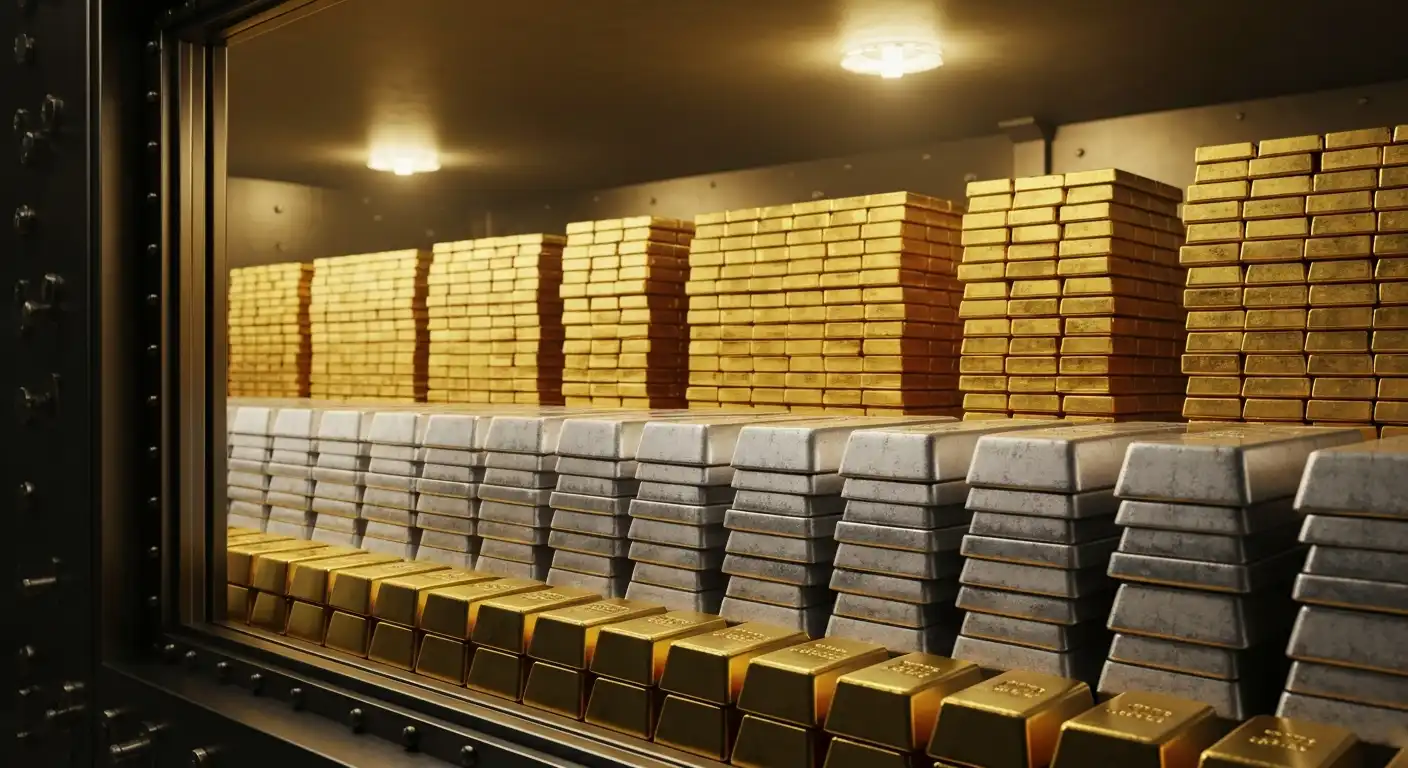
Germany sits on a massive fortune of solid gold. The German Bundesbank controls exactly 3,350 tonnes of the precious metal. This stash ranks as the second-largest reserve in the entire world, sitting just behind the United States. Recently, the price of gold skyrocketed past $4,700, or about €4,140, for every single troy ounce. Because of this massive price jump, the total value of German gold reserves now stands at a jaw-dropping €440 billion.
Marcel Fratzscher runs the German Institute for Economic Research. He looks at this massive pile of wealth and sees a giant piggy bank for national emergencies. Fratzscher argues that German leaders should finally crack open this vault. He wants the government to sell at least a small portion of the gold to help the country survive its current financial struggles.
During a recent interview, he suggested the government could take the cash from these gold sales and give it directly to ordinary citizens. He believes this money could relieve the heavy financial burdens crushing families and local businesses. Alternatively, he said the government could invest the billions into new schools, better roads, and modern infrastructure.
This bold suggestion arrives at a perfect time for struggling consumers. Every day, prices continue to climb higher across the country. For example, the Motorists’ Index tracks the exact costs of goods and services related to driving. According to the Federal Statistical Office, this index rose 6.7% in March 2026 compared with the same month one year earlier. Drivers simply pay more for everything right now.
Most people assume Germany keeps all its gold locked safely inside vaults in Frankfurt. However, the reality looks very different. The Federal Reserve in New York actually holds about 1,236 tonnes of the German supply. This represents roughly one-third of the total national wealth. Meanwhile, vaults in London hold another 404 tonnes of the precious metal. German central bankers still manage all these foreign accounts from afar.
This strange storage arrangement goes back many decades. After the Second World War ended, Germany built up massive trade surpluses. The government converted these profits into solid gold under the Bretton Woods system. This post-war financial rulebook tied participating currencies directly to the US dollar at fixed exchange rates. When that global system collapsed in the early 1970s, German leaders simply left their gold exactly where it sat.
The Bundesbank did bring some wealth home recently. In 2017, the bank shipped 374 tonnes of gold from Paris back to Germany. Bankers said they no longer needed to keep gold in France because both countries share the euro currency. Despite this move, the vast majority of the foreign reserves stayed inside the New York vaults.
Keeping so much wealth in America now sparks a fierce political fight. Michael Jäger serves as the vice president of the German Taxpayers’ Association. He recently told reporters that people lost confidence in the United States because of Donald Trump’s policies. Jäger strongly believes the time has come to bring every single ounce of the gold back home.
Right-wing politicians agree with Jäger. In March 2026, the Alternative for Germany party introduced a formal motion in parliament. They demanded that the government bring all state gold back to German soil immediately. The political group went even further. They suggested the gold reserves could eventually back a brand new national currency. This idea clearly hints at a secret plan to abandon the euro completely.
Other political parties quickly attacked this extreme proposal. Mechthilde Wittmann, a politician from the CSU party, laughed at the idea. She called it a comic motion and warned her colleagues not to treat the national reserves with silly buzzwords or ideological panic. Philipp Rottwilm from the SPD party defended the current setup. He argued that keeping gold in New York gives the country important financial flexibility.
Sebastian Schäfer of the Green Party called the entire right-wing push a total sham debate. He insisted that the gold remains perfectly safe inside the deep vaults of the Federal Reserve Bank in New York City. Meanwhile, Doris Achelwilm of the Left Party took a completely different approach. She agreed with Fratzscher and asked if the government could simply sell some of the reserve right now to raise cash.
The Bundesbank firmly rejects any plan to sell the gold. The central bank views the massive metal pile as a long-term anchor that keeps public trust in the currency strong. Bankers also repeatedly state that they fully trust the Federal Reserve as a safe custodian of their wealth. For now, the bank refuses to budge an inch on the matter.
Fratzscher knows his idea breaks a major financial taboo. He admits that even the German chancellor lacks the legal authority to order the bank to sell the gold tomorrow. However, he argues that ruling out a sale entirely makes zero sense. As economic pressure mounts on ordinary families, Fratzscher thinks leaders must put every single option on the table.