For the past two decades, the story of computing has been a story of centralization. A powerful gravitational force, driven by the economies of scale of the public cloud, has pulled our data, applications, and digital lives into massive hyperscale data centers. This cloud computing revolution has been a transformative force, providing unprecedented access to computational power and storage. But as our world becomes ever more connected, as the digital and physical realms fuse, the limitations of this purely centralized model are becoming increasingly apparent. The speed of light, it turns out, is a harsh and unforgiving mistress. The round-trip journey to a distant cloud and back is simply too long for a new generation of applications that demand instantaneous response and real-time intelligence.
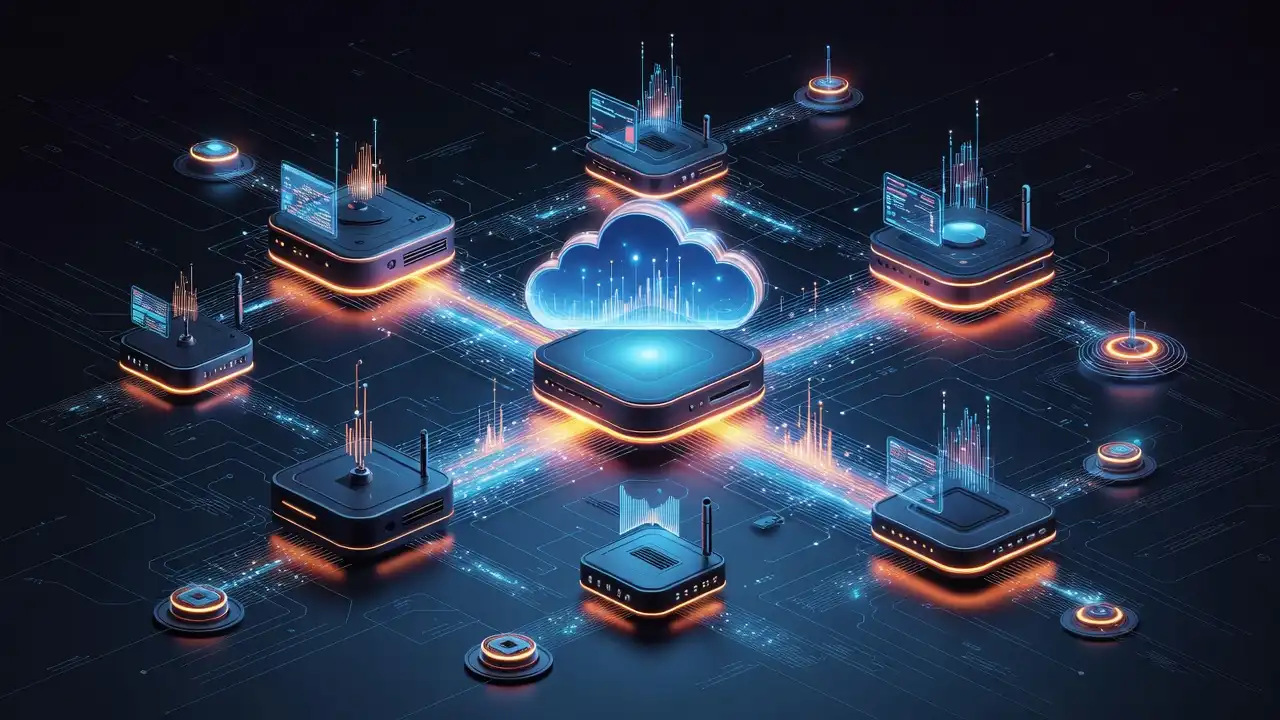
In response to this challenge, a powerful counter-current is now reshaping the landscape of global technology infrastructure. This is the era of edge computing. It is not a replacement for the cloud, but a necessary and powerful extension of it. Edge computing is a distributed computing paradigm that pushes computation and data storage closer to data sources and points of consumption. It is about moving the “brain” of the operation from the remote, centralized cloud to the local “edge” of the network—to the factory floor, the retail store, the base of a 5G cell tower, or even the connected car itself. This is not just a technical shift; it is a fundamental re-architecting of our digital world, a move from a simple hub-and-spoke model to a sophisticated, decentralized, and intelligent nervous system. For global industries, edge computing is the key to unlocking the true potential of transformative technologies like 5G, the Internet of Things (IoT), and artificial intelligence, enabling a future that is faster, smarter, and more autonomous than ever before.
The Cloud’s Long Shadow: Why Centralized Computing is Hitting a Wall
To understand the powerful “why” behind the rise of edge computing, we must first understand the inherent limitations of a purely cloud-centric model. The cloud will always be the best place for massive, long-term data storage, complex, large-scale analytics, and the training of enormous AI models. But for a growing class of applications, the physical distance to the cloud is an insurmountable barrier.
This challenge can be broken down into three fundamental laws of physics and economics, which drive the need for a more distributed architecture.
The Tyranny of Latency and the Speed of Light
Latency is the time delay in a network communication. It is the time it takes for a data packet to travel from its source to its destination and for a response to return. While modern networks are incredibly fast, they are still bound by the ultimate speed limit of the universe: the speed of light.
For many emerging applications, this physical delay, even if it is just a few tens of milliseconds, is simply unacceptable.
- The Physics Problem: The round-trip time for a signal to travel from a device on the East Coast of the U.S. to a cloud data center on the West Coast and back can easily be 70-80 milliseconds. This is a hard, physical limit that cannot be overcome with a faster network connection.
- The Real-Time Imperative: This latency is fine for sending an email or streaming a movie, but it is a deal-breaker for applications that require instantaneous, real-time interaction with the physical world. Consider a self-driving car that must make a split-second decision about whether to apply the brakes. It cannot afford to wait for a round trip to a remote cloud data center to get its instructions. The decision must be made locally, in the vehicle, within microseconds. Other examples include augmented reality overlays, remote robotic surgery, and the real-time control of industrial machinery.
The Data Deluge and the Bandwidth Bottleneck
The world is generating data at an exponential rate, with a large portion of it now being created at the edge by billions of IoT sensors, high-resolution cameras, and connected devices. The sheer volume of this data is beginning to overwhelm our network infrastructure.
Sending all of this raw data back to a centralized cloud for processing is becoming both technically and economically unsustainable.
- The Tsunami of IoT Data: A single autonomous vehicle can generate terabytes of data per day from its cameras, LiDAR, and radar sensors. A modern smart factory can generate petabytes of data from its thousands of IIoT sensors. It is simply not feasible or cost-effective to stream all of this raw data back to a central cloud over a wide-area network (WAN) connection.
- The Cost of Bandwidth: Even if the network could handle the volume, the cost of the bandwidth required to backhaul all of this data would be astronomical for many businesses.
The Imperative of Data Sovereignty, Privacy, and Autonomy
In many industries and countries, there are strict rules about where data can be stored and how it can be processed. Furthermore, many critical applications need to function even if their connection to the wider internet is lost.
The centralized cloud model can create challenges for data governance, privacy, and operational resilience.
- Data Sovereignty and Residency: Many countries have data sovereignty laws that require the personal data of their citizens to be stored and processed within their borders. Edge computing allows data to be processed locally, helping organizations to comply with these regulations.
- Privacy Concerns: For sensitive data, such as medical information from a connected health device or video footage from a home security camera, there is a strong desire to process it as locally as possible to minimize the risk of interception or exposure in transit to the cloud.
- The Need for Autonomous Operation: A smart factory, a remote oil rig, or a hospital’s critical systems cannot afford to shut down simply because their internet connection goes down. Edge computing provides the local processing and control capabilities that enable these systems to continue operating autonomously, even when disconnected from the central cloud.
Deconstructing the Edge: A Spectrum of Distributed Intelligence
Edge computing is not a single, monolithic concept. It is a spectrum of capabilities, a continuum of compute that extends from the centralized cloud all the way out to the device itself.
Understanding this spectrum is key to architecting the right edge solution for a specific problem.
The “Far Edge” vs. The “Near Edge”
The edge can be thought of in terms of its proximity to the end device or the data source.
- The Far Edge (Device Edge and On-Premises Edge): This is the compute that happens as close as physically possible to the data source.
- Device Edge: Computation occurs directly on the end device. Your smartphone running a machine learning model to recognize faces in your photos is an example of the device’s edge capabilities. The onboard computer in a self-driving car is processing sensor data.
- On-Premises Edge: Computation occurs on a local server or a small “edge gateway” located on the same premises as the devices. This could be a small server rack in the back room of a retail store, in a factory, or in a hospital. This is a very common and powerful pattern.
- The Near Edge (Network Edge): This is the compute that is located within the network infrastructure, between the end device and the central cloud. It is not on the customer’s premises, but it is much closer than a regional cloud data center would be.
- Carrier Edge (5G MEC): The most important example of the near edge is the rise of Multi-access Edge Computing (MEC), a key feature of 5G networks. Mobile network operators are deploying small data centers at the base of their cell towers and in their central offices. This allows application workloads to run just one network “hop” away from the end-user’s mobile device, enabling ultra-low-latency applications.
- Content Delivery Networks (CDNs), such as Akamai and Cloudflare, have been a form of edge computing for years. They cache static content (such as images and videos) at thousands of points of presence (PoPs) around the world, closer to users, to speed up website delivery. Modern CDNs are evolving to allow developers to run their own application code at the edge.
The Symbiotic Relationship: Edge and Cloud – A Powerful Partnership
It is crucial to understand that edge computing is not a war against the cloud. It is a partnership. The edge and the cloud are designed to work together in a powerful, symbiotic relationship, each playing to its strengths.
This hybrid model creates a more intelligent, responsive, and efficient overall architecture.
- The Role of the Edge: The edge is responsible for the real-time, low-latency tasks. It performs initial data filtering, aggregation, and real-time analytics. It is where immediate actions and decisions are made. For example, an edge server in a factory might analyze a video stream from a quality-control camera in real time to identify a defective part and trigger a robot to remove it from the assembly line.
- The Role of the Cloud: The cloud remains the central hub for the heavy-lifting, less time-sensitive tasks. The edge sends the most important, filtered, and aggregated data back to the cloud. The cloud is where data from thousands of edge locations is stored long-term, massive, fleet-wide analytics are performed, and complex, computationally intensive AI models are trained. The newly trained model can then be pushed back out to the edge devices to make them smarter.
The Industrial Revolution at the Edge: How Edge Computing is Transforming Global Sectors
The theoretical benefits of edge computing are being translated into tangible, transformative value across nearly every major global industry. The edge is the key enabling technology that is finally making the futuristic promises of Industry 4.0, autonomous systems, and immersive experiences a practical reality.
Let’s explore the specific ways in which edge computing is becoming the new engine of industrial innovation.
Manufacturing and Industry 4.0: The Sentient, Autonomous Factory
The smart factory is one of the most powerful and immediate use cases for edge computing. The factory floor is a high-density environment of sensors, robots, and machinery that generate massive amounts of data and require real-time control.
Edge computing provides the low-latency brain needed to orchestrate the truly autonomous and self-optimizing factory of the future.
- Predictive Maintenance in Real-Time: As described before, predictive maintenance uses sensor data to predict machine failures. By placing an edge server on the factory floor, the AI model that analyzes the vibration and temperature data can run locally. This allows it to detect a potential failure in milliseconds and immediately shut down the machine to prevent catastrophic damage. This decision cannot wait for a round-trip to the cloud.
- AI-Powered Quality Control: High-resolution cameras on an assembly line can generate a massive stream of video data. Streaming all of this to the cloud for analysis is impractical. An edge device with a specialized AI accelerator (a GPU or a VPU) can analyze the video feed in real-time, right on the production line, to spot microscopic defects with superhuman accuracy and speed.
- Robotic Control and Human Safety: The safe and efficient operation of autonomous mobile robots (AMRs) and collaborative robots (cobots) requires ultra-low latency. The navigation and control logic for these robots runs on the edge, enabling them to respond instantly to their environment and to the presence of human workers.
Retail and Customer Experience: The Smart, Personalized Store
Brick-and-mortar retail is being reinvented with a new generation of in-store technologies designed to blend the best of the digital and physical worlds, creating a more personalized, efficient, and engaging customer experience.
Edge computing is the infrastructure that powers these “smart store” innovations.
- Real-Time Inventory Management and “Frictionless Checkout”: In-store cameras and smart shelves can track what products customers pick up. Edge computing can process this video and sensor data in real time to maintain a consistently accurate inventory count. This technology powers “grab-and-go” or “frictionless checkout” experiences like Amazon Go, where customers can simply walk out of the store with their items as the transaction is processed automatically.
- Personalized In-Store Experiences: By analyzing in-store traffic patterns and customer behavior (while respecting privacy), edge systems can trigger personalized promotions or assistance to a customer’s smartphone as they move through the store.
- Loss Prevention and Operational Efficiency: AI-powered video analytics running on the edge can detect potential theft in real time. It can also be used to analyze checkout queue lengths and automatically dispatch additional staff to open a new lane, improving the customer experience.
Transportation and the Autonomous Vehicle Revolution
The future of transportation is autonomous, connected, and electric. The modern connected car is a sophisticated data center on wheels, and the autonomous vehicle is the ultimate edge computing device.
The safe and efficient operation of autonomous systems is entirely dependent on powerful, low-latency edge compute.
- The Onboard Brain of the Autonomous Vehicle: An autonomous vehicle is a rolling-edge data center. It is equipped with a powerful onboard computer that must process a massive, continuous stream of data from its cameras, LiDAR, and radar sensors in real-time. This “sensor fusion” and “perception” stack, which identifies other cars, pedestrians, and road signs, must run locally in the vehicle with microsecond-level latency to make safe, life-or-death driving decisions.
- Vehicle-to-Everything (V2X) Communication: The future of transportation involves vehicles communicating not just with the cloud but also with each other (V2V), with the surrounding infrastructure, such as traffic lights (V2I), and with pedestrians (V2P). This “V2X” communication requires ultra-low latency and will be enabled by the 5G Mobile Edge Computing (MEC) infrastructure. A car could receive a signal from a traffic light around a blind corner, warning it of an impending red light, a feat that requires near-instantaneous communication.
- Fleet Management and Predictive Maintenance: While real-time control occurs in the vehicle, data from a fleet of connected vehicles can be aggregated at a regional edge location or in the cloud to optimize traffic flow across a city or perform predictive maintenance on the fleet.
Healthcare and the Internet of Medical Things (IoMT)
A wave of connected medical devices and remote patient monitoring systems is transforming the healthcare industry. Edge computing is critical for securely processing sensitive patient data and enabling a new generation of real-time healthcare applications.
Edge computing brings the hospital’s intelligence closer to the patient, wherever they may be.
- Real-Time Remote Patient Monitoring: For a patient with a critical condition being monitored at home, data from their connected devices (such as an ECG or a glucose monitor) needs to be analyzed in real time. An on-premises edge gateway in the patient’s home can perform this initial analysis, look for anomalies, and send an alert to the hospital or doctor only in the case of an emergency. This preserves patient privacy and ensures a rapid response.
- AI-Powered Medical Imaging Analysis: A hospital’s MRI or CT scanner generates massive image files. Instead of sending these large files to the cloud for analysis, an on-premises edge server with a powerful GPU can run an AI model to perform initial image analysis, helping a radiologist triage cases and identify potential abnormalities much faster.
- Robotic Surgery and Telesurgery: The vision of a surgeon in one city performing a complex operation on a patient in another city using a robotic system requires a network with near-zero latency and absolute reliability. This is an ultimate use case for 5G and the Mobile Edge Computing infrastructure, as the feedback loop between the surgeon’s hand movements and the robot’s actions must be instantaneous.
Telecommunications and the 5G-Powered Future
For the telecommunications industry, edge computing is not just an application they can enable; it is a core part of their future business model. The rollout of 5G is inextricably linked to the deployment of Mobile Edge Computing (MEC).
MEC is the key that unlocks the most valuable and futuristic use cases for 5G.
- Enabling Ultra-Low Latency Applications: As described earlier, the MEC infrastructure will deliver the single-digit millisecond latency promised by 5G, enabling applications such as cloud gaming, AR/VR, and V2X communication.
- A New Revenue Stream for Telcos: By offering a distributed cloud computing platform at the edge of their network, mobile operators have a massive opportunity to create a new revenue stream. They can sell this “edge cloud” capacity to application developers, enterprises, and content providers who want to run their workloads closer to the end-users. This is a critical part of the business case for their massive 5 G investment.
Media and Entertainment: Immersive, Interactive Experiences
The media and entertainment industry is constantly pushing the boundaries of network performance to deliver richer and more interactive experiences.
Edge computing is the key to overcoming the latency and bandwidth barriers that currently limit these next-generation experiences.
- Cloud Gaming: Cloud gaming services like NVIDIA GeForce Now and Xbox Cloud Gaming stream video games from a powerful server to a user’s device. The biggest challenge for this model is “input lag”—the delay between the user pressing a button and seeing the result on screen. By running the game-rendering servers in an edge data center near the user, latency can be drastically reduced, creating a much more responsive and enjoyable experience.
- Live and Interactive Streaming: For large-scale live events, such as concerts or sporting events, edge computing can be used to transcode and process video streams closer to viewers, improving quality and reducing buffering. It also enables new forms of interactive content, in which the audience can influence the event in real time.
The Edge Computing Technology Stack: Building the Distributed Future
The edge computing ecosystem is a complex and rapidly evolving landscape of hardware and software. Building a robust edge solution requires a new set of tools and a new way of thinking about software deployment and management.
The goal is to bring the power and automation of the cloud-native world to the distributed, resource-constrained edge environment.
The Hardware at the Edge: From Tiny Gateways to Micro Data Centers
The hardware used at the edge varies dramatically depending on the use case.
It is a diverse spectrum, ranging from small, ruggedized devices to fully-featured, compact data centers.
- Edge Gateways: These are often small, ruggedized industrial PCs designed to operate in harsh environments (such as factory floors or oil rigs). They act as a bridge between the local devices (the “OT” world) and the IT network, performing initial data filtering and protocol translation.
- Edge Servers: For more demanding workloads, companies deploy full-fledged servers at their edge locations. These can range from a single server in the back of a retail store to a small, self-contained “micro data center” in a factory.
- AI-Accelerated Edge Hardware: A new and rapidly growing category of edge hardware includes specialized accelerators, such as GPUs, VPUs (Vision Processing Units), and FPGAs, designed to run AI inference models with high performance and low power consumption.
The Software at the Edge: A Cloud-Native Approach
The real revolution is in the software stack used to manage and deploy applications at the edge. The industry has converged on using the same cloud-native technologies that power the central cloud to manage the distributed edge.
The goal is to have a single, unified control plane that can manage applications seamlessly, whether they are running in a hyperscale data center or on a tiny edge device.
- Containers and Lightweight Kubernetes at the Edge: Containers (Docker) are the perfect format for packaging edge applications. Kubernetes, the cloud-native container orchestrator, is the key technology for managing these applications. However, the full Kubernetes platform can be too resource-heavy for some edge devices. This has led to the rise of lightweight, certified Kubernetes distributions that are specifically designed for the edge, such as K3S, MicroK8s, and KubeEdge.
- The “Single Pane of Glass” Management: The ultimate goal is to use a central Kubernetes control plane (running in the cloud) to manage a massive, geographically distributed fleet of edge clusters. This gives operators a “single pane of glass” to deploy, monitor, and update applications across thousands of edge locations with the same automated, declarative “GitOps” workflows they use for their cloud applications.
- Edge-Native Application Development: Building applications for the edge requires a new set of considerations. Developers must design their applications to be resilient to intermittent network connectivity, mindful of edge devices’ limited resources, and capable of intelligently handling data synchronization between the edge and the cloud.
The Road Ahead: Overcoming the Challenges of a Distributed World
The vision of a fully realized, intelligent edge is a powerful one, but the journey to get there is not without significant challenges. Deploying and managing a distributed infrastructure at a massive scale is inherently more complex than managing a centralized one.
Overcoming these operational, security, and cultural hurdles is the next major task for the technology industry.
The Challenge of Massive-Scale Management and Orchestration
Managing a few Kubernetes clusters in the cloud is one thing. Managing thousands or even hundreds of thousands of small clusters distributed across the globe, each with its own unique network conditions and physical environment, is a challenge of a completely different order of magnitude.
This requires a new generation of management tools and a new level of automation.
- Zero-Touch Provisioning: It is not feasible for a highly skilled engineer to physically visit every edge location to set up and configure a new cluster. The process must be fully automated, enabling a non-technical person on-site to easily plug in a new edge device, have it automatically provision itself, and connect to the central management plane.
- Managing a Heterogeneous Environment: Unlike the homogenous environment of a cloud data center, the edge is a messy, heterogeneous world of different hardware types, operating systems, and network conditions. The management platform must be able to handle this diversity.
The Cybersecurity Imperative in a Zero-Trust World
The edge dramatically expands an organization’s physical and digital attack surface. Every one of the thousands of edge devices is a potential entry point for an attacker.
Securing the edge requires a fundamental shift to a “zero-trust” security model.
- The End of the Perimeter: In a zero-trust model, you assume that the network is already compromised. You cannot trust any device or user, inside or outside the traditional network perimeter. Every request to access a resource must be authenticated, authorized, and encrypted.
- Physical Security: Edge devices are often deployed in physically insecure locations, such as retail stores or factory floors. They must be physically hardened against tampering, and the software must be designed with secure boot and disk encryption to protect the data if the device is stolen.
The Data Management and Synchronization Challenge
In a hybrid edge-cloud architecture, managing data flow is a complex challenge. You need to decide what data to process at the edge, what data to send to the cloud, and how to keep the data’s state consistent between the two. This requires a new set of data management tools and a carefully designed data architecture.
The Skills Gap and the Convergence of IT and OT
The world of edge computing requires a new, hybrid skill set. The teams that manage the edge need to understand both the world of cloud-native IT (Kubernetes, containers, APIs) and the world of Operational Technology (OT)—the industrial control systems, sensors, and protocols of the physical world. There is a major global shortage of people with this converged IT/OT expertise. This is driving a massive need for workforce reskilling and upskilling.
Conclusion
The great migration to the cloud was the defining story of the last decade of technology infrastructure. The great distribution of intelligence to the edge will be the defining story of the next. Edge computing is not a niche technology; it is a fundamental and necessary evolution of our digital world, a powerful response to the demands of a new generation of real-time, data-intensive, and autonomous applications. It is the missing link that will finally connect the awesome power of the cloud to the messy, dynamic reality of our physical world.
The journey to a fully realized, intelligent edge will be complex, filled with technical challenges, and require a new way of thinking about how we build and manage software. But the momentum is undeniable. For global industries, from manufacturing and retail to healthcare and transportation, the edge is no longer a distant frontier; it is the new center of gravity. It is the locus of real-time decision-making, the source of competitive advantage, and the essential foundation upon which the next wave of digital transformation will be built. The future of computing is not just in the cloud; it is everywhere.