Key Points:
- SpaceX told investors that no one can remove Elon Musk from his leadership roles without his direct consent.
- The company will use a dual-class share system, giving Musk super-voting Class B shares with 10 votes each.
- Corporate governance experts call this level of control highly unusual compared to other major technology companies.
- SpaceX incorporated in Texas after a Delaware judge previously voided a $56 billion pay package for Musk at Tesla.
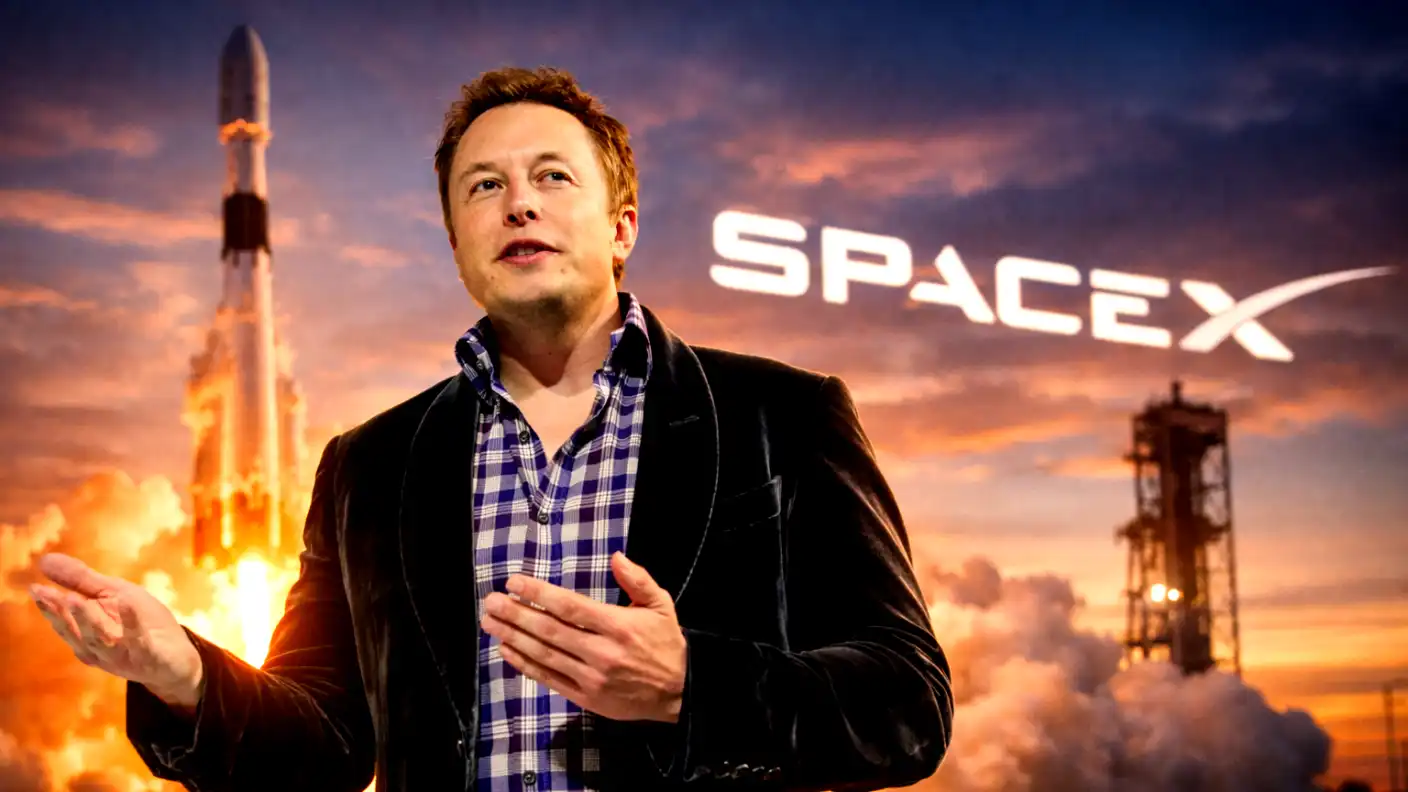
SpaceX is making its leadership rules crystal clear before selling shares to the public. According to documents prepared for its initial public offering, investors cannot fire Elon Musk from his role as chief executive officer and chairman of the board. The billionaire founder built a legal wall around his position, ensuring he can only lose his job if he personally agrees to step down.
The initial public offering filing outlines exactly how Musk maintains this absolute power. The aerospace company plans to split its stock into two distinct categories. Public investors will buy Class A common stock, which carries standard voting rights. Meanwhile, company insiders will hold Class B shares. These special super-voting shares carry exactly 10 votes apiece.
Musk will control the vast majority of these Class B shares after the company goes public. The official filing states that removing Musk from the board or his executive roles requires a direct vote from Class B shareholders. Since Musk controls those specific shares, the board of directors cannot fire him unless he himself votes to fire himself.
This setup creates an unprecedented level of job security for the controversial billionaire. The company documents state that if Musk holds a significant portion of his Class B common stock for an extended period, he will continue to control the election and removal of a majority of the board. He holds the ultimate veto power over any major corporate decision.
Corporate governance experts find this specific arrangement highly unusual. Lucian Bebchuk, a professor at Harvard Law School who focuses on corporate governance and finance, explained the typical industry standards. He noted that even in companies with powerful founders, the board of directors usually retains the formal authority to remove a chief executive officer. Founders typically rely on their massive voting power to replace angry board members, rather than explicitly banning the board from firing the boss in the first place.
Technology companies often use dual-class share structures when they go public. Mark Zuckerberg secured his power at Facebook back in 2012 by holding super-voting shares. More recent technology listings, such as Figma, also concentrated voting power directly in their founders’ hands. However, SpaceX takes this concept a step further by directly tying the removal of the chief executive to his own personal voting power.
SpaceX wants prospective buyers to understand exactly what they are purchasing. The company explicitly warned potential investors about their lack of power in the new filing. The document tells buyers that this corporate structure will severely limit or completely preclude their ability to influence corporate matters and the election of directors. Anyone buying the stock must simply trust Musk to run the business his way without any outside interference.
This complex corporate structure represents a major departure from how Musk runs his other famous business. Tesla operates with a single share class. Every shareholder at the electric car maker gets exactly one vote per share. That even playing field caused massive headaches for Musk in the past, leading him to demand a much tighter grip on SpaceX.
The push for total control likely stems from recent legal battles over his personal wealth. A Delaware court previously voided a massive $56 billion pay package that Tesla awarded to Musk. That legal defeat angered the billionaire and prompted him to move his business registrations out of the state entirely. SpaceX now operates as a company officially incorporated in Texas, keeping it far away from Delaware corporate courts.
The Delaware Supreme Court eventually reinstated the massive compensation package late last year. However, Musk clearly learned a harsh lesson about leaving his fate up to outside judges and angry shareholders. He refuses to take that same risk with his rocket and satellite business.
Neither SpaceX nor Elon Musk responded to requests for comment regarding the initial public offering documents. The company continues to prepare for its highly anticipated stock market debut. Financial analysts expect the offering to draw massive interest from Wall Street, despite the strict voting rules and the lack of shareholder power.
Investors face a very simple choice. They can buy into the most successful space exploration company on the planet, but they must accept that they have absolutely zero say in how it operates. Musk built the rockets, he built the business, and now he guarantees he will stay in the driver’s seat for as long as he wants.