Enterprise Resource Planning (ERP) software has become integral to modern business operations, enabling organizations to streamline processes, enhance productivity, and make data-driven decisions. ERP systems are crucial in achieving operational efficiency and agility in today’s dynamic and competitive business landscape.
ERP Software Market Analysis
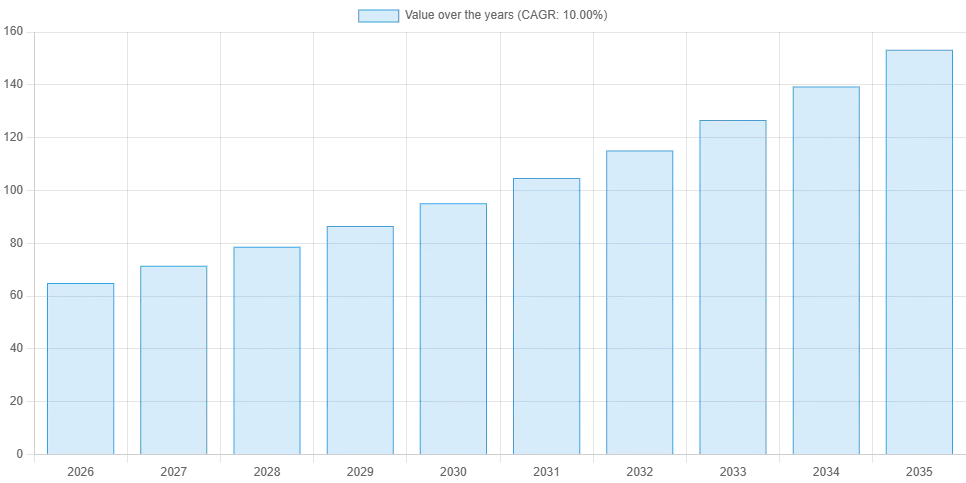
The Techgolly market research team’s preliminary estimate is that the global ERP software market was valued at least USD 65 billion in 2026 and is projected to reach up to USD 153.27 billion by 2035. Growth will continue at a compound annual growth rate (CAGR) of 8%-10% from 2026 to 2035.
Reasons for ERP Software Market Growth
As businesses continue to recognize the transformative potential of ERP systems, the market is expected to expand further, shaping the future of enterprise management and efficiency. The primary reasons behind the sustained growth of the ERP software market are given below.
- Business Process Optimization: ERP software helps organizations optimize their business processes by centralizing data and automating routine tasks. It leads to improved operational efficiency, reduced errors, and faster decision-making.
- Data Integration and Visibility: ERP systems integrate data from various departments and functions into a unified platform. It provides real-time visibility into business operations, enabling stakeholders to access accurate information as needed.
- Scalability and Flexibility: ERP solutions are designed to scale with an organization’s growth. They offer flexibility to adapt to changing business needs, whether a company is expanding, diversifying, or restructuring.
- Cost Reduction: ERP systems help organizations reduce operational costs by eliminating redundant processes, minimizing manual data entry, and optimizing inventory management. This cost-saving potential drives ERP adoption and market growth for ERP software.
- Compliance and Regulation: Many industries must adhere to strict regulatory requirements, including the Sarbanes-Oxley Act (SOX) and industry-specific standards. ERP software helps ensure compliance by providing accurate financial reporting and audit trails.
- Globalization and Multi-Site Operations: Businesses operating in multiple locations or countries benefit from ERP systems that support standardized processes, consolidated financials, and multi-currency capabilities, thereby simplifying global operations.
- Improved Customer Service: ERP systems enhance customer service by providing access to customer data, order history, and inventory availability. It enables quick responses to customer inquiries and better service delivery.
- Data-Driven Decision-Making: ERP software generates actionable insights through data analytics and reporting tools. These insights enable informed decision-making and strategic planning, leading to better business outcomes.
- Supply Chain Management: ERP systems optimize supply chain management by tracking inventory levels, demand forecasting, and managing supplier relationships. It reduces inventory costs and ensures timely product availability.
- Digital Transformation: ERP software is pivotal to an organization’s digital transformation. It enables the adoption of emerging technologies such as IoT, AI, and machine learning to improve operations and enhance competitiveness.
- Cloud-Based Solutions: The availability of cloud-based ERP solutions has made ERP adoption more accessible to organizations of all sizes. Cloud ERP offers scalability, flexibility, and lower upfront costs.
- Mobile Accessibility: ERP systems are increasingly accessible via mobile devices, allowing employees to access critical business data and perform tasks on the go. This mobility enhances productivity and responsiveness.
- Industry-Specific Solutions: ERP vendors offer industry-specific solutions tailored to the unique needs of sectors such as manufacturing, healthcare, retail, and finance, thereby further driving adoption.
- Competitive Advantage: Today, organizations that implement ERP systems gain a competitive edge by improving operational efficiency, customer satisfaction, and innovation capabilities.
- Disaster Recovery and Data Security: ERP systems provide robust data security measures and disaster recovery capabilities, ensuring data integrity and business continuity.
Key Market Players
The major ERP software vendors are NetSuite Inc., Hewlett-Packard Development Company LP, Acumatica Inc., Epicor Software Corporation, Sage Group PLC, International Business Machines Corporation, Infor Inc., Microsoft Corporation, SAP SE, and Oracle Corporation.