Key Points:
- The European Union plans to propose a bloc-wide social media ban for children as early as this summer.
- European Commission President Ursula von der Leyen says online platforms exploit children’s attention for profit.
- The EU faces challenges in establishing a common age-verification system to enforce new digital restrictions.
- Countries like France are already drafting national laws to block users under 15 from apps like Instagram and TikTok.
The European Union is preparing to introduce groundbreaking regulations to protect children from the pervasive influence of social media. European Commission President Ursula von der Leyen announced on Tuesday that the EU could propose a ban on social media for minors across the entire bloc as early as this summer. This bold move comes amid increasing pressure from several member states to strengthen online safeguards for young people.
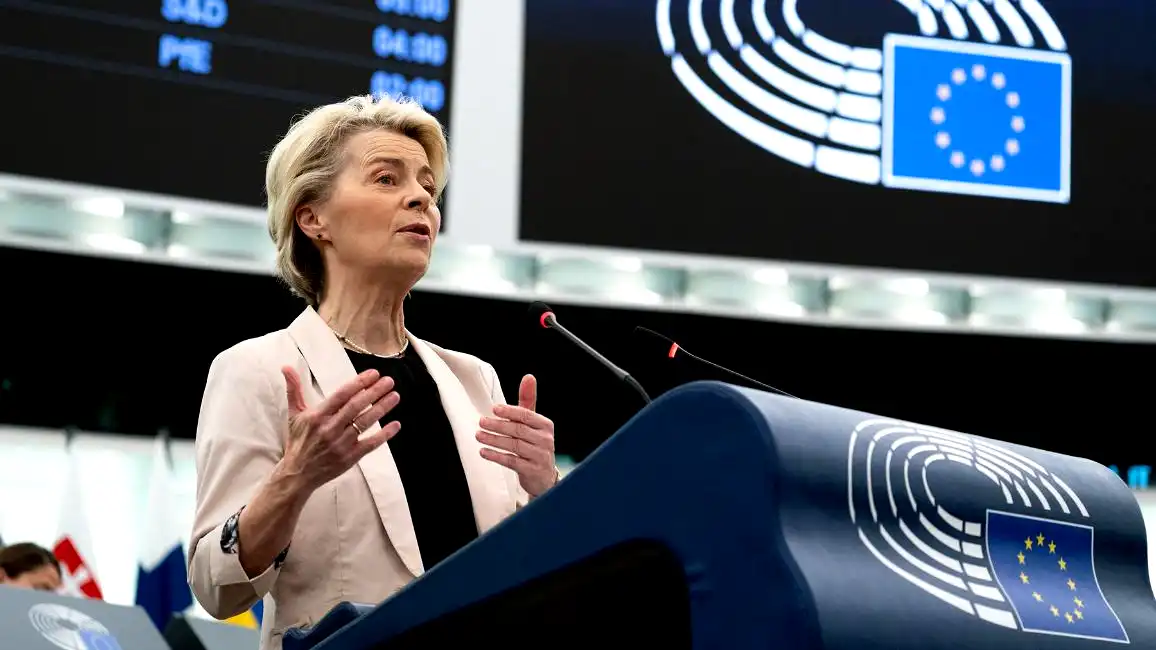
Speaking at the European Summit on Artificial Intelligence and Children in Copenhagen, von der Leyen delivered a stark message to the technology industry. She emphasized that the many harms social media inflicts on children and youth are not accidental. Instead, she stated these problems directly result from business models that deliberately treat the attention of young people as a mere commodity to be bought and sold.
Von der Leyen painted a clear picture of the rapid technological changes shaping children’s lives. She noted that technology advances at lightning speed, deeply penetrating every corner of childhood and adolescence. This fast pace makes it even more crucial for governments to act decisively and create safe digital spaces for the next generation.
Several EU countries already pursue their own national laws to tackle this problem. France, for example, expects new legislation to take effect in September. This law will require platforms like Instagram and TikTok to block users under 15 and suspend any accounts that violate the new rule. Spain, Greece, and Denmark also lead calls for similar measures, all aiming to shield children from what governments describe as highly addictive online platforms. However, Brussels has faced pressure to maintain a harmonized approach across the bloc’s single market to avoid a confusing patchwork of regulations.
The European Commission has already taken steps to prepare for these new regulations. The institution established an independent panel of experts focusing specifically on online child safety. This panel will assess various possible measures designed to tackle critical issues such as addiction and social anxiety among minors. Their findings will play a crucial role in shaping the final legal proposals.
“Without pre-empting the panel’s findings, I believe we must consider a social media delay,” von der Leyen stated. She added that depending on the results of the expert panel’s work, the Commission could put forward a legal proposal this summer. This aggressive timeline could allow Brussels to move ahead of new French legislation and establish a unified European front on child protection.
One of the biggest hurdles for the EU remains finding a common technical solution for age verification. Platforms would need to use a standardized system to ensure that only users above a certain age can access their services. Von der Leyen made it clear that “discussions about a minimum age for social media can no longer be ignored.” She referenced a potential EU age-verification app, modeled after the bloc’s highly successful EU Digital COVID Certificate system, as a possible solution.
Despite the Commission’s formal recommendation for such an app, some member states reacted cautiously. Cybersecurity experts also voiced concerns about potential technical vulnerabilities within such a system. Ensuring a secure and effective age verification process without infringing on user privacy presents a complex technical and ethical challenge.
The European Union is not alone in its pursuit of stricter controls on children’s social media use. Other nations around the globe have already implemented similar measures. Australia and Indonesia, for instance, have introduced their own regulations to protect minors from harmful online content and addictive platform designs. This global trend highlights a growing international consensus on the need to rein in big tech.
Beyond a potential outright ban, Brussels has also initiated other actions. The Commission placed platforms like Instagram and Snapchat under scrutiny through the Digital Services Act. These investigations address concerns that the companies failed to protect minors adequately. The bloc also considers banning certain addictive design features, such as “attention capture, complex contracts, (and) subscription traps,” under the proposed Digital Fairness Act. These measures aim to curb manipulative tactics used to keep users engaged for extended periods.
Von der Leyen concluded her speech with a powerful call to action. She recognized that “sustainable change does not happen overnight.” However, she warned that if leaders are slow and hesitant, “it will be another entire generation of children that pays the price.” Her message underscores the urgency and long-term implications of regulating social media to safeguard the well-being of young people in the digital age.