Key Points:
- NASA Administrator Jared Isaacman wants to restore Pluto to its former status as a full planet.
- The International Astronomical Union stripped Pluto of its planet status back in 2006 and reclassified it as a dwarf planet.
- NASA scientists are currently writing research papers to challenge the 2006 ruling and spark a new debate.
- The 2015 New Horizons space mission revealed complex ice mountains and nitrogen glaciers on the distant world.
Almost 20 years after the scientific world considered the debate closed, Pluto is once again making headlines. During a recent United States Senate hearing regarding the 2027 budget request for NASA, Administrator Jared Isaacman made a bold statement. His comments completely reopened a massive question that many astronomers thought they had settled long ago. Isaacman wants to know if the scientific community should classify Pluto as a true planet once again.
Republican Senator Jerry Moran from Kansas actually sparked this new conversation near the end of the budget hearing. For Moran, the status of this distant icy world holds deep personal and local importance. Clyde Tombaugh, the astronomer who originally discovered Pluto back in 1930, grew up in Kansas. Because of this historical connection, the senator asked the head of NASA where he stood on the controversial topic.
Isaacman did not hesitate to give a clear and direct answer. He told the Senate committee that he firmly belongs to the camp that wants to restore Pluto’s planetary status. He also revealed some surprising news about what his agency is doing behind the scenes right now. According to Isaacman, NASA scientists are currently drafting specific scientific papers on this exact subject. He plans to take these papers and escalate the discussion through the broader scientific community to force a serious review of the current rules.
To understand this fierce debate, people must look back at history. Astronomers discovered Pluto almost 100 years ago. For decades, textbooks around the world proudly listed it as the 9th planet of our solar system. Generations of students grew up memorizing its name alongside Earth, Mars, and Jupiter. However, everything changed dramatically in 2006.
During that year, the International Astronomical Union stepped in to organize the solar system. This global group of scientists introduced a very strict, formal definition of what exactly makes a celestial body a planet. Under their new rulebook, a space object must meet 3 specific criteria to earn the prestigious title.
First, the object must orbit the Sun directly. Second, the body needs sufficient mass for its own gravity to pull it into a spherical shape. Third, the object must possess enough gravitational power to completely clear its orbital path of any other rocks or debris.
Pluto easily passes the first 2 tests. It orbits the Sun and is round. However, the distant world fails the third requirement. Pluto lives inside the Kuiper Belt, a massive ring at the edge of the solar system packed with thousands of similar icy rocks. Because Pluto controls less than 1% of the total mass in its orbit, it lacks the gravitational dominance to clear its neighborhood. As a result, the International Astronomical Union officially demoted it to a simple dwarf planet.
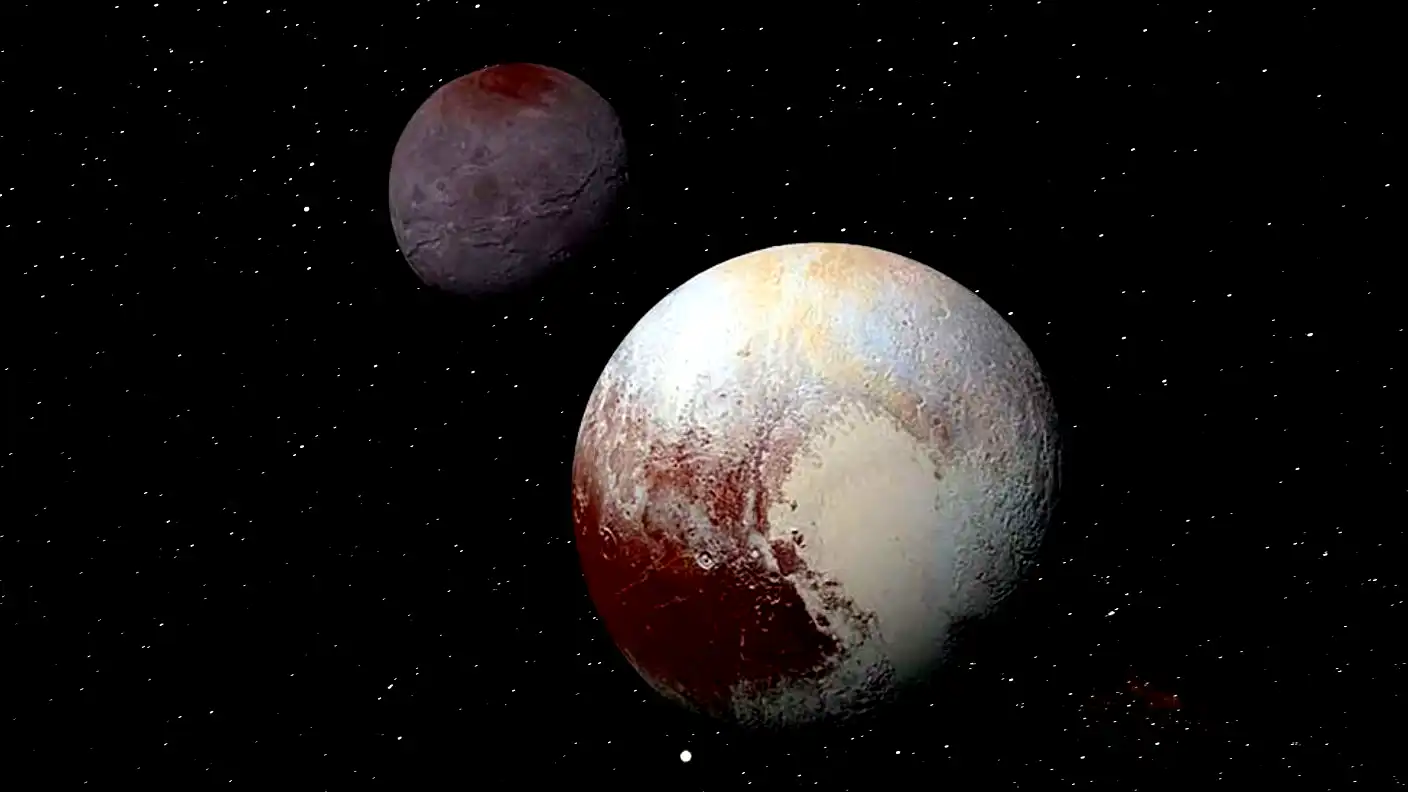
This demotion upset many space fans, but discoveries over the past decade added fresh fuel to the fire. In July 2015, the NASA New Horizons spacecraft finally reached Pluto after a journey of more than 3 billion miles. The probe captured the very first close-up images of the surface and sent them back to Earth.
These stunning photographs revealed a surprisingly active and complex world. Scientists expected to see a dead, boring rock. Instead, they saw towering mountains made of solid water ice and massive glaciers flowing with frozen nitrogen. The geologically diverse surface challenged all the old assumptions that experts held about the dwarf planet. The world looked incredibly active, which made many people feel it deserved its old title back.
Despite these amazing photographic discoveries, the International Astronomical Union stands firm. This organization is the only internationally recognized authority with the power to assign official designations to celestial bodies. So far, the group has completely refused to revisit or change its controversial 2006 decision.
For the time being, textbooks will continue to label Pluto as a dwarf planet. Any future changes depend entirely on the strength of the new scientific arguments that NASA plans to present. If Isaacman and his team can build a compelling case, they might just force the global astronomy community to rewrite the history books one more time.