Key Points:
- Nvidia CEO Jensen Huang unveiled the new Groq 3 chip and server racks during a 2.5-hour keynote at GTC 2026.
- The company shifted its focus heavily toward AI inferencing following a $20 billion deal with chipmaker Groq last December.
- New hardware combinations offer up to 35x higher inference throughput per megawatt compared to older Blackwell systems.
- Nvidia also launched NemoClaw to provide strong security guardrails for popular OpenClaw AI agents.
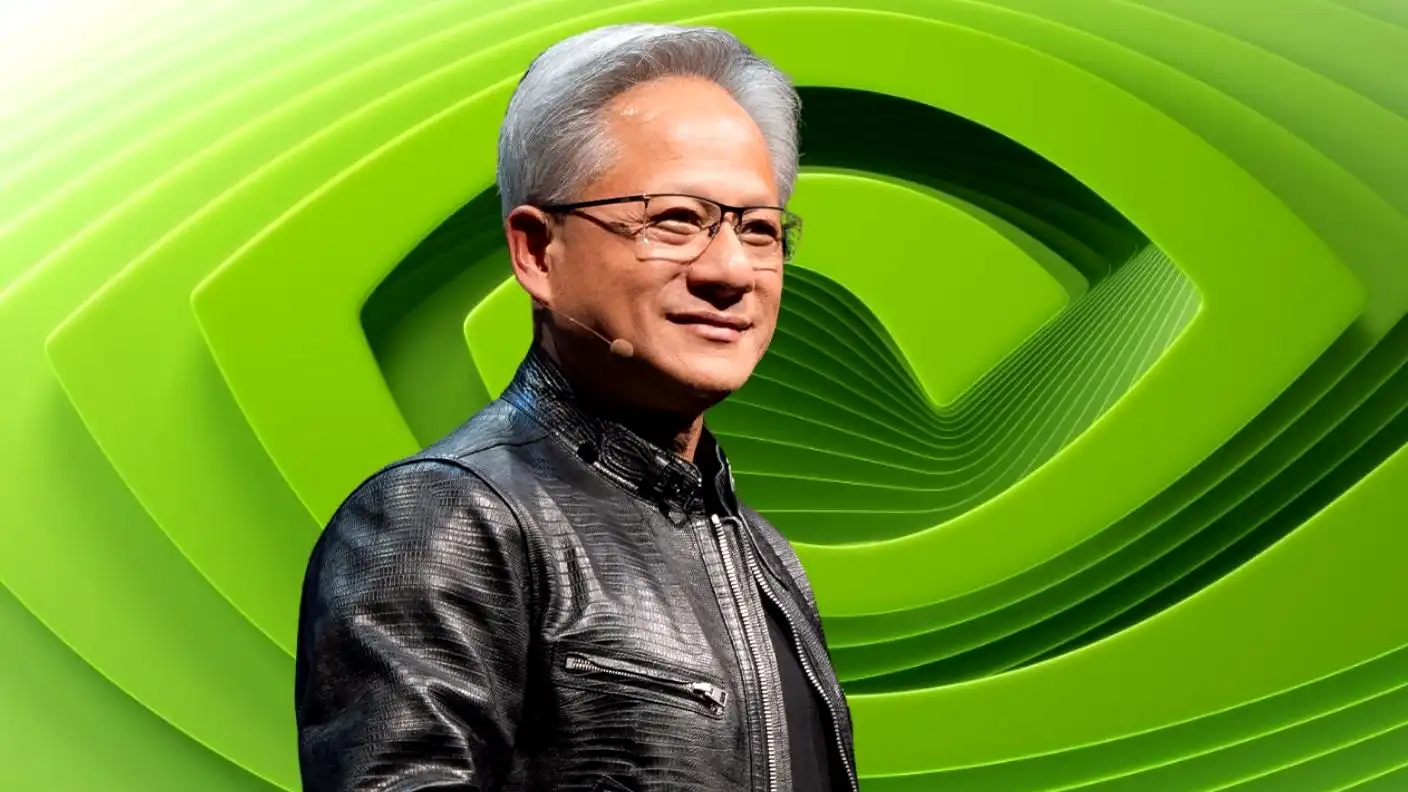
Jensen Huang stepped onto the stage at Nvidia’s GTC event in San Jose, California, on Monday. Wearing his signature leather jacket, the CEO gave the world a massive update on the most valuable company on the planet. He delivered a fast-paced, 2.5-hour keynote to an excited crowd of roughly 30,000 attendees. This event, often called the Super Bowl of AI, highlighted a major shift in Nvidia’s plans to dominate the future of technology.
For years, people knew Nvidia for its general-purpose chips that train artificial intelligence models and drive self-driving cars. However, upstart competitors like Cerebras and Groq have recently begun building processors designed specifically for running those models, a process called inference. To protect its massive market share, Nvidia showed up to GTC 2026 ready to prove it leads the inferencing race, too.
Nvidia answered the competition by revealing its new Groq 3 chip and the Groq 3 LPX server rack. This launch stems directly from a massive $20 billion deal Nvidia signed with Groq back in December. Through that agreement, Nvidia acquired Groq’s intellectual property and hired top leaders, including founder Jonathan Ross and president Sunny Madra. Now, Nvidia officially offers graphics processing units, central processing units, and language processing units.
Huang explained that as AI models grow larger, speed becomes a serious problem. Servers must answer complex questions instantly. To solve this, Nvidia combined its Vera Rubin system, which features 6 chips, with the new Groq 3 LPX rack. Huang proudly announced that this new pairing delivers up to 35x higher inference throughput per megawatt than the older Blackwell system alone. He also claimed this setup creates up to 10x more revenue opportunity for trillion-parameter models.
Beyond the Groq integration, Nvidia showed off its new Vera CPU rack. Previously, the company combined 1 Vera CPU with 2 Rubin GPUs. Now, Nvidia is breaking the Vera CPU out as a standalone chip and packing 256 of them into a single system. CPUs handle the heavy lifting when autonomous AI agents browse websites or pull data from spreadsheets. Huang noted that these Vera servers represent a multibillion-dollar opportunity, though he stressed Nvidia does not want to steal everyday computing tasks away from rivals like Intel or AMD.
Hardware only tells half the story. Nvidia also jumped headfirst into the trendy world of high-powered AI agents. The tech industry recently fell in love with OpenClaw, a tool that debuted as Clawd in November 2025, changed its name to Moltbot, and became OpenClaw in January. This software lets users run self-evolving AI agents directly through daily apps like WhatsApp, Discord, and Slack.
While OpenClaw does annoying daily work for users, its self-evolving nature creates a massive security nightmare. These autonomous bots can learn and bypass roadblocks, meaning they might grab sensitive data you never wanted them to see. To stop this, Nvidia launched the NemoClaw platform. NemoClaw puts strict guardrails around these digital agents, keeping them safe and secure on local computers and enterprise networks.
Industry experts praised Nvidia’s quick reaction to market trends. Patrick Moorhead, founder of Moor Insights and Strategy, noted that Nvidia realized it needed a high-performance inferencing solution and knew standard GPUs could not get the job done alone. By rapidly launching NemoClaw and integrating Groq technology, Nvidia proves it can pivot instantly to the next big AI hotspot and firmly hold onto its industry leadership.