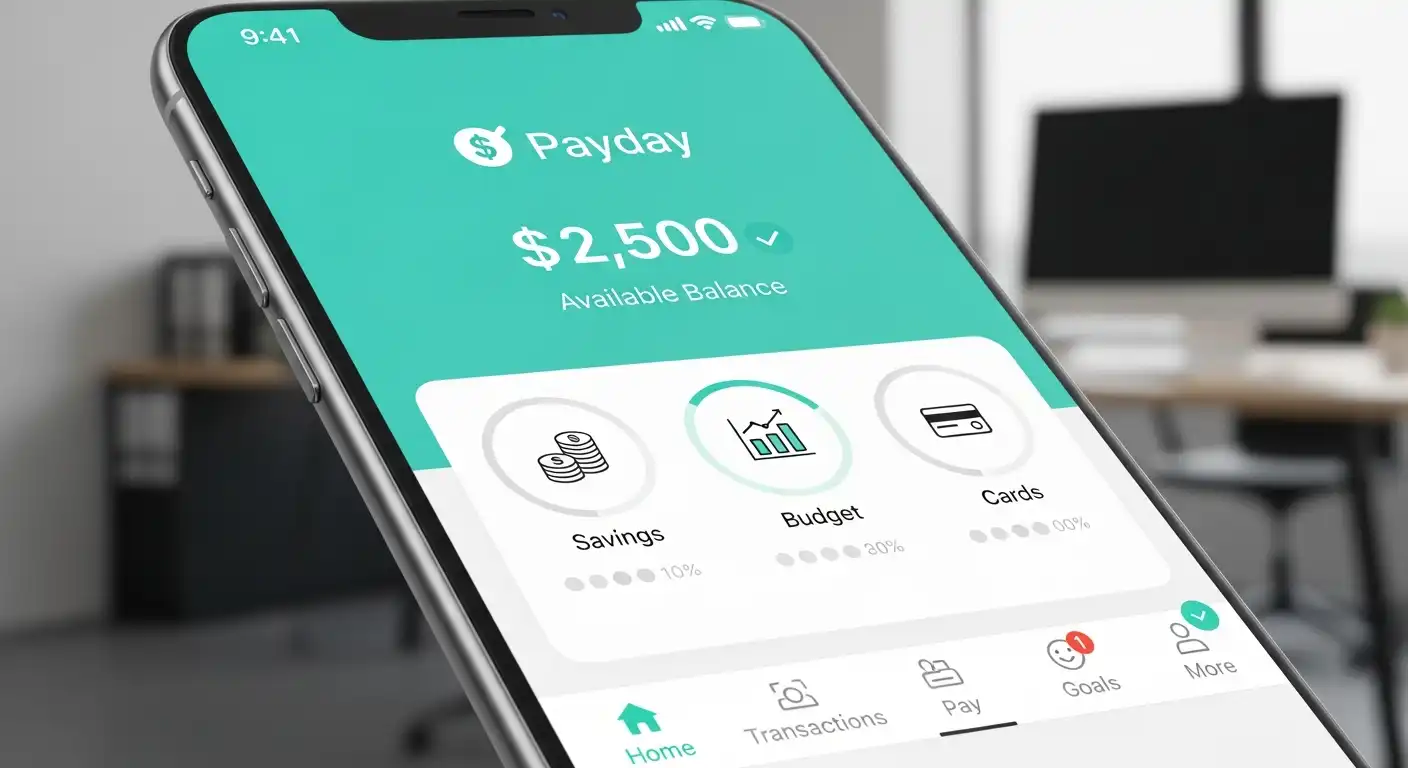
In an age where your smartphone can order groceries, book a flight, and connect you with the world, it can also deliver a portion of your paycheck before payday. Welcome to the world of payday apps, also known as salary advance or earned wage access (EWA) apps. They promise a quick, low-cost solution to a universal problem: the cash crunch that hits when an unexpected expense arises days before your salary is due.
For millions, these apps are a godsend, a way to fix a flat tire or cover a medical co-pay without resorting to high-interest payday loans or incurring hefty bank overdraft fees. But as their popularity soars, so do the questions. Are these services the financial innovation we’ve been waiting for, or are they a modern-day debt trap cloaked in user-friendly technology?
This comprehensive guide will pull back the curtain on payday apps. We will explore what they are, how they work, and critically examine their key pros and cons. We’ll also compare them to their notorious predecessors, payday loans, and provide a roadmap of safer alternatives to help you build a more resilient financial future.
What Exactly Are Payday Apps?
At its core, a payday app is a financial technology (FinTech) service that lets you access a portion of wages you have already earned but have not yet been paid. If you work the first week of a two-week pay period, you’ve technically earned that money, but it’s inaccessible until your employer processes payroll. Payday apps bridge this gap. They provide a mechanism to get a small advance on your upcoming paycheck, typically ranging from $50 to $500, directly through your smartphone.
The Rise of Earned Wage Access (EWA)
The concept behind these apps is often referred to as Earned Wage Access, or EWA. This model has gained significant traction as a modern employee benefit. The fundamental idea is that workers should have access to their money as they earn it, rather than being forced to wait for an arbitrary pay cycle. This flexibility, proponents argue, can reduce financial stress, improve employee morale, and decrease turnover. While some apps partner directly with employers to offer EWA as a formal benefit, many more operate on a direct-to-consumer model, allowing almost anyone with a steady job and a bank account to sign up.
How Do Payday Apps Work?
While each app has a slightly different interface, the underlying process is remarkably consistent and designed for simplicity:
- Download and Sign Up: You start by downloading the app of your choice (such as Earnin, Dave, Brigit, or MoneyLion) and creating an account.
- Connect Your Bank Account: You’ll be required to link the app to your primary checking account using a secure service like Plaid. This allows the app to verify your identity, confirm you have a regular source of income via direct deposit, and monitor your account balance to assess your ability to repay.
- Verify Your Employment: The app needs to know you have a job. Some apps do this by tracking your work location via your phone’s GPS (like Earnin’s original model) or by analyzing your direct deposit history. Apps that partner with your employer get this information directly.
- Request an Advance: Once you’re verified, you can request an advance. The app will tell you your available limit based on your income and spending habits. You select the amount you need, and the funds are typically transferred to your linked bank account.
- Receive Your Funds: Standard transfers might take one to three business days to arrive for free. For a small fee (typically $1.99 to $8.99), most apps offer an “instant” transfer that delivers the funds in minutes.
- Automatic Repayment: This is the key feature. On your next scheduled payday, the app automatically deducts the exact amount you borrowed, plus any fees or optional “tips,” directly from your bank account. There’s no interest to calculate and no monthly payments to remember.
Key Differences from Traditional Payday Loans
It’s crucial to distinguish payday apps from traditional payday loans, as they operate under very different models. Confusing the two can lead to poor financial decisions.
- Cost Structure: Payday loans are notorious for their predatory triple-digit Annual Percentage Rates (APRs), often exceeding 400%. Payday apps, in contrast, do not charge interest. Their revenue comes from optional tips, small instant transfer fees, and monthly subscription fees. While these fees can add up, they are almost always significantly lower than those of a payday loan.
- Regulatory Framework: Payday loans are treated as loans and are subject to lending laws like the Truth in Lending Act. Payday apps have largely operated in a regulatory gray area, arguing that they are not lenders but are simply providing access to money already earned. This is slowly changing, but the distinction remains important.
- Impact on Credit: Payday loans typically do not improve your credit score, but failing to repay one can severely damage it if the debt is sent to collections. Salary advance apps do not require a credit check and do not report your activity to the major credit bureaus, so they have no direct impact on your credit score, for better or worse.
- Debt Cycle Potential: The structure of a payday loan, with its high interest and lump-sum repayment, is infamous for trapping borrowers in a cycle of debt. While payday apps can create a cycle of dependency (more on that later), the lack of compounding interest makes it a less aggressive and financially ruinous trap.
The Bright Side: The Pros of Using Salary Advance Apps
When used responsibly, these apps offer several compelling advantages that have made them a popular financial tool for millions.
Immediate Access to Earned Wages in an Emergency
Life is unpredictable. A car battery dies, a child gets sick, or a pipe bursts. These are not budgeting failures; they are emergencies. When you need cash immediately, and payday is a week away, a salary advance app can be an incredibly effective solution. The ability to get up to a few hundred dollars in your account within minutes can be the difference between a manageable inconvenience and a full-blown financial crisis.
Lower Costs Compared to Payday Loans and Overdraft Fees. Let’s
Let’s look at the math. A typical bank overdraft fee is around $35. If you accidentally overdraw your account by just $20, you’re effectively paying a 175% fee. In comparison, getting a $100 advance from a payday app might cost a $3.99 instant transfer fee and a suggested $2 tip. That’s a total cost of $5.99—vastly cheaper than the alternatives. For short-term cash needs, they are among the most cost-effective options.
Convenience and Ease of Use
The user experience of these apps is a major selling point. The entire process, from sign-up to cash delivery, is handled on your smartphone in minutes. There are no paper forms to fill out, no need to travel to a storefront, and no lengthy approval processes. The interface is intuitive and designed for speed, catering to a digitally native generation that expects on-demand services.
No Credit Check Required
For a significant portion of the population with poor or no credit history, accessing traditional forms of credit, such as personal loans or credit cards, is difficult, if not impossible. Payday apps level the playing field. Since they are advancing your own earned money, your credit score is irrelevant. Eligibility is based on income and employment status, making it an accessible financial tool for unbanked and underbanked communities.
Potential for Financial Wellness Features
Many leading apps are expanding beyond simple cash advances. They are evolving into comprehensive financial wellness platforms. Apps like Dave and Brigit offer features that help you budget, monitor your spending, and receive alerts when you are at risk of overdrawing your account. Some, like Brigit, also offer credit-builder programs to help users improve their credit scores over time. This holistic approach demonstrates a genuine commitment to improving users’ overall financial health, not just providing a temporary fix.
The Hidden Dangers: The Cons and Risks of Payday Apps
Despite their benefits, salary advance apps are not without significant risks. Overlooking these downsides can worsen your financial situation.
The Potential for a Cycle of Dependency
This is arguably the greatest risk. When you take a $100 advance, your next paycheck will be $100 smaller. This can create a shortfall in the next pay period, increasing the likelihood that you will need another advance to cover your expenses. This can quickly spiral into a chronic cycle where you are perpetually “borrowing” from your future self just to make it through the present. You become reliant on the app to bridge the gap it itself is creating. This dependency can mask underlying financial problems, preventing you from addressing the root cause of your cash shortfalls.
The True Cost: Fees, Tips, and Subscriptions
While cheaper than payday loans, these apps are not free. The costs can be opaque and add up quickly.
- Instant Transfer Fees: When you need money in an emergency, you need it now. The instant transfer fees, while small individually, can become substantial if you use the service frequently. A $4.99 fee on a $50 advance is nearly a 10% charge.
- “Optional” Tips: Many apps, like Earnin, pioneered a model based on optional tips. While framed as a way for users to “pay what is fair,” this model can be psychologically manipulative. Users may feel pressured to tip to ensure future access or “good standing” with the app.
- Monthly Subscriptions: Other apps, like Brigit and Dave, operate on a monthly subscription model. For a fee of around $9.99 per month, you get access to advances and other financial tools. If you only use the advanced feature once or twice a year, you could be paying over $120 for a service you rarely need.
Deceptive “0% APR” Claims
The claim of “0% APR” is technically true because these apps don’t charge interest. However, this can be misleading. When you calculate fees as a percentage of the advance amount for a short-term period, the effective APR can be surprisingly high. For example, paying a $5 fee on a $100 advance repaid in 10 days yields an APR over 180%. While still better than a payday loan, it’s far from “free money.”
Data Privacy and Security Concerns
To use these apps, you must grant them an extraordinary amount of access to your most sensitive financial data. By linking your bank account, you are giving the app a real-time view of your income, spending habits, account balance, and transaction history. While these companies use bank-level security, any centralized data repository is a potential target for hackers. You must be comfortable with this data-sharing trade-off.
Not a Solution for Chronic Financial Problems
A salary advance is a temporary patch, not a long-term solution. It can address a one-time cash-flow problem, but it cannot fix fundamental issues such as overspending, insufficient income, or insufficient savings. Relying on these apps to cover regular, recurring expenses like rent or utility bills is a red flag of deeper financial instability that needs to be addressed through budgeting, increasing income, or reducing expenses.
When Should You Use a Payday App?
Given the balance of pros and cons, the decision to use a payday app should be made with caution and deliberation.
For Genuine, One-Time Emergencies
The ideal use case for a salary advance app is a true, unforeseen emergency. Your refrigerator breaks down, you have an unexpected medical bill, or you need to make an emergency trip. In these situations, where you have a clear plan to cover your expenses once your full paycheck arrives, the app serves its intended purpose perfectly.
To Avoid a Higher-Cost Alternative
If your only other options are a bank overdraft fee, a late payment fee that will ding your credit, or a high-interest payday loan, then a salary advance app is almost certainly the lesser of two evils. The goal is to choose the option with the least negative financial impact.
Scenarios to Avoid Using Salary Advances
You should avoid using these apps for non-essential purchases such as concert tickets, new clothes, or dining out. Using debt or an advance for discretionary spending is a dangerous habit. Furthermore, avoid using them to pay for recurring bills. If you cannot afford your rent or car payment without an advance, it is a sign of a structural budget deficit that an advance will only postpone, not solve.
Smarter Alternatives to Payday Apps
Before turning to a salary advance, it’s wise to explore other, often better, alternatives. Building these habits and resources can eliminate the need for payday apps.
Build an Emergency Fund
This is the number one long-term solution. An emergency fund is a savings account that covers three to six months of living expenses. Having this cushion allows you to handle unexpected costs without stress and without needing to borrow money. Start small—even saving $500 can cover most common emergencies and break the cycle of living paycheck to paycheck. Automate a small transfer to a high-yield savings account each payday.
Negotiate with Creditors and Billers
If you’re facing a looming bill you can’t pay, pick up the phone. Many utility companies, landlords, and credit card issuers are willing to offer a payment plan, defer a payment, or waive a late fee if you proactively reach out to them. They would rather get paid late than not get paid at all.
Request a Paycheck Advance from Your Employer
Many companies, especially smaller ones, are willing to offer a direct payroll advance to employees in good standing. This is often the cheapest option, as it typically comes with no fees. Speak with your HR department or manager to see if this is an option.
Use a Low-Interest Credit Card
For those with good credit, a low-interest credit card can be a viable option for emergencies. While you will pay interest if you carry a balance, the APR will be significantly lower than the effective APR of many payday app fees. Many cards also offer 0% introductory APR periods on purchases.
Personal Loans from Credit Unions
Credit unions are non-profit financial institutions known for their member-friendly policies. They often offer small personal loans (sometimes called Payday Alternative Loans or PALs) with much lower interest rates and more flexible repayment terms than traditional banks or payday lenders.
Building a Financially Secure Future
Ultimately, the goal is to create a financial life where you are not dependent on advances to get by. Payday apps can be a useful tool on this journey, but they should not be the destination.
The Power of a Detailed Budget
The foundation of financial stability is knowing where your money is going. Use a budgeting app or a simple spreadsheet to track your income and expenses. A clear budget will reveal areas where you can cut back and free up cash for savings and debt repayment.
Strategies to Increase Your Income
Sometimes, the problem isn’t spending—it’s income. Explore opportunities for a raise or promotion at your current job. Consider taking on a side hustle, freelance work, or part-time employment to create an additional income stream that can be directed toward your financial goals.
The Final Verdict: A Tool, Not a Cure
Payday apps are powerful yet complex financial tools. They represent a significant improvement over predatory payday loans. They can be a lifeline in a genuine emergency, offering a convenient and relatively low-cost way to bridge a temporary financial gap.
However, their convenience is also their biggest risk. The ease of access can foster a cycle of dependency, masking deeper financial issues and turning a short-term solution into a long-term crutch. The “interest-free” label can obscure the real costs associated with fees, tips, and subscriptions.
The smartest way to approach a salary advance app is with a healthy dose of skepticism and strict discipline. Use them rarely, understand the full cost, and only for true, unavoidable emergencies. Your primary focus should always be on the long-term cure: building an emergency fund, creating a workable budget, and developing financial habits that lead to stability and freedom, rendering the need for an advance obsolete.