

Key Points:
- Wall Street analyst Alexander Potter set a $500 price target for Tesla stock.
- The traditional car and software businesses hold a combined value of $400 per share.
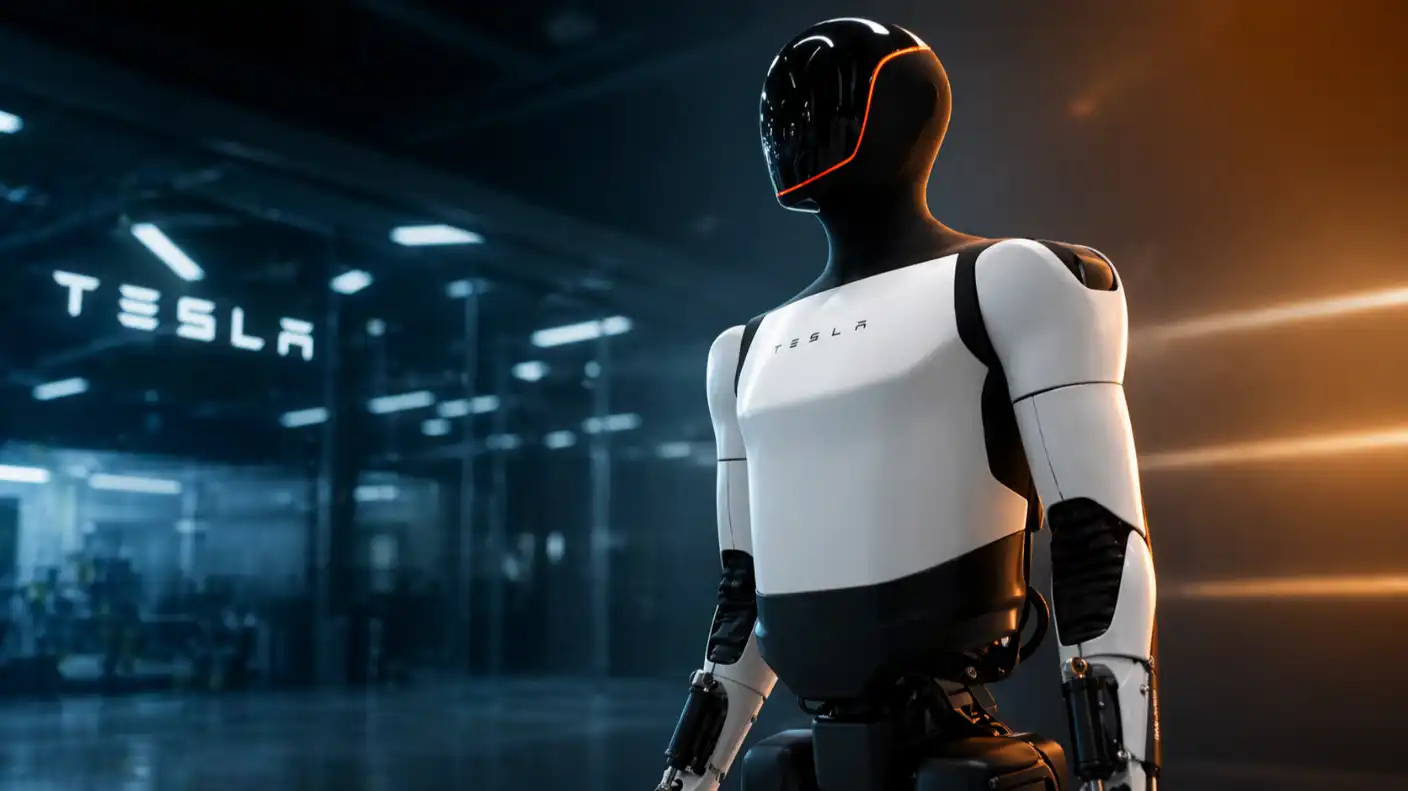
- Buyers purchasing shares near the current $420 price essentially get the Optimus robot business for free.
- Tesla recently reported 1.1 million active subscribers for its self-driving software program.
Investors buying Tesla stock near the $420 mark receive a massive hidden bonus. According to a major investment bank, people buying shares today essentially get the entire Optimus humanoid robot business for free. Alexander Potter, an analyst at Piper Sandler, broke down this surprising math in the second edition of his massive investment guide.
Potter built a new financial model that splits the giant electric vehicle company into 17 specific product lines. These core businesses include traditional car manufacturing, energy storage batteries, the global supercharging network, and the internal insurance program. He also included future software revenues from self-driving subscriptions and the upcoming robotaxi business.
When the analyst added the values of these 17 specific lines together using a 20-year cash flow analysis, he arrived at a base value of $400 per share. This calculation sits just shy of the current stock price. However, this $400 baseline calculation completely ignores the Optimus humanoid robot. Potter intentionally left the ambitious robotics project out of his main financial model.
Because the stock currently trades around $420, Potter argues that buyers pay almost nothing extra to own a piece of the robot program. He noted that investors essentially grab the robotics division for free. However, he made it very clear that the robot holds massive value. He simply finds it impossible to properly value a machine that might eventually reshape the entire global labor market and completely alter global economic output.
Potter believes Optimus and a separate artificial intelligence service act as transformational products. He stated that these future projects could soon be worth more than the rest of the traditional businesses combined. Because predicting the exact financial impact of these future products is so difficult today, he advises investors to enjoy the free option simply.
To account for this massive future potential, Potter set his official price target for the stock at $500. The math behind this target remains very straightforward. He takes his $500 price target and subtracts the $400 value of the 17 modeled product lines. This simple equation leaves exactly $100 per share to cover the Optimus robot and any other wild projects the chief executive decides to build.
To reach this high valuation, Piper Sandler changed its view of the company. The firm increased its earnings multiple to 233 times projected earnings for 2027. This represents a significant jump from the previous multiple of 180. Potter justifies this higher valuation by pointing out the hidden revenue streams that other Wall Street analysts consistently overlook.
According to the report, most financial models completely overlook the profits generated by the internal insurance program and the charging stations. Potter also ensured his new model reflected specific values for the robotaxi business and factored in the massive 2025 compensation plan for the chief executive. He believes his approach paints a much more accurate picture of the entire corporate structure.
Despite his high price target, Potter actually lowered his expectations for short-term profits. He cut his revenue and earnings predictions for 2026 and 2027 below the current Wall Street consensus. He blames this expected drop on slower car deliveries of older, discontinued models. He also expects the company to make less money selling regulatory credits to rival automakers.
However, the analyst believes a short-term earnings miss will not hurt the stock price at all. The entire investment thesis relies on a massive shift in how the market views the company. Investors no longer care about traditional automotive numbers like daily factory output. Wall Street now focuses heavily on software progress and artificial intelligence milestones.
The company recently announced that it has 1.1 million active subscribers to its full self-driving software as of the fourth quarter of 2025. Potter argues that traditional car metrics lose their relevance every single day. As long as self-driving numbers and robotaxi metrics continue to improve, he believes the stock has a very strong floor at $400 per share.
This overall bullish stance completely depends on execution. Slowing car sales will not crash the stock if new business lines, such as artificial intelligence and insurance, generate enough cash. Ultimately, the success of this massive financial bet falls directly on the shoulders of Elon Musk. He must turn these ambitious robot plans into a working reality to deliver the massive payoff investors expect.






