
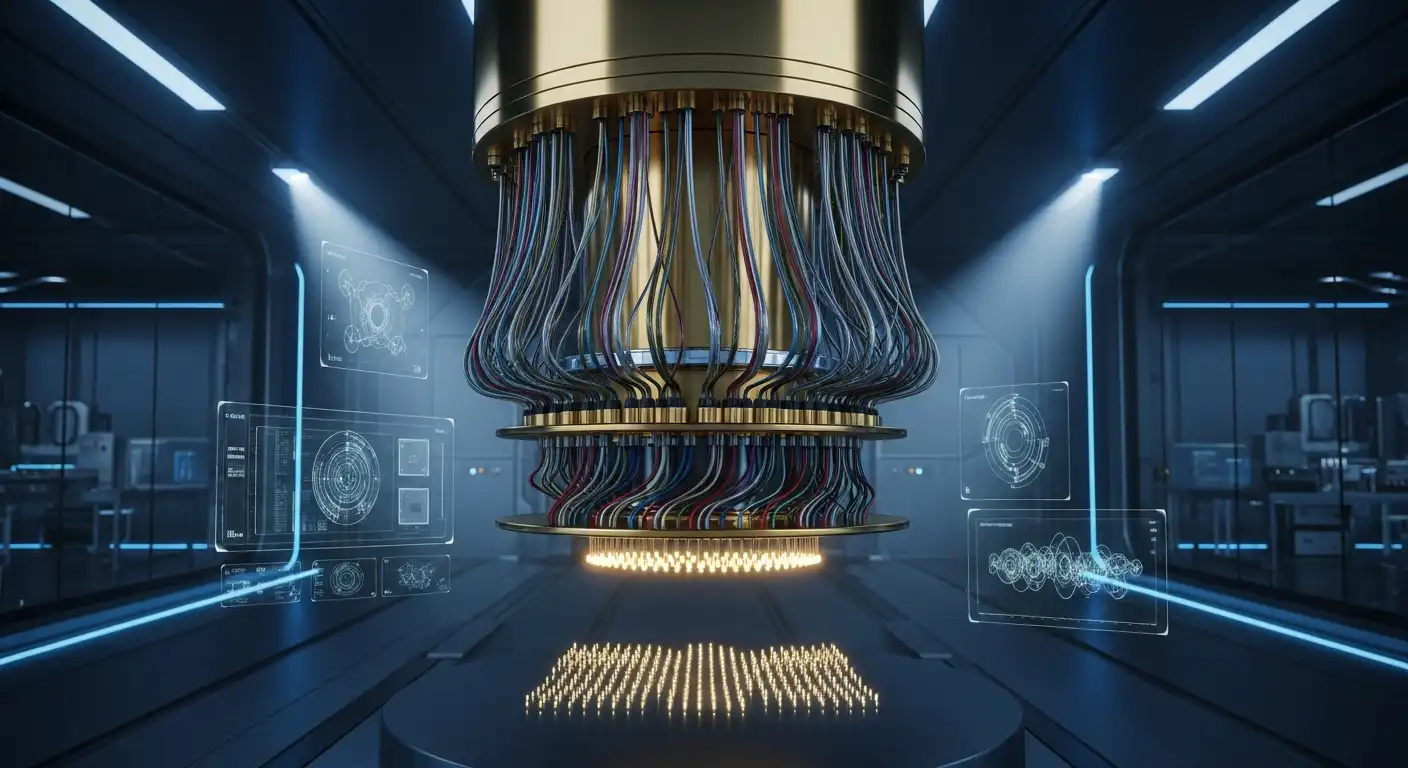
For the entirety of human history, our progress has been defined by the tools we use to compute. From the humble abacus to the mechanical calculators of the industrial revolution, and finally to the silicon-based digital computers that power our modern world, each leap in computational ability has unleashed a corresponding tidal wave of innovation and societal change. We now stand on the precipice of the next great computational paradigm shift, a leap so profound that it makes the transition from the abacus to the supercomputer seem like a mere step. This is the dawn of the age of quantum computing.
This is not merely a story about building faster computers. It is a story about building a fundamentally different kind of computer, one that operates not on the familiar, deterministic rules of classical physics, but on the strange, probabilistic, and often counterintuitive laws of the quantum realm. By harnessing phenomena like superposition and entanglement, quantum computers promise to solve certain classes of problems that are, and will forever be, intractable for even the most powerful supercomputers we could ever imagine building. This is not an incremental improvement; it is a rewriting of the rules of computation itself. For global industries, from medicine and finance to manufacturing and energy, the implications are staggering. Quantum computing is a disruptive force of unprecedented scale, holding the potential to solve humanity’s most complex challenges and, in the process, create unimaginable value, reshaping the very fabric of our global economy.
Beyond the Bit: Deconstructing the Foundations of Quantum Computing
To understand why quantum computing is so revolutionary, we must first understand how it differs from the classical computers that sit on our desks and in our pockets. The entire digital world is built upon a simple, binary foundation: the bit.
A classical bit is like a light switch; it can be in one of two definite states: either a 0 (off) or a 1 (on). All the complex software, video streaming, and data processing we experience is, at its most fundamental level, a manipulation of billions of these simple on/off switches. A quantum computer, however, is built upon a far more powerful and mysterious foundation: the quantum bit, or “qubit.”
The Qubit: The Heart of Quantum Power
A qubit is not limited to being just a 0 or a 1. Thanks to a quantum mechanical principle called superposition, a qubit can exist in a combination of both states simultaneously.
This fundamental difference is the source of a quantum computer’s exponential power, which is further enhanced by two other bizarre quantum phenomena.
- Superposition: Think of a classical bit as a coin lying flat on a table, either heads (1) or tails (0). A qubit is like that same coin while it is spinning in the air. It is not definitively heads or tails but exists in a probabilistic state of being both at once. It is only when we “measure” the qubit that it “collapses” into one of the definite states, 0 or 1. This ability to represent multiple values simultaneously enables a quantum computer to explore a vast number of possibilities simultaneously. Two qubits in superposition can represent four states (00, 01, 10, and 11) simultaneously. Three qubits can represent eight states. The number of states a quantum computer can explore grows exponentially with each added qubit. A mere 300-qubit quantum computer could, in theory, explore more states simultaneously than there are atoms in the known universe.
- Entanglement: Albert Einstein famously referred to this phenomenon as “spooky action at a distance.” When two or more qubits are entangled, their fates become inextricably linked, no matter how far apart they are. The state of one qubit is instantly correlated with the state of the other. If you measure one and find it is a 0, you instantly know its entangled partner must be a 1 (depending on how they were entangled). This creates a powerful form of correlation that has no classical equivalent and is a key ingredient in many quantum algorithms, allowing for complex, multi-qubit operations that are crucial for solving real-world problems.
- Interference: Quantum mechanics describes particles not just as points, but as waves. Like waves in a pond, these quantum waves can interfere with each other. Quantum algorithms are cleverly designed to leverage this property. They set up the quantum computation in such a way that the wave patterns corresponding to the wrong answers cancel each other out (destructive interference). In contrast, the wave patterns for the right answer reinforce each other (constructive interference). This makes the correct solution much more likely to be found when the qubits are finally measured.
The Quantum Advantage: What Problems Can Quantum Computers Actually Solve?
Quantum computers will not replace your laptop for browsing the web or writing an email. They are specialized machines designed to tackle a specific class of problems that are “computationally hard” for classical computers. These problems typically involve a massive number of interacting variables, making them exponentially difficult to solve as the number of variables increases.
The ability to solve these problems is known as achieving a “quantum advantage,” and it falls into three main categories.
- Simulation: The universe is, at its heart, quantum mechanical. Richard Feynman, the Nobel Prize-winning physicist, famously pointed out that if you want to simulate nature, you’d better build a quantum system to do it. Classical computers are terrible at simulating the behavior of molecules and materials at the quantum level because the complexity grows exponentially. A quantum computer, being a quantum system itself, is perfectly suited for this task.
- Optimization: Many of the world’s most significant business and scientific problems are optimization problems, which involve finding the best possible solution from a vast number of potential options. This includes everything from finding the most efficient delivery route to designing the optimal financial portfolio. For many of these problems, the number of possible solutions is so enormous that a classical computer would take billions of years to check them all. Quantum algorithms are designed to explore this massive solution space in a more efficient way to find the optimal, or near-optimal, solution.
- Factoring and Cryptography: A specific type of problem that quantum computers are uniquely good at is finding the prime factors of huge numbers. While this may sound like a niche mathematical curiosity, it forms the foundation of most of the cryptography that protects our digital world today.
The Shockwave of Disruption: How Quantum Computing Will Reshape Global Industries
The theoretical power of quantum computing is staggering. But where will this power be directed? The potential for disruption spans nearly every sector of the global economy, promising to solve long-standing challenges and create entirely new industries.
Let’s explore the specific ways in which quantum computing is poised to become a transformative force across key global industries.
Healthcare, Pharmaceuticals, and the Dawn of Personalized Medicine
The process of discovering new drugs and materials is currently a slow, expensive, and often serendipitous process of trial and error. Quantum computing promises to transform this art into a precise and predictive science.
By accurately simulating molecular interactions, quantum computers are poised to revolutionize the design of drugs and enhance our understanding of biology.
- Drug Discovery and Design: The human body is a complex web of proteins. Many diseases are caused by faulty proteins, and drugs work by binding to these proteins to alter their function. The problem is that predicting how a complex drug molecule will fold and interact with a target protein is a quantum mechanical problem of immense complexity. A classical supercomputer cannot accurately model this for anything but the simplest molecules. A fault-tolerant quantum computer could simulate this interaction with perfect fidelity, allowing chemists to design new, highly effective drugs in silico (on a computer) before ever synthesizing them in a lab. This could slash the time and cost of drug development (currently over a decade and billions of dollars) and lead to cures for diseases like Alzheimer’s, Parkinson’s, and many forms of cancer.
- Personalized Medicine and Genomics: The human genome contains over 3 billion base pairs. Analyzing this vast amount of data to understand the complex interplay of genes that leads to disease is a massive computational challenge. Quantum machine learning algorithms could analyze genomic data sets in new ways, identifying complex patterns and correlations that are invisible to classical algorithms. This could lead to truly personalized medicine, where treatments and drug regimens are tailored to an individual’s unique genetic makeup, dramatically improving efficacy and reducing side effects.
- Accelerating Medical Research: Complex biological processes, like protein folding, are at the root of many diseases. Misfolded proteins are implicated in conditions like cystic fibrosis and dementia. Simulating the dynamics of protein folding is a classic problem in quantum mechanics. By understanding this process, researchers could develop novel therapies to correct or prevent it.
Finance, Economics, and the Quantum Overhaul of Wall Street
The financial industry is a world of immense complexity, risk, and optimization. Quantum computing is perfectly suited to tackle the industry’s most challenging computational problems, promising to create more efficient markets and more sophisticated risk management tools.
From portfolio optimization to fraud detection, quantum algorithms could provide a significant edge in a hyper-competitive industry.
- Portfolio Optimization and Risk Analysis: A central challenge in finance is to create an investment portfolio that maximizes returns for a given level of risk. With thousands of assets and a near-infinite number of variables affecting their prices, this is a fiendishly complex optimization problem. Quantum optimization algorithms could analyze a much larger set of assets and more complex correlations, identifying optimal portfolios that are simply impossible to find with classical methods.
- Accelerating Monte Carlo Simulations: Financial institutions heavily rely on Monte Carlo simulations to price complex derivatives and model market risk. These methods involve running millions or billions of random simulations of market movements to understand the range of possible outcomes. Quantum algorithms have the potential to quadratically speed up these simulations, enabling more accurate pricing and significantly faster, more sophisticated real-time risk analysis.
- Quantum Machine Learning for Algorithmic Trading: Quantum machine learning (QML) can be utilized to train trading models on vast and complex datasets, enabling the identification of subtle, high-dimensional patterns in market behavior. This could lead to more predictive and profitable trading strategies, operating at speeds and levels of complexity that are beyond the reach of classical AI.
Materials Science and Manufacturing: Designing the Future from the Atom Up
For centuries, the discovery of new materials has been a slow process of experimentation and happy accidents. Quantum computing will enable us to become true atomic architects, designing novel materials with precisely the properties we desire.
This could unleash a new industrial revolution, creating materials that are stronger, lighter, more conductive, or have other exotic properties.
- Designing Better Batteries: The performance of batteries is limited by the chemical reactions that occur at the molecular level in the electrolyte and at the electrodes. By accurately simulating these quantum chemical processes, researchers could design new battery chemistries that are more energy-dense, charge faster, last longer, and are made from more abundant, environmentally friendly materials. This would be a game-changer for electric vehicles and grid-scale energy storage.
- Creating New Catalysts for Industry and the Environment: Catalysts are materials that accelerate chemical reactions, and they are essential for processes ranging from fertilizer production to oil refining and reducing pollution in car exhausts. Designing more efficient catalysts is a quantum simulation problem. For example, a quantum computer could aid in designing a catalyst that mimics the natural process of nitrogen fixation used by bacteria, enabling us to produce ammonia for fertilizer with a fraction of the energy currently required by the Haber-Bosch process, which consumes over 1% of the world’s total energy.
- The Quest for Room-Temperature Superconductors: Superconductors are materials that can conduct electricity with zero resistance, a property that could revolutionize power transmission and computing. Currently, they only work at extremely low temperatures. A quantum computer could help us understand the complex quantum mechanics behind high-temperature superconductivity, potentially leading to the discovery of a material that is superconducting at room temperature—a holy grail of materials science.
Artificial Intelligence and the Next Generation of Machine Learning
Artificial intelligence is already a transformative technology, but its progress is often limited by the sheer amount of classical computing power required to train large models. Quantum computing promises to turbocharge certain aspects of machine learning, creating a powerful new synergy.
Quantum Machine Learning (QML) is a nascent yet incredibly exciting field that could solve problems intractable for even the most advanced classical AI.
- Solving More Complex AI Problems: QML algorithms are particularly well-suited for certain types of problems, such as classification and clustering on extremely high-dimensional datasets. This could lead to breakthroughs in areas like medical diagnosis, pattern recognition, and fraud detection.
- Quantum-Enhanced Optimization: Many machine learning tasks are fundamentally optimization problems, such as finding the optimal set of weights and biases for a neural network. Quantum optimization algorithms could explore the vast parameter space of these models more efficiently, potentially leading to better, more powerful AI models that can be trained with less data.
- A New Kind of AI: Some researchers believe that quantum computers could enable entirely new types of AI models inspired by quantum phenomena themselves, moving beyond the classical neural network architecture that currently dominates the field.
Logistics, Supply Chain, and the Optimization of Everything
Modern society runs on a complex, global network of logistics and supply chains. Optimizing these systems is a problem of staggering complexity, famously exemplified by the “Traveling Salesman Problem,” where the goal is to find the shortest possible route that visits a set of cities and returns to the origin. As the number of cities grows, the number of possible routes explodes exponentially.
Quantum optimization algorithms are specifically designed for these types of “combinatorial optimization” problems, which are at the core of modern logistics.
- Route and Fleet Optimization: For global shipping companies like FedEx or Maersk, or airlines like Delta, optimizing the routes of thousands of vehicles, planes, and ships in real-time while accounting for weather, traffic, and delivery constraints is a monumental task. Quantum computers could find more optimal solutions, resulting in significant savings in fuel, time, and carbon emissions.
- Supply Chain and Factory Floor Optimization: Quantum algorithms could be used to optimize the entire supply chain, from sourcing raw materials to managing factory floor production schedules and optimizing inventory levels across a global network of warehouses.
- Network Design: Quantum computers could be used to design more efficient and resilient telecommunications networks, transportation grids, and energy distribution systems.
Energy and Environment: Tackling Climate Change at the Molecular Level
Many of the world’s most pressing environmental challenges, from climate change to food security, have solutions that are rooted in complex chemical and physical systems. Quantum computing offers a powerful new tool for understanding and manipulating these systems.
By modeling complex environmental systems and designing new green technologies, quantum could be a key ally in the fight for a sustainable future.
- Climate Change Modeling: Climate models are incredibly complex, with countless interacting variables. While quantum computers will not entirely replace classical supercomputers for this task, they could be used to solve specific, highly complex sub-problems within the models, such as simulating cloud formation or ocean chemistry with much greater accuracy.
- Carbon Capture and Sequestration: Developing more efficient materials and chemical processes for capturing carbon dioxide directly from the atmosphere is a major goal in climate science. A quantum computer could simulate and design new molecules (like metal-organic frameworks) or catalysts that bind to CO₂ much more effectively and with less energy input.
- Optimizing the Power Grid: Integrating intermittent renewable energy sources, such as wind and solar, into the power grid presents a significant challenge for optimization. Quantum computers could be used to optimize the flow of energy across the grid in real-time, improving stability and efficiency and reducing the need for fossil fuel backup power.
The Quantum Threat: A Ticking Clock for Global Cybersecurity
While the disruptive potential of quantum computing is largely positive, there is one area where it poses a profound and imminent threat: cybersecurity. The same mathematical properties that make quantum computers adept at optimization also render them an effective tool for breaking much of the public-key cryptography that underpins the security of the internet.
This is not a distant, theoretical threat. It is an active and urgent problem that security agencies and technology companies are currently racing to solve.
Shor’s Algorithm and the End of RSA
In 1994, the mathematician Peter Shor developed a quantum algorithm that could find the prime factors of a large number exponentially faster than any known classical algorithm. This was a bombshell because the security of the most widely used public-key encryption standards, like RSA and Elliptic Curve Cryptography (ECC), relies on the fact that prime factorization is incredibly difficult for classical computers.
A sufficiently large, fault-tolerant quantum computer running Shor’s algorithm would be capable of breaking the encryption that protects our online banking, e-commerce, secure communications, and government secrets.
The “Harvest Now, Decrypt Later” Attack
The threat is urgent even though such a powerful quantum computer does not yet exist. Adversaries, particularly state-sponsored actors, are believed to be engaging in “Harvest Now, Decrypt Later” (HNDL) attacks. They are siphoning up and storing massive amounts of encrypted data today, with the full expectation that they will be able to decrypt it in the future once a capable quantum computer is built. This poses a significant threat to any data that needs to remain confidential for an extended period, such as national security intelligence, intellectual property, and personal health records.
The Race for a Quantum-Resistant Future: Post-Quantum Cryptography (PQC)
The good news is that the cybersecurity community is not standing still. A major global effort is underway, led by institutions such as the U.S. National Institute of Standards and Technology (NIST), to develop and standardize a new generation of public-key cryptographic algorithms that are resistant to both classical and quantum computer attacks. This field is known as Post-Quantum Cryptography (PQC).
The transition to PQC will be one of the largest and most complex global technology upgrades in history, requiring every piece of software and hardware that uses public-key cryptography to be updated. Technology companies are already beginning this monumental task, but it will take a decade or more to complete.
The Sobering Reality: The Immense Challenges on the Road to Quantum Supremacy
For all its world-changing promise, it is crucial to understand that quantum computing is still in its infancy. Building and controlling these machines is arguably one of the most difficult engineering challenges humanity has ever undertaken. There are immense scientific and technical hurdles that must be overcome before we have the large-scale, fault-tolerant quantum computers needed to solve the disruptive problems discussed above.
It is essential to distinguish between the long-term potential and the near-term reality, and to understand the obstacles that lie ahead on the path.
The Nemesis of Decoherence and “Noise”
The biggest single challenge in quantum computing is decoherence. Qubits are incredibly fragile. Their delicate quantum states of superposition and entanglement are easily disturbed by the slightest interaction with their environment—a stray magnetic field, a tiny vibration, or a temperature fluctuation. When this happens, the quantum information is lost, and the computation is corrupted. This process is called decoherence, and it is the primary source of errors, or “noise,” in a quantum computer.
The Overwhelming Challenge of Quantum Error Correction (QEC)
Classical computers also have errors, but they are rare and can be easily corrected. In a noisy quantum computer, errors are constant and pervasive. To build a truly useful, “fault-tolerant” quantum computer, we need to implement Quantum Error Correction (QEC). QEC works by encoding the information of a single, perfect “logical qubit” across many noisy “physical qubits.” The problem is that the overhead is enormous. Current estimates suggest that it could take anywhere from 1,000 to 100,000 physical qubits to create a single, fully error-corrected logical qubit. This means a quantum computer with a million physical qubits might only have 10 to 1,000 usable logical qubits.
The Scalability Conundrum
Building a quantum computer with just a few dozen qubits is already a huge achievement. Scaling up to the millions of high-quality physical qubits needed for fault-tolerant computing is a monumental challenge. Each type of qubit technology (see below) has its own unique scaling hurdles, from manufacturing consistency to the complexity of the control wiring and cryogenic cooling.
The Quantum Talent Gap
There is a severe global shortage of people with the skills needed to advance the field of quantum computing. We need more quantum physicists, specialized engineers (in areas like cryogenics, microwave engineering, and photonics), and software developers who can write quantum algorithms. Building this “quantum-ready” workforce is a major challenge for universities, governments, and corporations alike.
The Quantum Ecosystem: The Players and Technologies Building the Future
The race to build a useful quantum computer is a global endeavor, involving a vibrant ecosystem of tech giants, government labs, academic institutions, and a growing army of well-funded startups.
This ecosystem is also exploring several different physical approaches to building a qubit, each with its own set of advantages and disadvantages.
The Hardware Race: Different Paths to the Qubit
There is no consensus yet on which technology will ultimately prevail, and different types of qubits may be better suited for specific applications.
These are some of the leading modalities being pursued by the major players in the field.
- Superconducting Qubits: This approach is used by Google, IBM, and Rigetti. They use tiny, superconducting circuits cooled to temperatures colder than those found in deep space to create and control the quantum states. Pros: They are relatively fast and can be fabricated using techniques similar to those used in classical chip manufacturing. Cons: They have short coherence times (they lose their quantum state quickly) and require complex cryogenic cooling systems.
- Trapped Ion Qubits: This approach, employed by companies such as IonQ and Quantinuum, utilizes lasers to trap and manipulate individual charged atoms (ions) in a vacuum. Pros: These qubits are incredibly stable, with very long coherence times and high-fidelity operations. Cons: The operations are generally slower, and scaling up to a large number of interconnected ions is challenging.
- Photonic Qubits: Companies like PsiQuantum and Xanadu are using particles of light (photons) as their qubits. They use silicon photonics to route and manipulate the photons on a chip. Pros: Photonic qubits are stable and do not require cryogenic cooling. They also hold the promise of being manufactured at scale in existing semiconductor fabs. Cons: Creating the necessary interactions between photons is difficult, and they are prone to photon loss.
The NISQ Era: The Noisy, Exciting Present
We are currently living in the Noisy Intermediate-Scale Quantum (NISQ) era. This means we have quantum computers with 50 to a few hundred qubits that are too “noisy” (prone to errors) to run powerful algorithms like Shor’s, and they lack full quantum error correction. However, researchers are actively exploring whether these NISQ devices can still provide a quantum advantage for certain, specific problems in chemistry, optimization, and machine learning. Finding a real-world, commercially valuable problem that can be solved on an NISQ-era machine is the holy grail of the field today.
The Road Ahead: The Timeline for Disruption
Predicting the exact timeline for a technological revolution is notoriously difficult, but a consensus is emerging about the likely stages of quantum development.
The journey to full-scale quantum disruption will be a marathon, not a sprint, with different capabilities arriving in different phases.
- Present Day (The NISQ Era): The focus is on building better, more stable qubits, reducing noise, and exploring the possibilities with today’s hardware. Companies are offering access to their quantum computers via the cloud, enabling researchers and businesses to begin experimenting with and developing quantum algorithms.
- The Next 3-10 Years (The Dawn of Fault Tolerance): We will likely see the first demonstrations of a single, fully error-corrected logical qubit. We may also see NISQ-era machines begin to provide a real, albeit limited, quantum advantage for specific commercial problems in fields like materials science or financial modeling. The transition to Post-Quantum Cryptography will be well underway and become urgent.
- 10+ Years (The Era of Broad Disruption): This is the time horizon when many experts believe we will see the emergence of large-scale, fault-tolerant quantum computers with thousands of logical qubits. This is the point at which the broad industrial disruption described above—from drug discovery to breaking RSA encryption—becomes a tangible reality.
Conclusion
Quantum computing is a technology of almost unprecedented power and potential. It represents a fundamental shift in our ability to understand and manipulate the world at its most essential level. While the challenges on the road to building a truly fault-tolerant quantum computer are immense and the timeline is measured in years and decades, the trajectory is clear. The question is no longer if this technology will change the world, but when and how.
For global industries, the time to prepare is now. This is not a technology that can be ignored or adopted at the last minute. The transition to a quantum-resistant security posture is a decade-long project that must begin today. Building the “quantum-ready” talent and institutional knowledge required to harness this technology takes time and effort. The companies that will lead the quantum revolution will be those that start their journey now—investing in research, building partnerships with the quantum ecosystem, and identifying the high-value problems within their organizations that are ripe for quantum disruption. We are at the very beginning of humanity’s next great leap in computation. In this leap, we will take us from the simple logic of bits to the infinite possibilities of the quantum realm. The industries that learn to speak this new language will not just lead the future; they will have the power to define it.