

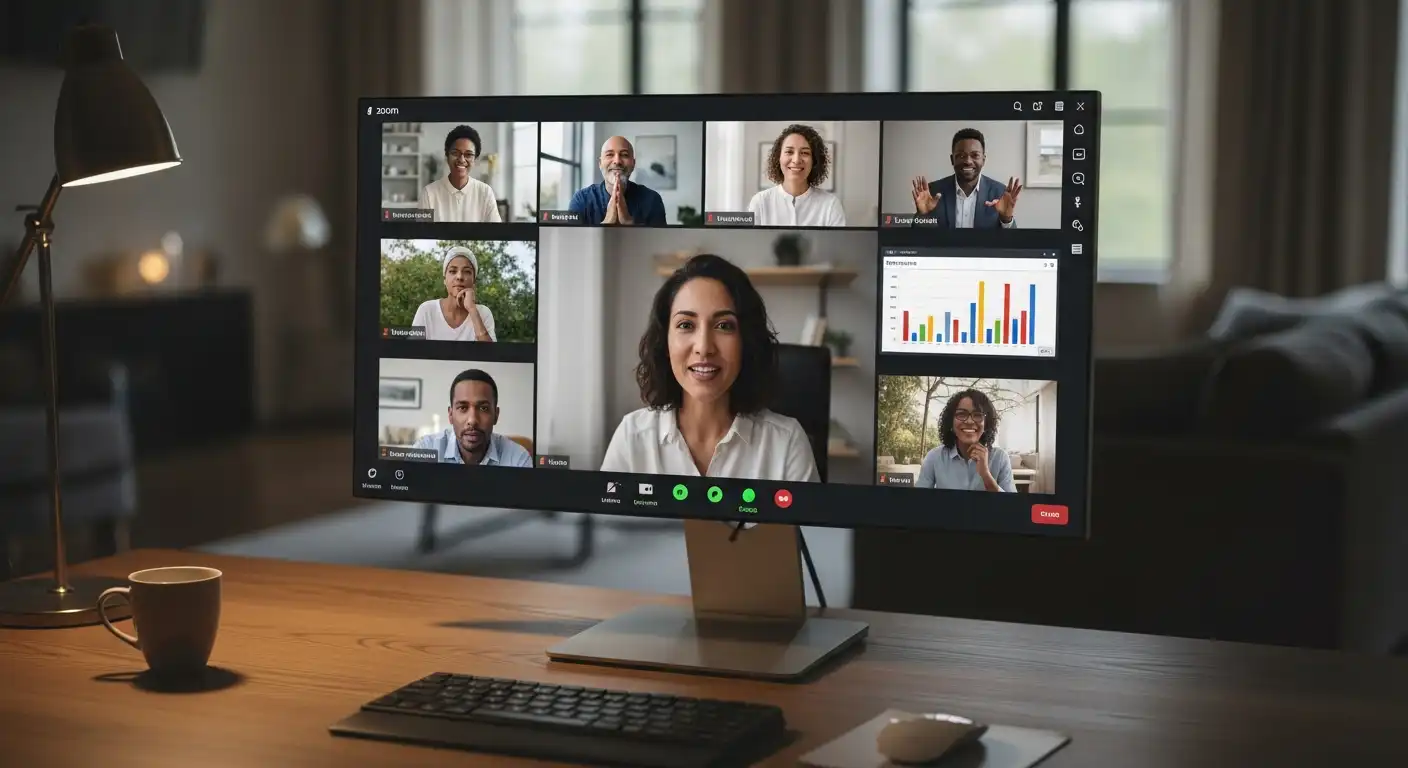
The traditional office completely vanished as the default place of work. Companies no longer force people to sit in the same room to build great things together. Leaders suddenly realized that limiting their talent search to a short commute radius severely restricted their business potential. Now, companies hire the best minds no matter where they live on the globe. This massive change relies entirely on remote collaboration tools. These digital platforms serve as the new office building. They hold the meeting rooms, the project files, and the casual conversations. Without them, a distributed workforce simply collapses into chaos. However, the future demands much more than just basic chat applications. Teams need intelligent software that bridges physical distance and makes remote work feel natural, fast, and completely unified.
Moving Beyond the Basic Video Call
Staring at a grid of faces on a flat screen quickly tires everyone out. The future of remote work moves far past the standard video call. We now see tools that create highly interactive environments. People want to feel as if they are sitting in the same room with their coworkers. New platforms use spatial audio so you hear someone speaking from your left or your right, mimicking real life. Shared digital whiteboards let multiple people draw, write, and brainstorm at the same time. Nobody wants to sit silent on mute while one person talks for an hour. True collaboration means messy, active participation. Software makers now realize they must build tools that encourage people to speak up and interact naturally.
Erasing the Time Zone Barrier
A global workforce operates around the clock. When a designer goes to sleep, a developer wakes up and starts working. Collaboration tools must fix the time zone problem entirely. Asynchronous communication takes the lead here. People record short video updates instead of calling a live meeting. Project management boards clearly track every single change. Someone can log in, read the updates, watch a quick video, and know exactly what to do next without ever waking up a coworker. This setup requires massive trust. Managers must believe their team will do the work without constant supervision. Good software builds this trust by making all progress fully visible and passing the baton smoothly and painlessly.
The Rise of Unified Virtual Workspaces
Right now, workers lose a lot of time switching between ten different applications. They check a chat app, open an email, dig through cloud storage, and update a task manager. The next major shift involves unified virtual workspaces. A single digital hub will hold everything. You log in to a single screen to access your messages, documents, and schedule. Siloed information destroys productivity. If the marketing team cannot see what the sales team does, the whole company suffers. Unified platforms break down these digital walls and force teams to share their knowledge openly. A clean, central space keeps a distributed team moving in the same direction without constant confusion.
Fixing the Digital Burnout Problem
Working from home often blurs the line between personal life and company time. Collaboration tools sometimes make this worse by sending notifications at all hours. Constant pings and pop-ups create severe anxiety. Employees feel like they must reply instantly to prove they are working. We need software that respects human rest. Future platforms will automatically block messages after work hours or delay sending them until the recipient starts their actual shift. Smart tools will even measure a user’s workload and suggest breaks. Leaders must choose tools that help employees disconnect. When the software sets clear boundaries, people return to work the next day with fresh energy.
Keeping Company Data Safe Anywhere
When people work from coffee shops, airports, and living rooms, company data travels everywhere. Sending files back and forth over open networks creates massive security risks. Hackers constantly look for weak spots in remote setups. One poor password choice by an employee working from a public connection can expose thousands of sensitive client records. The future of collaboration tools requires invisible but powerful security. Instead of sending a file, a worker sends a secure link. The document never actually leaves the company server. If a team member loses their laptop, the IT department immediately cuts off access. Companies must protect their ideas without making the software too difficult for the average employee to use.
The Human Connection in a Digital Space
The biggest challenge of a distributed workforce is loneliness. People miss the casual jokes and quick chats that happen in a real physical office. Workers who feel completely isolated usually quit. They need to feel they belong to a real community. Tools cannot just focus solely on productivity; they must also help build human relationships. Some platforms now include virtual break rooms where people can play quick games or share their personal hobbies. Leaders use casual digital channels to celebrate birthdays or praise good work loudly. While a computer screen will never replace a real handshake, smart digital design can help coworkers feel like a real team rather than strangers typing in the dark. Small features make a massive difference in daily morale.
Conclusion
The distributed workforce represents the permanent future of global business. We will never stuff everyone back into a single office building. Because of this reality, remote collaboration tools act as the lifeblood of modern companies. They hold the amazing power to connect brilliant minds across massive oceans. We must stop treating remote work as a temporary fix and start treating it as the primary way we do business. Yet, companies must choose their software carefully. The best tools will break down time zones, fiercely protect data, and bring humanity back to the digital screen. Organizations that build a smooth, connected, and healthy digital workspace will attract the best talent on the planet and easily outpace their older, slower competitors.






