Key Points
- Scientists have developed a new in vitro model using human stem cells to study early embryonic development.
- The model simulates the formation of the neural tube (the future nervous system) and somites (the future spine and muscles).
- Studying this stage in real human embryos is impossible due to ethical and technical limitations.
- The researchers discovered a “crosstalk” or two-way communication between the two structures that is critical for proper development.
Scientists have created a new lab-grown model that mimics the earliest stages of human development, allowing them to observe for the first time how key parts of the body begin to form and communicate. The breakthrough could provide vital clues into why some pregnancies fail and how birth defects occur.
During the first few weeks of life, an embryo forms two crucial structures: the neural tube, which gives rise to the brain and spinal cord, and the somites, which develop into the spine, ribs, and muscles. These structures need to “talk” to each other to develop correctly, but studying this process in actual human embryos is impossible due to ethical and practical limits.
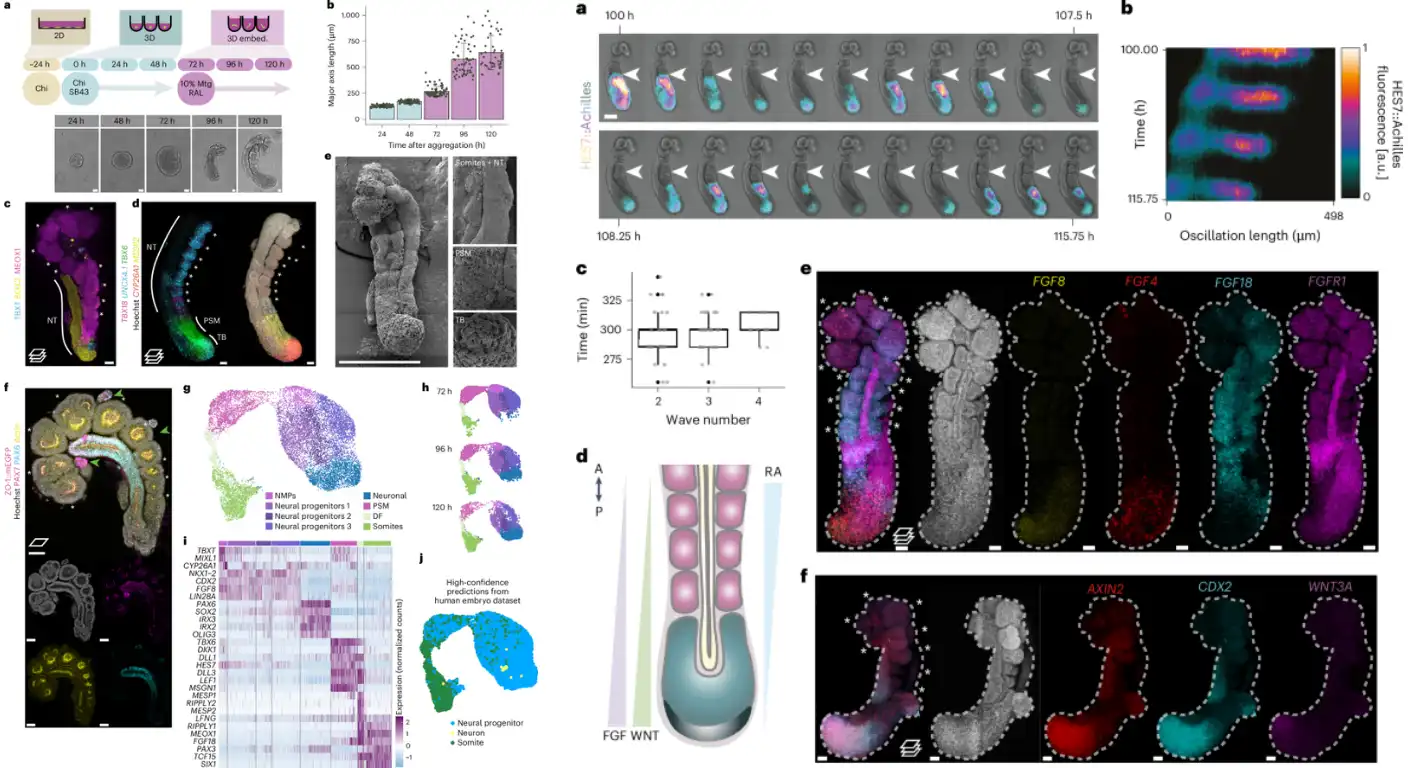
To get around this, a team at the Francis Crick Institute has developed a new model using human stem cells. By culturing these cells under specific conditions, they generated 3D structures that spontaneously formed a neural tube and somites, mirroring an embryo at approximately four to five weeks post-fertilization.
This simplified model allowed the researchers to isolate the communication between these two key structures. They discovered a surprising two-way “crosstalk” that helps cells determine what they are supposed to become.
“Surprisingly, a gene involved in processing retinoic acid signaling was found in high concentrations in parts of the somites closest to the neural tube, suggesting that the two structures are in close communication,” said Komal Makwana, a lead author of the study.
This research offers a powerful new tool for understanding a critical and previously invisible stage of human life. “With this system, we can trace how key structures first emerge and interact, illuminating a stage of human development we’ve never been able to watch unfold before,” said team leader Naomi Moris.
Source: Nature Cell Biology (2025).