Key Points
- Scientists are using atomically thin materials to control how light travels. The research focuses on “polaritons,” a hybrid of light and matter.
- They observed anomalous optical effects, such as light bending backward.
- The technique involves stacking and twisting these materials like “atomic Legos.”
- This could lead to the development of new technologies in computing, biosensing, and imaging.
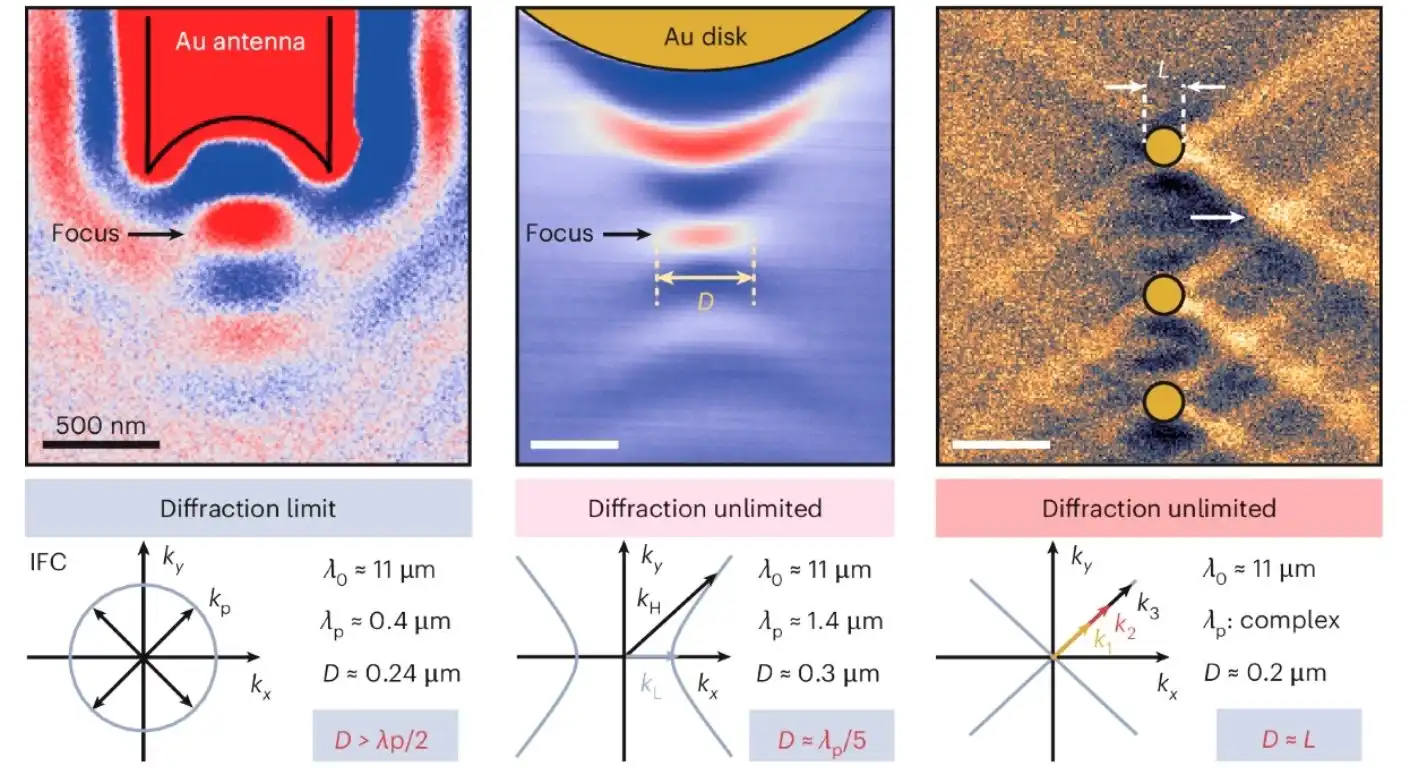
An international team of scientists has figured out a new way to control light at a scale thousands of times smaller than a human hair. By using super-thin materials, they can make light do some very strange and useful things, like bend in the wrong direction or travel in a perfectly straight line without spreading out.
The research, published in the journal Nature Nanotechnology, focuses on what occurs when light and matter interact strongly. When this occurs, they form a hybrid particle known as a “polariton.”
The team used van der Waals materials, which are only a single atom thick. When light strikes these materials, it ceases to behave normally. Instead of shining everywhere, it gets channeled along specific paths.
This new level of control allows for some mind-bending effects. One is “negative refraction,” where light bends in the opposite direction you would expect when it passes from one material to another. Another is “canalized propagation,” which is like creating a tiny, perfect highway for light energy to travel down without getting scattered.
This work is part of the TWISTOPTICS project. The lead professor, Pablo Alonso González, described their technique as playing with “atomic-scale Lego pieces.” By stacking these incredibly thin layers of material and twisting them in different ways, the scientists can design brand-new physical properties on demand.
This breakthrough isn’t just a cool lab experiment. It lays the groundwork for a whole new generation of technology.
The ability to control light so precisely could lead to faster and smaller computer circuits, highly sensitive biosensors for detecting diseases, improved methods for managing heat in electronics, and imaging systems that can see things in much greater detail than ever before.