Key Points:
- Chinese researchers discovered an 8- to 11-year delay between rising air temperatures and the melting of deep permafrost.
- The Qinghai-Xizang Plateau holds the largest high-altitude permafrost region in the world, playing a massive role in global climate regulation.
- The study used data from 54 testing sites collected between 2001 and 2020 to measure underground temperatures down to a depth of 15 meters.
- Even if climate change slows down immediately, accumulated past heat will force the permafrost to keep degrading for up to 15 years.
Chinese scientists recently uncovered a hidden time delay in how climate change destroys frozen ground. Their new study shows that permafrost on the Qinghai-Xizang Plateau does not melt immediately as the air warms. Instead, the frozen earth holds on to past heat, creating a delayed response that scientists call a thermal memory effect. This discovery fundamentally changes how experts understand global warming and frozen landscapes.
The Northwest Institute of Eco-Environment and Resources led the groundbreaking research project. The team published their findings in the journal npj Climate and Atmospheric Science. Their work provides a vital scientific foundation for predicting future environmental changes. It also helps officials assess the risks of dangerous carbon emissions and ensures the structural safety of roads, bridges, and railways built across the massive plateau.
Permafrost stability acts as a crucial anchor for the global climate. Global warming continually disrupts the long-term freezing patterns of these soils. When permafrost thaws, it releases massive amounts of organic carbon previously trapped in the ice. Wu Qingbai, the lead researcher on the project, warns that this escaping carbon creates a dangerous cycle that makes global warming even worse.
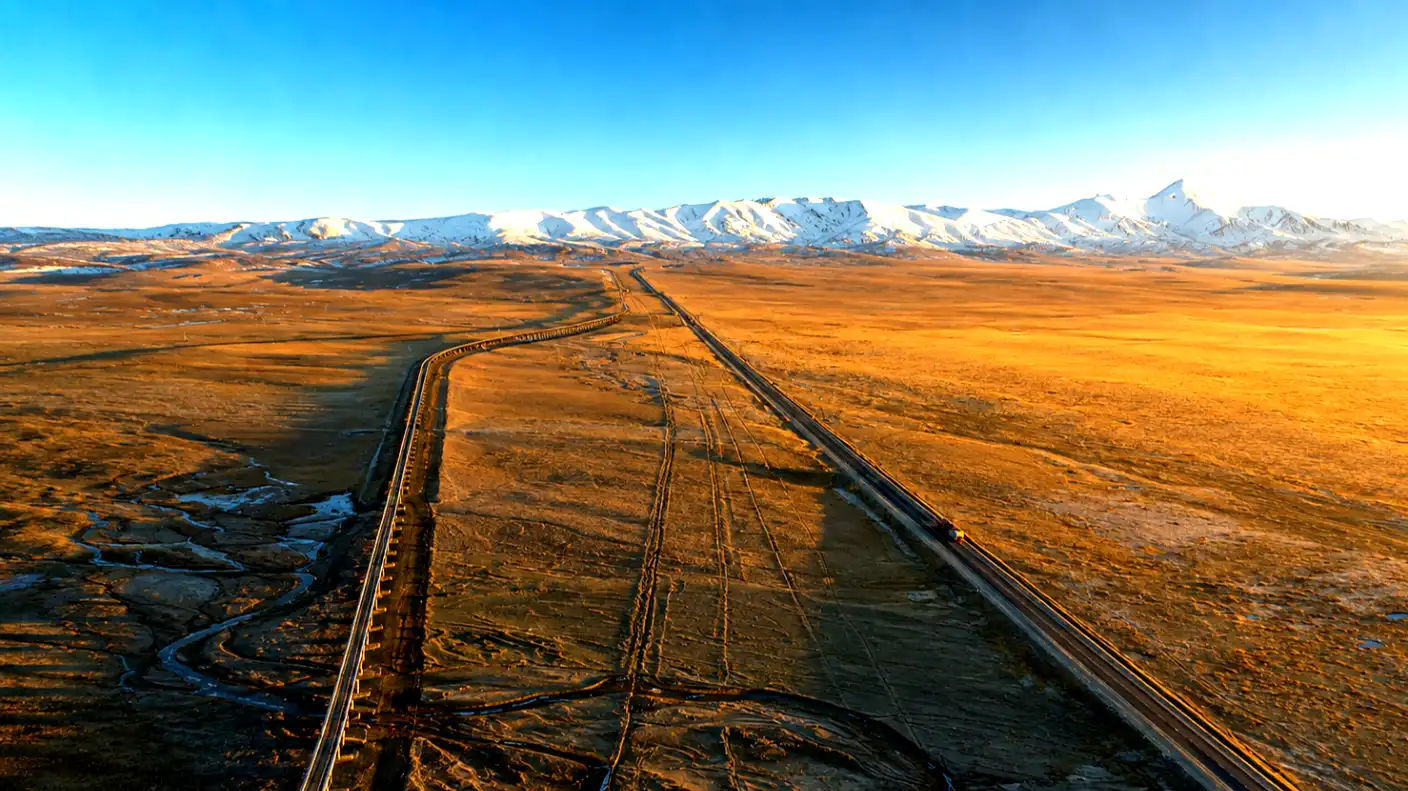
The Qinghai-Xizang Plateau serves as the perfect laboratory for this research. The area contains the largest high-altitude permafrost region on the planet. Any physical changes to this frozen ground significantly affect local ecosystems and natural water cycles. Furthermore, melting ground directly threatens the safety of major engineering projects built across the region.
Wu explained that permafrost ignores sudden spikes in daily air temperature. The thermal behavior of deep soil depends on a complex interplay of surface energy exchanges, water movement, and subsurface heat conduction. Because the soil absorbs and moves heat slowly, the melting process shows a clear time lag. The researchers designed their study specifically to measure this hidden delay across different areas of the massive plateau.
To find the exact timeline of this melting delay, the research team analyzed long-term data from 54 separate testing sites. They collected information spanning from 2001 to 2020. The scientists combined high-resolution climate data with direct measurements taken from deep boreholes. They measured the thickness of the active soil layer and ground temperatures at depths of 10 and 15 meters.
The massive data set revealed a clear and pronounced thermal memory effect. The team discovered a median time delay of 8 to 11 years between a rise in surface air temperature and a corresponding rise in deep permafrost temperature. The ground retains the heat from a decade ago and continues to respond to it long after the weather above has changed.
This time delay changes drastically depending on the specific location on the plateau. In the warm, humid southeastern sections of the region, the melting process occurs much faster. Researchers noted a shorter time lag of just 6 to 8 years in these wetter areas. The moisture in the soil likely helps transfer surface heat deeper into the ground more quickly.
A completely different timeline exists in the cold and arid northwestern parts of the plateau. In these dry, freezing areas, the thermal memory effect lasts much longer. The data showed a massive delay of 12 to 15 years before the deep permafrost finally reacted to the warming air above. This proves that local weather patterns completely alter how the frozen ground behaves.
The study identified specific factors that drive these regional differences. Broad climatic conditions, like air pressure and total rainfall, account for 31% to 51% of the spatial variance across the plateau. Meanwhile, local landscape features and specific soil moisture levels control the rest of the melting timeline. Water and land shape dictate exactly how fast the heat travels downward.
Fu Ziteng, a postdoctoral researcher on the team, highlighted the most alarming takeaway from the decadal thermal memory effect. He explained that the permafrost stores ice accumulated over earlier periods. This means the deep-frozen ground will continue to warm and melt over the next decade, no matter what happens to the weather above today.
Even if human beings successfully cut carbon emissions and slow down the rise in near-surface air temperatures, the Qinghai-Xizang Plateau will still face severe degradation. The heat from 10 years ago has already entered the soil, and it will inevitably reach the deep permafrost. Planners and engineers must prepare for this unavoidable melting as they design the region’s future infrastructure.