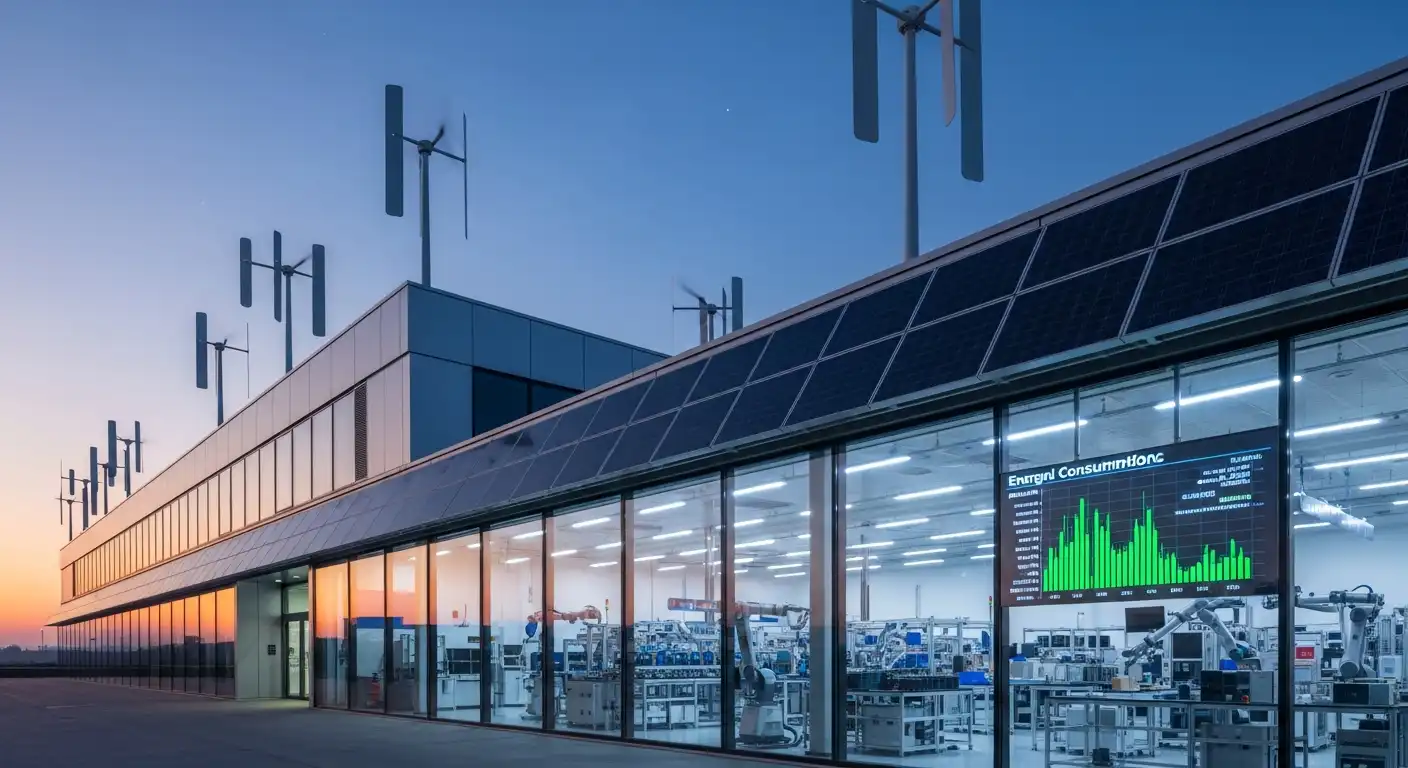
For centuries, the story of manufacturing has been one of revolutions, each a seismic shift that redefined the very nature of production and, in turn, reshaped human society. The first industrial revolution was powered by steam and mechanization, the second by electricity and the assembly line, and the third by computers and basic automation. We are now living through the fourth and arguably most profound revolution of them all: Industry 4.0. This is not a story about a single new machine or process; it is a story of a great convergence, a fusion of the physical and digital worlds on the factory floor. The driving force behind this revolution, the very heart of Industry 4.0, is the concept of smart manufacturing.
Smart manufacturing is the radical transformation of the traditional factory from a collection of siloed, manually operated machines into a fully integrated, collaborative, and self-aware organism. It is a world where machines talk to each other, supply chains are self-optimizing, and a constant stream of real-time data provides an unprecedented level of insight and control over the entire production process. This is not science fiction; it is the new competitive reality. From the automotive giants of Germany and the electronics assemblers of Asia to the aerospace innovators in the United States, companies are embracing smart manufacturing not just to improve efficiency but as a fundamental strategy for survival and growth in a world that demands unprecedented levels of agility, customization, and resilience. This deep dive will explore the core technologies, the transformative impact, and the global adoption of the smart manufacturing paradigm that is defining the next era of industrial progress.
The Legacy of the Past: Why the Traditional Factory Model is No Longer Sustainable
To appreciate the revolutionary nature of smart manufacturing, we must first understand the deep-seated limitations of the traditional, “Industry 3.0” factory model. This model, built on the principles of mass production and lean manufacturing, was a marvel of the 20th century. Still, its inherent rigidity and opacity have made it ill-suited for the dynamic and volatile demands of the 21st century.
The old model is cracking under the pressure of a new set of economic, technological, and societal forces.
The Inefficiency of Siloed and Reactive Operations
The traditional factory is a collection of “islands of automation.” You have a machine that does one task, a separate control system for another, and a paper-based or spreadsheet-driven process for tracking inventory. These systems rarely talk to each other, creating massive information silos.
This lack of integration leads to a host of chronic inefficiencies.
- Reactive Maintenance: In a traditional factory, maintenance is typically performed in one of two ways: either on a fixed schedule (preventive maintenance), which often means replacing parts that are still perfectly good, or after a machine has already broken down (reactive maintenance), which leads to costly, unplanned downtime.
- Lack of Visibility: Factory managers often have a very limited, after-the-fact view of what is happening on the production line. Data is collected manually, entered into spreadsheets, and analyzed days or weeks later, making it impossible to respond to problems in real-time.
- Poor Supply Chain Coordination: The factory’s internal systems are often disconnected from the broader supply chain. This means a sudden shortage of a critical component or a change in a customer order can take a long time to propagate through the system, leading to production delays and missed deadlines.
The Inflexibility of Mass Production in an Age of Customization
The assembly line model was perfected for the mass production of identical products. But modern consumers in both B2C and B2B markets are increasingly demanding personalized, customized products.
The rigid, one-size-fits-all nature of the traditional factory makes it incredibly difficult and expensive to handle this demand for “high-mix, low-volume” production.
- Costly and Time-Consuming Changeovers: Reconfiguring a traditional production line to switch from making one product variant to another is a slow, manual process that results in significant downtime.
- The “Lot Size of One” Challenge: The ultimate goal of customization is the “lot size of one”—the ability to efficiently produce a single, unique item that is tailored to a specific customer’s needs. This is simply impossible with traditional manufacturing methods.
The Fragility of Globalized, Just-in-Time Supply Chains
The lean manufacturing revolution, with its emphasis on “just-in-time” (JIT) inventory, created incredibly efficient yet fragile global supply chains. The recent pandemic and geopolitical events have brutally exposed the risks of this model. A single disruption at a single supplier on the other side of the world can bring a multi-billion-dollar production line to a grinding halt for weeks, as the automotive industry learned during the chip shortage.
The Pillars of the Smart Factory: Core Technologies of Industry 4.0
Smart manufacturing is the solution to these profound challenges. It is an umbrella term for a suite of interconnected technologies that, when deployed together, create a self-aware, self-optimizing, and highly autonomous production environment.
These are the foundational pillars upon which the factory of the future is being built.
The Industrial Internet of Things (IIoT): The Factory’s Nervous System
The bedrock of the smart factory is the Industrial Internet of Things (IIoT). This refers to the massive network of interconnected sensors, actuators, and smart devices embedded throughout the factory floor, from individual machines to pallets of raw materials.
The IIoT is the factory’s sensory nervous system, constantly collecting a torrent of real-time data about the health and status of every aspect of the production process.
- What it Connects:
- Sensors: These can measure a wide range of variables, such as temperature, vibration, pressure, humidity, and energy consumption in machinery.
- Smart Machines and PLCs: Modern Programmable Logic Controllers (PLCs) and industrial machines come with built-in connectivity, allowing them to report their operational status, error codes, and production data.
- RFID and Location Tracking: Radio-Frequency Identification (RFID) tags and other real-time location systems (RTLS) can be attached to tools, materials, and finished goods to provide a precise, real-time view of their locations in the factory.
- The Data It Generates: The IIoT unleashes a “data tsunami.” A single production line can generate terabytes of data every day. This data is the raw fuel for all the other smart manufacturing technologies.
Cloud and Edge Computing: The Factory’s Brain
The massive amount of data generated by the IIoT needs to be collected, stored, and processed. This is the role of cloud and edge computing, which together act as the factory’s distributed brain.
This hybrid computing model provides the flexibility and real-time processing power that smart manufacturing requires.
- Cloud Computing: The public cloud (AWS, Azure, GCP) provides a virtually limitless and cost-effective platform for storing the vast amounts of historical data generated by the factory. It also provides the massive computational power needed to run complex, long-term analytics and to train sophisticated AI models.
- Edge Computing: Not all data needs to be sent to the cloud. For applications that require real-time decision-making and low latency (such as detecting a quality defect on the line or controlling a robot), processing needs to occur closer to the data source. Edge computing involves placing small, powerful servers directly on the factory floor (the “edge” of the network) to perform this real-time analysis and control.
Big Data Analytics and Artificial Intelligence (AI): The Source of Intelligence
Data, on its own, is just noise. The magic of smart manufacturing comes from applying big data analytics and AI/machine learning to turn raw data into actionable insights, predictions, and automated decisions.
AI is the cognitive engine that allows the factory to become truly “smart.”
- Descriptive and Diagnostic Analytics: At the most basic level, analytics platforms can visualize the real-time data from the IIoT on powerful dashboards, telling factory managers what is happening right now (descriptive) and helping them understand why it is happening (diagnostic).
- Predictive Analytics: This is where AI begins to deliver transformative value. By training machine learning models on historical sensor data, a factory can move beyond reactive maintenance. Predictive maintenance algorithms can analyze real-time vibration and temperature data from a machine to predict failures before they occur, enabling proactive maintenance scheduling.
- Prescriptive Analytics: The most advanced level. This is where AI systems not only predict what will happen but also recommend the best course of action or even take that action automatically. For example, a prescriptive analytics system might detect that a production line is becoming a bottleneck and automatically adjust the speed of the upstream and downstream machines to optimize the overall flow.
Digital Twins: The Virtual Replica of Reality
A digital twin is one of the most compelling concepts in Industry 4.0. It is a dynamic, high-fidelity virtual model of a physical asset (such as a machine or a robot), a process (such as an assembly line), or even an entire factory.
The digital twin is not a static 3D model; it is a living, breathing digital replica that is constantly updated with real-time data from its physical counterpart via IIoT sensors.
- How it Works: A sensor on a real-world robotic arm streams its position, speed, and motor temperature to its digital twin. The virtual model then mirrors the behavior of the physical robot in real-time.
- The Benefits of a Virtual Playground:
- Simulation and “What-If” Analysis: The digital twin allows engineers and operators to test changes and run “what-if” scenarios in the virtual world without risking the physical production line. They can simulate the impact of changing a machine’s speed or reconfiguring the production cell’s layout to find the optimal setup before ever touching a wrench.
- Virtual Commissioning: A new production line can be fully built, tested, and optimized in the digital twin’s virtual world. This “virtual commissioning” can dramatically shorten the time it takes to set up and ramp up a new factory.
- Enhanced Maintenance and Training: A maintenance technician can use an augmented reality headset to overlay the digital twin’s data onto their view of the physical machine, allowing them to see the machine’s internal temperature or its error-code history. Operators can also be trained on a virtual replica of the production line in a safe and realistic environment.
Advanced Robotics and Automation
While robots have been in factories for decades, Industry 4.0 is ushering in a new generation of smarter, more flexible, and more collaborative robots. These advanced robots are moving beyond repetitive, caged-off tasks to work more dynamically and intelligently alongside humans.
- Collaborative Robots (Cobots): Cobots are designed to work safely in proximity to human workers without the need for safety cages. They can handle tedious or ergonomically challenging tasks, acting as a “third hand” for their human colleagues and augmenting their capabilities.
- Autonomous Mobile Robots (AMRs): Unlike traditional automated guided vehicles (AGVs) that follow fixed magnetic strips on the floor, AMRs use sensors and AI to navigate the factory dynamically, just like a self-driving car. They are used to autonomously transport materials, parts, and finished goods, making the factory’s internal logistics far more flexible and efficient.
- AI-Powered Vision Systems: Modern industrial robots are being equipped with advanced, AI-powered computer vision systems. This allows them to perform complex tasks like identifying and picking a specific part from a bin of mixed parts (“bin picking”) or performing in-line quality inspections with superhuman accuracy.
Additive Manufacturing (3D Printing): The Democratization of Production
Additive manufacturing, or industrial 3D printing, is the process of building a three-dimensional object layer by layer from a digital design file. It is the opposite of traditional “subtractive” manufacturing, which involves cutting away material from a solid block.
Additive manufacturing is a key enabler of the flexibility and customization that are hallmarks of Industry 4.0.
- Rapid Prototyping and Tooling: 3D printing has already revolutionized the product development process by enabling engineers to create and test physical prototypes in hours, rather than weeks. It is also being used to print the custom jigs, fixtures, and tools needed for the assembly line, dramatically accelerating the manufacturing setup process.
- Production of Complex, Lightweight Parts: Additive manufacturing can create complex, intricate geometries that are impossible to produce with traditional methods. This is particularly valuable in the aerospace and medical industries, where it is used to produce lightweight, high-strength parts and custom medical implants.
- Enabling the “Lot Size of One”: 3D printing makes it economically viable to produce a single, customized item, as there is no need for expensive tooling or molds. This is a key technology for delivering the mass customization that modern markets demand.
Augmented Reality (AR) and the Connected Worker
Augmented reality technology, delivered through smart glasses or tablets, overlays digital information onto a worker’s real-world view of the factory floor. AR is a powerful tool for empowering the “connected worker,” providing them with the right information, in the right context, at the right time.
- Step-by-Step Digital Work Instructions: A complex assembly task can be guided by AR, which can overlay 3D animations and instructions directly onto the workpiece, reducing errors and speeding up the process.
- Remote Expert Assistance: A junior technician on the factory floor who encounters a problem can use their smart glasses to share their perspective with a senior expert who could be anywhere in the world. The remote expert can then see what the technician sees and guide them through the repair, annotating their real-world view with instructions.
- Contextual Data Visualization: A worker can look at a machine and instantly see its key performance indicators (KPIs), maintenance history, and real-time operating temperature overlaid in their field of view.
The Transformative Impact: How Smart Manufacturing is Redefining Industrial Competitiveness
The convergence of these technologies is not just making factories a little bit better; it is creating a step-change in performance across every key dimension of manufacturing. The benefits are not incremental; they are transformative.
The adoption of smart manufacturing is creating a widening gap between industrial leaders and laggards.
A Quantum Leap in Operational Efficiency and Productivity
At its core, smart manufacturing is about eliminating waste and maximizing the productivity of every asset in the factory.
- Maximizing Overall Equipment Effectiveness (OEE): OEE is a key metric that measures the percentage of planned production time that is truly productive. Smart manufacturing boosts all three components of OEE:
- Availability: Predictive maintenance dramatically reduces unplanned downtime.
- Performance: Real-time analytics and AI-driven optimization ensure machines always run at optimal speed.
- Quality: In-line quality control using AI-powered vision systems can detect defects in real time, drastically reducing scrap, rework, and the number of defective products reaching the customer.
The Dawn of Mass Customization and Agility
Smart manufacturing finally breaks the long-standing trade-off between efficiency and flexibility. The reconfigurable and data-driven nature of the smart factory makes it possible to achieve the efficiency of mass production while delivering the customization of a craft workshop.
- From Mass Production to Mass Personalization: A smart factory can seamlessly switch between producing different product variants without significant downtime, making the “lot size of one” an economic reality. A customer could order a car with a unique combination of features, and the smart factory’s systems would automatically adjust the production line and supply chain to build that specific vehicle.
- Faster Time-to-Market: Using digital twins for virtual commissioning and 3D printing for rapid prototyping can slash the time it takes to design, test, and launch a new product from years to months.
Building Resilient, Transparent, and Self-Optimizing Supply Chains
The intelligence of smart manufacturing extends beyond the four walls of the factory to encompass the entire supply chain.
By creating a “digital thread” that connects the factory to its suppliers and customers, smart manufacturing builds a more resilient and responsive supply network.
- End-to-End Visibility: A smart factory has real-time visibility into its suppliers’ inventory levels and production schedules, while its customers can see the status of their orders. This transparency allows the entire network to anticipate and react to disruptions much more effectively.
- A Self-Learning Supply Chain: Data from the entire supply chain can be fed into AI models that learn and adapt over time. The system could automatically re-route shipments around a weather event, or proactively increase an order for a component from a secondary supplier if it detects a potential production slowdown at the primary supplier.
Creating Safer and More Empowering Work Environments
The narrative that automation will destroy jobs is an oversimplification. Smart manufacturing is not about replacing humans; it is about augmenting their capabilities and changing the nature of their work.
The smart factory is a safer, more engaging, and more empowering place to work.
- Improving Worker Safety: Robots and cobots can take over the tasks that are dangerous, repetitive, or ergonomically challenging, reducing workplace injuries. Predictive maintenance also prevents catastrophic equipment failures that can endanger workers.
- From Manual Labor to Knowledge Work: Jobs in a smart factory focus less on manual labor and more on problem-solving, data analysis, and the management of complex automated systems. The factory worker of the future is a “knowledge worker” who uses their expertise to optimize and improve the production process.
- Empowering the Connected Worker: Technologies such as AR and mobile devices provide workers with the information and tools they need to make better, faster decisions, thereby increasing their autonomy and job satisfaction.
Driving Sustainability and the Circular Economy
Smart manufacturing is also a powerful enabler of a more sustainable and circular industrial model.
The granular data and control provided by Industry 4.0 technologies enable much more efficient use of resources.
- Energy and Resource Optimization: IIoT sensors can precisely monitor the energy, water, and raw material consumption of every machine in the factory. AI algorithms can then use this data to identify and eliminate waste, optimizing the entire process for minimum resource use.
- Enabling the Circular Economy: The data and traceability provided by smart manufacturing are essential for building a circular economy. A product can be tracked throughout its lifecycle, making it easier to recover, refurbish, and remanufacture at its end of life. Additive manufacturing also enables the on-demand production of spare parts, extending the life of existing products.
The Global Adoption of Industry 4.0: A World in Transformation
The adoption of smart manufacturing is a global phenomenon, but the pace, focus, and strategy vary significantly by region, reflecting different industrial strengths, government policies, and economic priorities.
From Germany’s pioneering vision to China’s massive state-led push, the world is in a race to define the future of manufacturing.
Germany: The Birthplace and Intellectual Leader of Industrie 4.0
The term “Industrie 4.0” was coined in Germany in 2011 as part of the German government’s high-tech strategy. As a global powerhouse in high-end industrial machinery and automotive manufacturing, Germany has focused on leveraging smart manufacturing to maintain its global leadership in complex, high-quality engineering. The strategy is characterized by deep collaboration among its large industrial giants (such as Siemens and Bosch), its world-class research institutes (such as Fraunhofer), and its network of small- and medium-sized “Mittelstand” companies.
The United States: A Focus on Innovation and the “Smart Manufacturing Leadership Coalition”
The U.S. has a more market-driven and innovation-focused approach. Its strengths lie in its leadership in software, cloud computing, and AI. Initiatives such as the “Smart Manufacturing Leadership Coalition” and the “Manufacturing USA” network of institutes aim to foster public-private partnerships to accelerate the development and adoption of next-generation manufacturing technologies, particularly in the aerospace, defense, and medical device sectors.
China: The State-Directed Push for “Made in China 2025”
China is engaged in the world’s largest and most ambitious industrial upgrading program. Its “Made in China 2025” strategy is a massive, state-directed effort to transform the country from the world’s “low-cost factory” into a high-tech manufacturing superpower, with smart manufacturing and robotics as its centerpiece. The Chinese government is providing substantial subsidies and incentives to encourage its companies to adopt automation and digital technologies, aiming to achieve global leadership in sectors such as electric vehicles, robotics, and telecommunications equipment.
Japan: The Vision of “Society 5.0”
Japan, a traditional leader in robotics and lean manufacturing, is approaching Industry 4.0 through its broader vision of “Society 5.0.” This concept aims to use digital technologies to solve not just industrial challenges but also broader societal problems, such as an aging population. In manufacturing, the focus is on a deep integration of humans and robots, creating highly flexible and efficient production systems that can augment the capabilities of a smaller workforce.
The Road Ahead: Navigating the Challenges on the Path to the Smart Factory
The transition to smart manufacturing is not a simple, “plug-and-play” process. It is a complex, multi-year journey that requires significant investment, a new set of skills, and a fundamental cultural transformation.
Organizations face a series of common hurdles on their Industry 4.0 journey.
The Challenge of Brownfield Integration
Very few companies have the luxury of building a brand-new, “greenfield” smart factory from scratch. The vast majority of manufacturers must figure out how to integrate these new digital technologies into their existing, “brownfield” facilities, which are often filled with a mix of old and new equipment from different vendors that were never designed to be connected. This challenge of retrofitting and connecting legacy machinery is a major technical and financial hurdle.
The Cybersecurity Imperative
As factories become more connected, they also become more vulnerable to cyberattacks. The “air gap” that once separated the factory floor’s operational technology (OT) network from the company’s IT network is disappearing. A successful cyberattack on a smart factory could not only steal intellectual property but also sabotage production, damage expensive equipment, and even endanger worker safety. A robust, converged IT/OT cybersecurity strategy is a non-negotiable prerequisite for any smart manufacturing initiative.
The Data and Interoperability Challenge
The promise of smart manufacturing is built on the free flow of data. However, in reality, data is often trapped in proprietary systems from different vendors that do not speak the same language. Achieving true “plug-and-play” interoperability between different machines, software, and systems is a major challenge. Open standards and platforms, such as OPC UA, are emerging to address this problem, but it remains a significant area of focus.
The Skills Gap and the Need for a “Digital-Ready” Workforce
The biggest barrier to the adoption of smart manufacturing is often not the technology itself, but the lack of a workforce with the skills to implement and operate it. There is a massive global shortage of people with the hybrid skills needed for the smart factory—people who understand both the physical world of manufacturing and the digital world of data science, software, and cybersecurity. A massive investment in workforce reskilling and upskilling is essential to close this gap.
The High Cost and Uncertain ROI
The upfront investment required for a full-scale smart manufacturing transformation can be substantial. For small and medium-sized enterprises (SMEs), in particular, the cost can be prohibitive. Building a clear business case and demonstrating a positive return on investment (ROI) can be challenging, especially in the early stages. This is why many companies start with smaller pilot projects focused on solving a specific, high-value problem (such as predictive maintenance for a critical piece of machinery) to prove the value before scaling up.
Conclusion
The Fourth Industrial Revolution is not a distant, futuristic vision; it is happening now, on the factory floors of every major industrial nation. Smart manufacturing is the powerful engine driving this transformation, turning our production facilities from dumb, mechanical beasts of burden into intelligent, adaptive, and interconnected systems. It is a paradigm shift that promises not just a new level of efficiency but a new era of industrial resilience, customization, and sustainability.
The journey to the fully realized smart factory is long and challenging, requiring a deep and sustained commitment to investment, innovation, and, most importantly, the development of its human workforce. But the direction of travel is clear. The companies and countries that master the principles and technologies of smart manufacturing will lead the global economy in the 21st century. They will be the ones who can build better products, faster and more sustainably, and create a new generation of safer, more engaging, and more valuable manufacturing jobs. We are not just building smarter factories; we are engineering the very future of how we make things.