Do you remember what it was like to use a computer 15 years ago? You’d press the power button, and then you’d have enough time to make a cup of coffee while it groaned and whirred its way to life. Launching an application involved a click, a long pause, and a hopeful stare at the screen. We lived in an era of digital molasses, where our computers were constantly struggling to keep up with our thoughts. The culprit for this universal slowness wasn’t the processor; it was the ancient, mechanical hard drive.
Remembering the Whir and the Wait
For decades, the hard disk drive (HDD) was the heart of our computers. And it was, for its time, a miracle of engineering. It was a tiny, high-precision record player, with spinning magnetic platters and a delicate arm that would frantically read and write data. But that mechanical nature was its fatal flaw. It could only move so fast. It made noise. And if you dropped your laptop, the delicate dance of the arm and platter could come to a catastrophic end. We built faster and faster processors, but they were all held back by his clunky mechanical device to catch up.
Unleashing the True Power of Your Computer
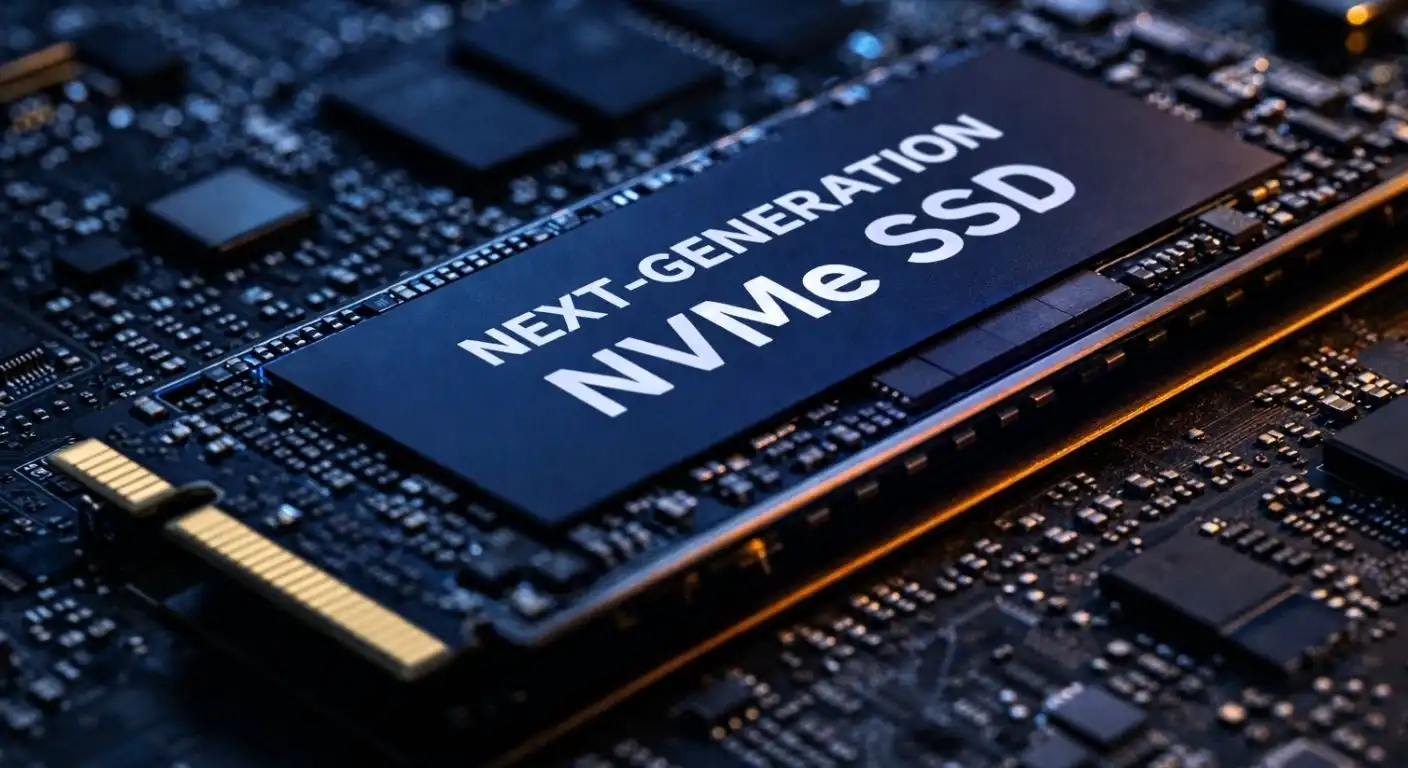
Then came the solid-state drive (SSD). It had no moving parts. It was, in essence, a large, high-speed version of the hash memory in a USB stick. And it changed everything. The SSD didn’t just make computers a little bit faster; it removed the single biggest bottleneck that had been holding back personal computing for a generation. It was like we had been putting supercar engines into cars with bicycle wheels, and the SSD finally gave us proper tires. Suddenly, the true power of our processors and memory was unleashed.
It’s Not Just Faster, It Feels Different
The most profound impact of the SSD isn’t something you can easily measure on a benchmark chart; it’s something you feel. It’s the difference between a sluggish, hesitant machine and one that feels alive and instantly responsive. It’s the “snappiness.” Booting up in seconds instead of minutes. Applications launch instantly when you click on them. The frustrating “click… wait…” cycle of the hard drive era was replaced by a fluid, seamless experience. The SSD didn’t just increase our computers’ speed; it changed our relationship with them, turning them from a source of frustration into a truly powerful tool.
The Unseen Revolution in Your Laptop’s Design
The ripple effects of this one component are everywhere. Because SSDs have no moving parts, they are far more durable, making laptops that can survive the bumps and jolts of daily life. Because they are much smaller and more energy-efficient than hard drives, they allowed for the creation of impossibly thin and light laptops with all-day battery life. The iconic, razor-thin design of a MacBook Air would simply not be possible without an SSD. The entire modern laptop industry was built on this silent, solid-state revolution.
The Unsung Hero of Modern Computing
The processor gets all the glory, and the graphics card gets all the hype, but the solid-state drive is the true unsung hero of modern computing. It was the single biggest leap in user experience in the last 20 years. It is the foundational technology that makes our computers feel modern. We take this instantaneous, snappy performance for granted now, but it’s the SSD that made it possible. It’s the quiet, invisible revolution we experience every time we click a mouse.