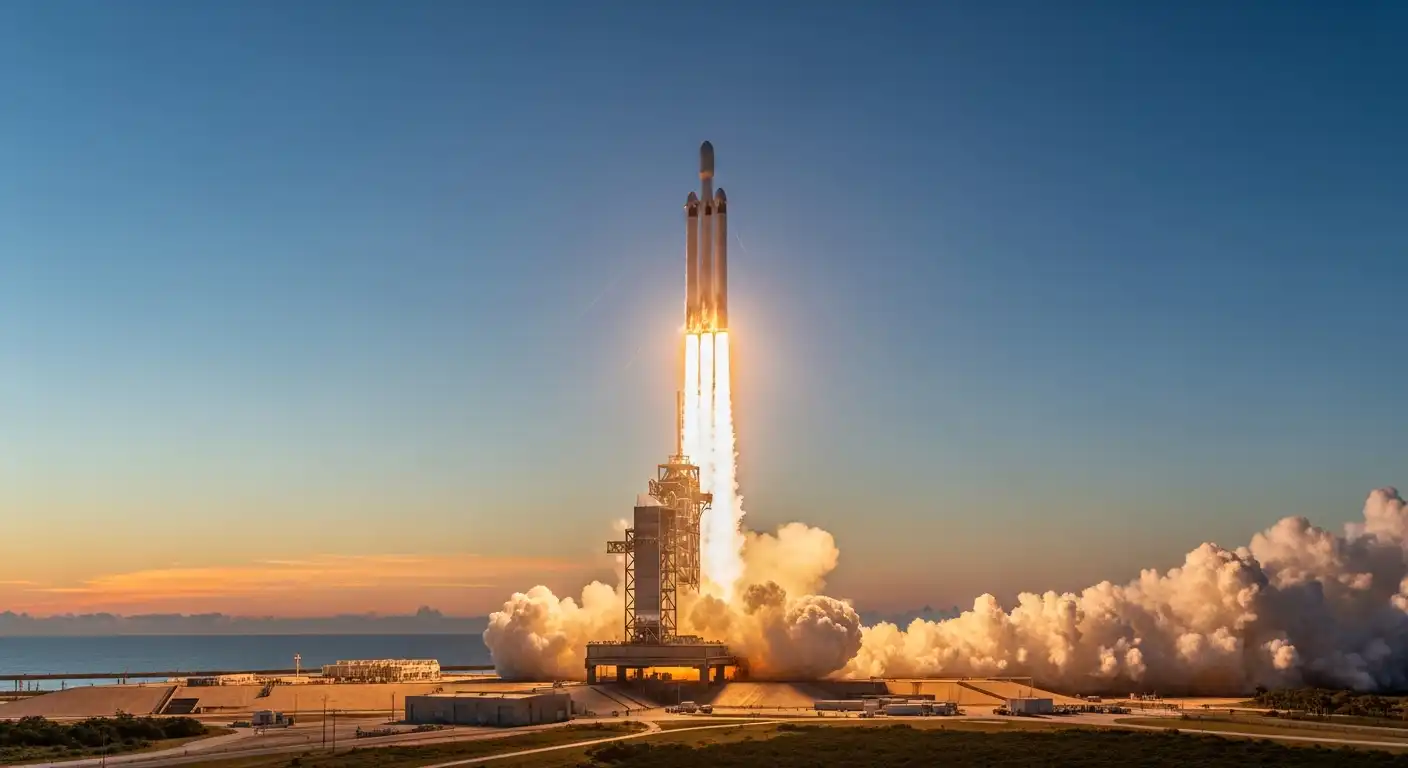
For the entirety of human history, our communication has been bound by the constraints of our planet’s surface. We laid copper wires across continents, strung fiber optic cables beneath oceans, and built cellular towers in our cities, creating a remarkable web of connectivity. Yet, for all its power, this web has always been frayed at the edges, unable to reach the vast, remote, and unforgiving corners of our world—the oceans, the mountains, the deserts, the poles. For billions of people and countless industries, the promise of the digital age remained a distant echo. As we surge past the midpoint of the decade, that terrestrial paradigm is undergoing a revolution of celestial proportions. The sky above is no longer a silent void; it is being transformed into the next great frontier of global communication.
A new generation of space technology, dominated by massive constellations of thousands of small, intelligent satellites, is not just augmenting our global communication systems; it is fundamentally reshaping them from the top down. This is not the slow, expensive satellite internet of the past. This is a new, space-based infrastructure layer for the entire planet—a low-latency, high-bandwidth mesh network that promises to connect everything, everywhere. From eradicating the digital divide and enabling the next generation of 5G and IoT to providing resilient lifelines in times of disaster, the changes are profound and systemic. This comprehensive guide will explore every facet of this transformation, including the displacement of legacy systems, the adoption of groundbreaking technologies, the key corporate and state actors, the industry-wide impacts, and the profound challenges of this new, crowded frontier above our heads.
The Old Frontier: The Limits and Legacy of Traditional Satellite Communication
To understand the sheer disruptive force of the current space revolution, we must first look back at the systems that have defined satellite communication for the last half-century. The traditional model, while a marvel of engineering, was built for a different era and was saddled with inherent limitations that made it a niche solution rather than a mainstream platform.
The Reign of Geostationary (GEO) Satellites: A Distant, Stationary View
For decades, the satellite communication landscape was dominated by massive, school-bus-sized satellites orbiting in a very specific celestial track: the geostationary orbit (GEO). These satellites orbit the Earth at an altitude of approximately 35,786 kilometers (22,236 miles) directly above the equator.
At this precise altitude, their orbital speed perfectly matches the Earth’s rotation, making them appear stationary from the ground. This unique property was both their greatest strength and their most significant, unavoidable weakness.
- Vast Coverage: Because a GEO satellite is so high up, a single satellite can provide communication coverage to a massive area—roughly one-third of the Earth’s surface. This made them ideal for broadcasting television signals and providing basic connectivity to entire continents from a single point in the sky.
- Simplified Ground Infrastructure: Since the satellite appears fixed, ground-based antennas do not need to move to track it, simplifying the equipment required on the ground.
The Tyranny of Latency: The Unavoidable Physics Problem
The Achilles’ heel of the GEO model is a fundamental law of physics: the speed of light is finite. For a signal to travel from a user on Earth up to a GEO satellite and back down to a ground station, it must traverse a round-trip distance of over 140,000 kilometers.
This journey introduces a significant time delay, known as latency or “ping,” that is baked into the very architecture of the system. This high latency rendered many modern, real-time internet applications practically unusable.
- The Impact on Real-Time Applications: The typical latency for a GEO satellite connection is 600-800 milliseconds or more. This makes real-time, interactive applications a frustrating experience. Video conferencing calls are filled with awkward pauses, online gaming is uncompetitive, and even basic web browsing feels sluggish, with a noticeable delay following each click.
- A Last Resort, Not a First Choice: Due to these performance limitations, traditional satellite internet was almost always a service of last resort, chosen only by those who had absolutely no other option for connectivity.
The Bandwidth Bottleneck and Astronomical Costs
Beyond latency, the GEO model suffered from issues of capacity and cost. A single, multi-billion-dollar GEO satellite has a finite amount of total bandwidth that must be shared among all users across its massive coverage footprint.
This shared capacity model often resulted in slow speeds and restrictive data caps for end-users. The economics of the system were a major barrier to widespread adoption and affordability.
- Congestion and Data Caps: During peak usage times, the shared bandwidth would become congested, leading to slow download speeds. To manage this limited capacity, providers often imposed strict monthly data caps, after which speeds would be throttled to an almost unusable level.
- Prohibitive Costs: Designing, building, and launching these massive, complex satellites is an incredibly expensive and high-risk endeavor. These high upfront costs were passed on to consumers in the form of expensive monthly subscriptions and costly professional installations.
The LEO Revolution: Rewiring the Heavens for a Real-Time World
The confluence of several key technological and economic breakthroughs has enabled a radical new approach to satellite communication, one that solves the fundamental problems of the GEO era. This is the Low Earth Orbit (LEO) revolution. Instead of a few large, distant satellites, the new model is a “mega-constellation” of thousands of smaller, cheaper, and more capable satellites orbiting much closer to the Earth.
A Fundamental Shift in Altitude: From GEO to Low Earth Orbit
The core innovation is a dramatic change in orbital altitude. LEO satellites operate in a range from 500 to 2,000 kilometers above the Earth—over 65 times closer than their GEO counterparts.
This proximity is the key that unlocks a new world of performance and capability. It fundamentally changes the physics and economics of satellite communication.
- Solving the Latency Problem: By drastically reducing the distance a signal has to travel, LEO constellations slash the round-trip latency to between 20 and 50 milliseconds. This is on par with terrestrial broadband services like fiber optic and cable internet.
- Enabling the Modern Internet: With this low latency, all the real-time applications that were impossible on GEO systems—Zoom calls, competitive online gaming, remote desktop access, cloud computing—become seamless and responsive. LEO satellite internet feels like high-speed ground-based internet.
The Constellation Concept: A Dynamic Mesh Network in the Sky
The trade-off for being so close to the Earth is that each LEO satellite has a much smaller coverage footprint and moves across the sky very quickly from the perspective of a ground user. To provide continuous, uninterrupted service, a vast “mesh” of thousands of interconnected satellites is required.
The user on the ground is not connected to a single satellite, but to the constellation as a whole. As one satellite moves out of view, the user’s terminal seamlessly hands off the connection to the next satellite coming into view.
- High Capacity and Throughput: While each satellite is smaller, the sheer number of satellites in a constellation creates an enormous amount of total network capacity. This allows for high download speeds (often exceeding 100-200 Mbps) and more generous, often unlimited, data plans.
- Increased Resilience: The distributed nature of the constellation provides inherent resilience. The failure of a single satellite has a negligible impact on the overall network, as traffic can be instantly rerouted through other satellites.
The Titans of the New Space Race: The Architects of Sky
The LEO revolution is being driven by a new generation of ambitious, well-funded companies that are deploying their constellations at a breathtaking pace. The competitive landscape will take clear shape, dominated by a few key players.
SpaceX’s Starlink: The Dominant First Mover and Market Leader
Led by Elon Musk, SpaceX’s Starlink has a commanding and almost insurmountable lead. Having started launching its satellites in 2019, it is already the largest satellite operator in the world by a massive margin, providing service to millions of users across all seven continents.
Starlink’s aggressive launch cadence and deep vertical integration have allowed it to build and scale its network faster than anyone thought possible. It has single-handedly proven the viability of the LEO mega-constellation model.
- The Constellation and Launch Cadence: As of late 2023, Starlink has over 5,000 satellites in orbit, with plans for tens of thousands more. By leveraging its own reusable Falcon 9 rockets, SpaceX can launch batches of satellites almost weekly, a pace that no competitor can currently match.
- Key Technologies: Starlink’s system relies on sophisticated, self-orienting “phased-array” user terminals on the ground and, critically, on inter-satellite laser links. These lasers allow the satellites to communicate with each other in orbit, creating a true, high-speed optical mesh network in space that reduces reliance on ground stations.
Amazon’s Project Kuiper: The Rising Challenger with Deep Pockets
Jeff Bezos’ Amazon is poised to become Starlink’s primary global competitor with its own LEO constellation, Project Kuiper. Backed by the immense financial, logistical, and technical resources of Amazon, Kuiper is a serious, long-term endeavor.
Project Kuiper is in the midst of its initial deployment phase, beginning to offer beta services and rapidly scaling its constellation. Its deep integration with Amazon Web Services (AWS) will be a key competitive advantage.
- The Deployment Strategy: While behind Starlink, Amazon has secured the largest commercial launch procurement in history, booking dozens of launches on rockets from Arianespace, Blue Origin, and United Launch Alliance to deploy its 3,200+ satellite constellation.
- The AWS Synergy: Project Kuiper will offer a unique value proposition to enterprise and government customers by providing a secure, high-performance, and low-latency on-ramp to the AWS cloud from any location on Earth.
OneWeb and the Enterprise and Mobility Focus
While Starlink and Kuiper are heavily focused on the direct-to-consumer and enterprise markets, other players like OneWeb have carved out a strategic focus on the B2B and B2G (Business-to-Business and Business-to-Government) sectors.
OneWeb is not trying to be a home internet provider; it is building the wholesale infrastructure for other service providers. Its mission is to be the connectivity backbone for industries that operate beyond the reach of terrestrial networks.
- Cellular Backhaul: OneWeb’s primary use case is providing the “backhaul” link for mobile network operators. This allows an MNO to build a 4G or 5G cell tower in a remote, rural area where laying fiber is not economical, using the satellite link to connect that tower to the global internet.
- Mobility Markets: OneWeb is heavily focused on providing high-quality connectivity to the aviation and maritime industries, which high-latency GEO solutions have long underserved.
The Technological Bedrock of the Communications Stack
The LEO revolution has been made possible by a convergence of groundbreaking technologies. These innovations have not just improved existing capabilities; they have fundamentally changed the economics and feasibility of operating a massive communications infrastructure in space.
Reusable Launch Vehicles: The Economic Game-Changer
This is arguably the single most important enabler. The development of reusable rockets, pioneered and perfected by SpaceX with its Falcon 9, has drastically reduced the cost of launching payloads to orbit.
Reusable rockets have turned launch from a single-use, prohibitively expensive event into a more routine, airline-like operation. They are the reason deploying thousands of satellites is economically viable.
- Cost Reduction: Reusability has slashed the cost per kilogram to orbit by an order of magnitude, from tens of thousands of dollars to just a few thousand.
- Increased Launch Cadence: The ability to quickly refurbish and re-fly a rocket booster allows for a much higher launch frequency, which is essential for deploying and replenishing a large constellation.
Inter-Satellite Laser Links (Optical Communication): The Space-Based Backbone
This is the technology that creates a true “internet in the sky.” Instead of a signal having to travel from a user to a satellite, down to a ground station, across terrestrial fiber, up to another ground station, and then up to a final satellite, inter-satellite links allow the data to be routed directly between satellites in orbit.
This space-based optical mesh has two profound advantages. It reduces reliance on a global network of ground stations and can actually be faster than fiber.
- Reduced Ground Infrastructure: It allows the constellation to provide service over vast ocean areas or polar regions where building ground stations is impossible.
- The Speed of Light Advantage: Light travels about 47% faster in a vacuum than it does through the glass of a fiber optic cable. For long-distance communication (e.g., London to Singapore), routing the signal through the space-based laser mesh can result in a lower end-to-end latency than the best possible terrestrial fiber route.
Phased-Array Antennas: Smart, Steerable Beams of Connectivity
To communicate with satellites that are rapidly moving across the sky, a ground terminal needs to be able to track them. Traditional parabolic dishes do this by physically moving, which is slow and mechanically complex. Phased-array antennas solve this problem electronically.
These flat-panel antennas can steer a beam of radio waves without any moving parts. They are the key technology in modern user terminals and on the satellites themselves.
- How They Work: A phased-array antenna is composed of a grid of hundreds of tiny, individual antennas. By precisely controlling the timing (or “phase”) of the signal sent to each of these elements, the antenna can electronically form and steer a highly focused beam of energy, allowing it to lock onto and track a moving LEO satellite seamlessly.
Software-Defined Networking (SDN) and the Cloud in Space
Managing a dynamic network of thousands of moving nodes is an incredibly complex challenge in software and networking. The entire constellation is operated using the principles of Software-Defined Networking (SDN).
The constellation is effectively a massive, distributed data center in orbit. The complex routing, traffic management, and network orchestration are all handled by sophisticated software on the ground and in space.
- Dynamic Routing: The SDN controller constantly calculates the optimal path for data to travel through the network, taking into account satellite positions, network congestion, and the location of ground stations.
- Onboard Processing: The newest generation of satellites has powerful onboard processors and routers, allowing them to make more routing decisions autonomously, further reducing latency and increasing network efficiency.
Systemic Impact: How Space Technology is Reshaping Global Industries
The deployment of these mature LEO constellations is not just an incremental improvement; it is a systemic shock that is creating new opportunities and disrupting old business models across a vast range of industries.
Eradicating the Digital Divide: Universal Broadband Becomes a Reality
This is the most celebrated and immediate impact. For the first time in history, we have the technology to provide high-speed, low-latency internet access to every square meter of the planet’s surface.
This is a monumental step towards achieving global digital equity. It is connecting the unconnected and bringing the benefits of the digital economy to all.
- Connecting Rural and Remote Homes: Families in rural areas, who terrestrial broadband providers have left behind, can now get internet service that is as good as or better than that available in many cities.
- Empowering Remote Education and Telehealth: Schools and clinics in remote villages, on islands, or in developing nations can be connected to high-speed internet, giving them access to the world’s educational and medical resources.
The Future of Mobility: Uninterrupted Connectivity for Planes, Ships, and Cars
The mobility sector, which operates far from terrestrial networks, is being completely transformed. The era of slow, expensive, and unreliable connectivity on the move is over.
LEO constellations are providing a blanket of high-bandwidth, low-latency coverage across the entire globe. This is enabling a new generation of connected experiences and data-driven operations.
- Aviation: Airlines can now offer high-speed, gate-to-gate Wi-Fi that is fast enough for video streaming and VPN access, dramatically improving the passenger experience. It also enables real-time transmission of aircraft health and performance data.
- Maritime: Shipping companies can provide high-speed internet to their crews, a major boost for morale and retention. It also enables real-time vessel tracking, remote monitoring of machinery, and route optimization.
- Land Mobility: While cars in cities will rely on 5G, LEO connectivity will provide a seamless link for connected and autonomous vehicles traveling through rural areas with no cellular coverage, ensuring a continuous connection for safety and data services.
The Critical Backbone for 5G and the Internet of Things (IoT)
LEO satellite communication will not replace 5G; it will be a critical enabler of it. It will also provide the ubiquitous connectivity needed to unlock the full potential of the global Internet of Things.
Satellites are the missing link that allows 5G and IoT to achieve their promise of global, pervasive connectivity. They extend the reach of these networks to 80% of the world that lacks terrestrial coverage.
- 5G/6G Backhaul: LEO constellations will provide the high-capacity backhaul needed to connect remote 5G and future 6G cell towers to the global internet, making it economically viable to extend mobile broadband coverage to rural communities.
- Global IoT Connectivity: LEO networks will connect a vast array of IoT devices in industries like agriculture (soil sensors), energy (pipeline monitoring), and logistics (container tracking), providing real-time data from assets located anywhere in the world.
A New Era for Disaster Response and Humanitarian Aid
When a natural disaster like a hurricane, earthquake, or wildfire strikes, the first thing to be destroyed is often the ground-based communication infrastructure.
LEO satellite terminals are uniquely resilient and can be deployed in minutes to restore a critical communication lifeline. They are becoming an essential tool for first responders and relief agencies.
- Instantaneous Connectivity Hubs: Emergency response teams can arrive in a disaster zone with portable satellite terminals and, within minutes, establish a high-speed Wi-Fi hotspot for coordinating rescue efforts, communicating with command centers, and allowing affected residents to contact loved ones.
The Next Frontier: Emerging Technologies and Future Trajectories
The LEO revolution is just the beginning. The technologies being developed are laying the groundwork for an even more deeply integrated and capable space-based communication infrastructure in the decades to come.
Direct-to-Device (D2D) Connectivity: The End of the Mobile Dead Zone
This is the next major leap, and the first generation of these services will begin to roll out. D2D technology will allow standard, unmodified smartphones to connect directly to satellites.
This will effectively eliminate all mobile coverage “dead zones” on the planet. Your existing phone will have a basic connection from anywhere on Earth, a monumental step for global safety and communication.
- The Initial Use Case: The first services will focus on low-bandwidth applications like SMS texting, emergency messaging (like Apple’s Emergency SOS via satellite), and potentially voice calls.
- The Technology: This requires satellites with massive, powerful antennas that can “talk” to the small, low-power radios inside a standard mobile phone.
The Quantum Leap: Secure Quantum Communication from Space
For high-security government and financial communications, the ultimate goal is to create a physically unhackable network. Quantum Communication, specifically Quantum Key Distribution (QKD), offers this promise.
Satellites provide the only feasible way to create a global QKD network. While still in the experimental stage, this is a major area of state-level research and development.
- How it Works: QKD uses the principles of quantum mechanics to distribute a secret cryptographic key between two parties. The act of an eavesdropper trying to intercept the key would disturb its quantum state, instantly revealing their presence. Satellites can be used to beam these quantum-encoded photons over long distances.
The Cislunar and Deep Space Internet: Building the Communications Highway to the Moon and Mars
As humanity expands its presence back to the Moon and eventually to Mars, a reliable, high-speed communication infrastructure will be essential.
The technologies and architectures being proven in LEO are the building blocks for this future interplanetary internet. NASA’s LunaNet initiative is an early example of this, aiming to create a “solar system internet.”
Navigating the Crowded Heavens: The Challenges and Risks of the LEO Era
The rapid population of low Earth orbit with tens of thousands of new satellites is not without significant risks and challenges. The long-term sustainability of this new space ecosystem depends on our ability to address these issues proactively.
- The Specter of Space Debris and Orbital Congestion: This is the single greatest threat. The orbits are becoming increasingly crowded, raising the risk of collisions. A single collision could create a cloud of thousands of pieces of high-velocity debris, which could in turn trigger a chain reaction of further collisions (a scenario known as the Kessler Syndrome). Mitigation requires robust space traffic management and a commitment from all operators to responsibly de-orbit their satellites at the end of their life.
- Light Pollution and the Impact on Astronomy: The reflectivity of satellites can create bright streaks in the images captured by ground-based telescopes, interfering with scientific research. The astronomical community and satellite operators are working together to find solutions, such as painting satellites black and adding visors to reduce their reflectivity.
- Regulatory Hurdles and the Battle for Spectrum: Radio frequency spectrum and orbital slots are finite resources. International bodies like the ITU and national regulators like the FCC face the immense challenge of allocating these resources fairly and preventing interference between different satellite systems.
- Geopolitical and Security Implications: These new mega-constellations are inherently dual-use technologies. They have immense military and intelligence applications, and there is a growing concern about their potential use in future conflicts and the weaponization of space.
Conclusion
The recent innovations mark a fundamental turning point in the history of human communication. The technological, economic, and cultural barriers that once confined high-speed connectivity to the developed, terrestrial world have been shattered. Space is no longer a distant and exotic domain, but an active and foundational layer of our global digital infrastructure. The LEO mega-constellations, once a science-fiction dream, are now a functional reality, weaving a new, planetary-scale network that promises to connect every person and every machine, everywhere.
This rewiring of the heavens is a feat of engineering on par with the laying of the first transatlantic cables or the creation of the internet itself. It comes with profound challenges—from managing the orbital environment to navigating a new geopolitical landscape. But its potential to foster global equity, accelerate economic development, save lives in times of crisis, and power the next generation of technology is undeniable. We are the first generation in history to look up at the night sky and see not just stars, but the glowing, vibrant pulse of a truly global, truly connected human civilization.