
Key Points:
- S&P Dow Jones Indices rejected proposals to fast-track SpaceX and other upcoming mega-cap listings into the S&P 500 benchmark.
- The index operator will keep its strict rules requiring a full year of public trading and consecutive GAAP profitability before index consideration.
- SpaceX’s steep $4.94 billion net loss in 2025 means the company will have to wait until at least 2027 or 2028 to join the index.
- Other index providers are bending their rules, with the Nasdaq-100 allowing SpaceX to join in just 15 trading days post-IPO.
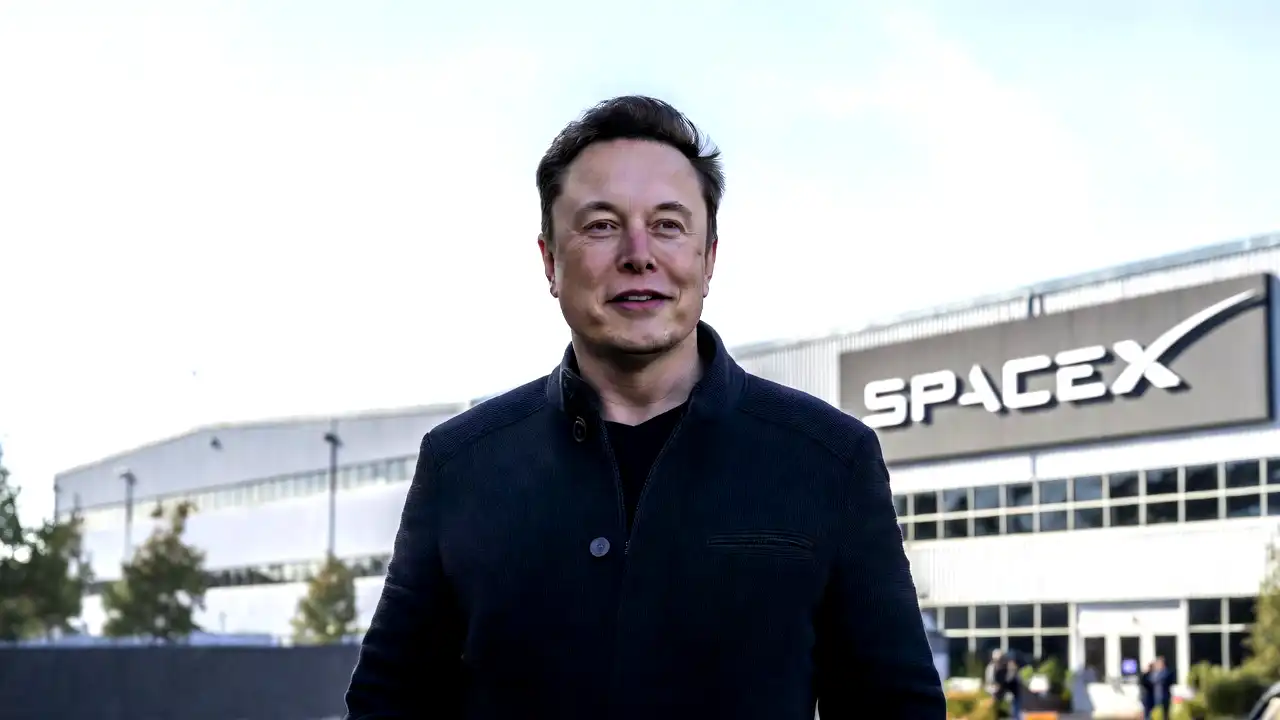
The highly anticipated public debut of Elon Musk’s aerospace empire has run head-on into the oldest and most rigid gatekeepers of traditional finance. On Friday, June 5, 2026, S&P Dow Jones Indices confirmed a surprise ruling: it will not relax its index eligibility requirements for SpaceX’s upcoming initial public offering. Despite intense lobbying from investment bankers and speculation about a fast-track entry, the index operator’s decision results in a major SpaceX exclusion from the S&P 500 index. This means the largest stock market debut in history will launch without immediate access to trillions of dollars in passive index fund capital.
To understand the gravity of the decision, one must look at the strict, three-part criteria that guard entry into the S&P 500. S&P Dow Jones requires newly public companies to trade on an eligible exchange for at least 12 months before being considered for index inclusion, rejecting a proposal to cut this “seasoning period” to 6 months. Furthermore, the prospective entrant must demonstrate four consecutive quarters of positive GAAP net income, including the most recent quarter. Finally, the company must maintain a real public float of at least 10% of outstanding shares. S&P DJI was absolutely clear that exceptions to these rules should not be granted solely on the basis of market capitalization.
SpaceX fails to meet nearly all of these core eligibility requirements, making its exclusion a mathematical certainty under the current rules. In its official IPO prospectus, the rocket, satellite, and artificial intelligence company reported a massive net loss of $4.94 billion for 2025, as well as a GAAP loss of $4.28 billion in the first quarter of 2026. Financial analysts at Evercore ISI do not expect the conglomerate to generate positive net income annually until 2027. Consequently, even if the firm completes its 12-month seasoning period by mid-2027, the profitability test could delay its S&P 500 entry until late 2028.
In addition to the profitability roadblock, SpaceX’s planned listing structure poses a significant challenge to achieving a significant public float. According to its amended registration statement, the company plans to sell a tiny, highly restricted portion of its equity to the public, resulting in an expected free float of only 3% to 5%. Because S&P 500 index weightings scale directly to the volume of shares that outsiders can realistically buy, this low float would have severely restricted SpaceX’s index footprint anyway. S&P’s refusal to waive its 10% float requirement ensures that index funds will not have to buy up illiquid, highly volatile shares on rebalance day.
The S&P DJI ruling creates a fascinating, highly visible split among the world’s largest index providers, highlighting how differently they approach mega-cap IPOs. While S&P decided to hold the line, rival index providers have aggressively rewritten their rules to capture the massive listing. Nasdaq Inc. recently introduced a fast-track entry mechanism that allows newly listed companies ranking among the top forty by market cap to join the prestigious Nasdaq-100 index in just 15 trading days. This means passive exchange-traded funds (ETFs) tracking the Nasdaq-100 will be compelled to buy billions of dollars’ worth of SpaceX stock in late June, even as S&P 500 funds remain locked out.
This sharp divergence has raised a profound, systemic question across Wall Street: Is passive investing slowly morphing into active curation? When major index providers make different judgment calls about whether to fast-track a multi-trillion-dollar company, the composition of the indexes ceases to reflect objective, rules-based market exposure. When Nasdaq creates a fast-track rule specifically to capture one company, and FTSE Russell prepares to add SpaceX to the Russell 1000 in September under adjusted guidelines, index providers are actively deciding which investors get early exposure to these untested giants, blurring the line between passive indexing and active stock-picking.
The immediate financial impact of the S&P 500 exclusion is massive, depriving SpaceX of a major, automatic buying catalyst. Investment banking analysts at J.P. Morgan previously estimated that an immediate S&P 500 inclusion would have triggered roughly $10 billion in automatic, passive inflows on rebalance day. Because index fund managers collectively hold trillions of dollars in assets tied to the S&P 500, they are forced to buy every stock on that list. By blocking fast-track entry, S&P has successfully insulated these passive portfolios from having to sell off billions of dollars in established giants like Apple, Microsoft, and Nvidia to buy the unproven newcomer.
The central bank’s decision to maintain its standards has received strong, high-profile backing from senior lawmakers in Washington. Congresswoman Maxine Waters, the Ranking Member on the House Financial Services Committee, issued a public statement commending the S&P Index Committee for refusing to participate in a “race to the bottom.” Waters emphasized that the index’s eligibility standards—including the profitability and seasoning rules—are not bureaucratic technicalities, but vital guardrails designed to protect the retirement savings and 401(k) accounts of millions of American teachers, retirees, and workers.
Despite this indexing setback, SpaceX’s IPO remains on track to make history as the largest public offering of all time. The company is scheduled to begin trading on the Nasdaq exchange on June 12, 2026, under the proposed ticker symbol SPCX. By selling 555.6 million shares at $135 apiece, the company aims to raise to $75 billion in an all-primary stock sale. This pricing will value the consolidated space, satellite, and artificial intelligence giant at a staggering $1.75 trillion, immediately establishing it as the seventh-largest company in the United States, ahead of Musk’s other public venture, Tesla. Even a minor 1.5% daily fluctuation in this massive $1.75 trillion valuation could wipe out or create more than $26 billion in market value, underscoring the high stakes of the debut.
Ultimately, the S&P 500’s refusal to bend its rules for SpaceX highlights a healthy, necessary correction in market priorities. While the tech sector’s infatuation with artificial intelligence and private space exploration has pushed company valuations to historic heights, the index operator is proving that even the most valuable companies must still pass the oldest and most fundamental tests of profitability and market liquidity. As the SPCX listing gets underway on June 12, the long wait for S&P 500 inclusion will serve as a vital testing ground, ensuring that public investors have ample time to evaluate the company’s true worth before it enters the bedrock of America’s retirement portfolios.