Our modern world is built on a mountain of electronics. From the smartphones that are our constant companions to the laptops that power our work, and the vast, invisible data centers that hum with the rhythm of our digital lives, these devices are the indispensable tools of the 21st century. They have connected humanity, unlocked unprecedented productivity, and democratized access to information. But this digital miracle has come at a staggering and often hidden environmental cost. For decades, the electronics industry has been dominated by a ruthlessly efficient but fundamentally unsustainable linear model: “take, make, dispose.” We extract finite resources from the earth, manufacture products with notoriously short lifespans, and then discard them in a rapidly growing, toxic tide of electronic waste, also known as e-waste.
This linear paradigm is now facing a crisis of its own making. The environmental degradation, resource scarcity, and social injustices inherent in this model are becoming increasingly difficult to ignore. In response, a powerful and transformative new vision is emerging, one that seeks to bend this straight line of production and consumption into a closed loop. This is the promise of sustainable electronics, powered by the principles of the circular economy. It is a radical reimagining of the entire lifecycle of a device—from its initial design and the materials it contains, to how it is used, repaired, and ultimately, how its valuable components are recovered and reborn into new products. This is not about incremental improvements; it is a fundamental redesign of our relationship with technology, a shift from a culture of disposable consumption to one of durable stewardship.
The Linear Catastrophe: Unpacking the High Cost of Our Disposable Tech Culture
To understand the profound necessity of a circular model, we must first confront the devastating consequences of the linear system that has defined the electronics industry for the past half-century. This model is not only inefficient; it is actively destructive at every stage of a product’s life cycle.
From the mine to the landfill, the linear economy for electronics leaves a trail of environmental, social, and economic damage.
The Problem Begins at the Source: The Toll of Extraction
The journey of every electronic device begins deep within the earth. The production of a single smartphone requires a complex combination of materials, including precious metals such as gold, silver, and palladium; conflict minerals like tin, tungsten, and tantalum; and a range of rare earth elements essential for screens and magnets.
The extraction of these materials is an environmentally and socially fraught process.
- Environmental Devastation: Mining is an incredibly destructive process. It involves moving vast quantities of earth, consumes enormous amounts of energy and water, and often uses toxic chemicals like cyanide and mercury to separate the desired minerals from the ore. This can lead to deforestation, soil erosion, and the contamination of local water sources, devastating ecosystems.
- The Scarcity Dilemma: Many of these resources are limited in quantity. We are rapidly depleting the world’s accessible reserves of elements like indium (used in touch screens) and cobalt (essential for lithium-ion batteries). This creates not only a long-term supply risk for the industry but also a geopolitical flashpoint, as the reserves of these critical minerals are concentrated in a few, often politically unstable, countries.
- The Human Cost and “Conflict Minerals”: The mining of certain minerals, particularly tin, tungsten, tantalum, and gold (collectively known as the “3TG” minerals), has been linked to severe human rights abuses and the funding of armed conflicts, particularly in regions such as the Democratic Republic of the Congo. Despite regulations like the Dodd-Frank Act in the U.S., ensuring a completely “conflict-free” supply chain remains a major challenge.
The Black Box of Manufacturing and the Energy-Intensive Supply Chain
The process of transforming these raw materials into a finished electronic device is a miracle of modern manufacturing, but it is also incredibly energy-intensive and opaque. A single semiconductor chip, the brain of any modern device, can undergo over a thousand steps in a fabrication plant that consumes as much energy as a small city. The global and fragmented nature of the electronics supply chain means that components can cross borders dozens of times, accumulating a massive carbon footprint from transportation long before the product ever reaches a consumer.
The Cult of the New: Designed for Obsolescence
A culture of constant consumption powers the economic engine of the linear model. This cycle is actively encouraged by a set of design and marketing practices often referred to as “planned obsolescence.” Products are not designed to last; they are designed to be replaced.
This strategy takes several forms, all of which contribute to shortening the useful life of our devices.
- Design and Repairability: Modern electronics are notoriously difficult, if not impossible, to repair. The use of proprietary screws, glued-in batteries, and soldered components makes it a challenge for even a professional to replace a broken screen or a failing battery. This effectively forces the consumer to buy a new device when a single component fails.
- Software Obsolescence: A perfectly functional device can be rendered obsolete when the manufacturer stops providing software and security updates for it. Without these updates, the device becomes insecure and may no longer be able to run the latest applications, pushing the user to upgrade.
- Marketing-Driven Upgrade Cycles: The relentless annual release cycle for products like smartphones, accompanied by marketing campaigns that emphasize minor incremental improvements, creates powerful social and psychological pressure to constantly upgrade to the “latest and greatest,” regardless of whether one’s current device is still perfectly functional.
The E-Waste Tsunami: A Toxic Legacy
The inevitable endpoint of the linear model is a mountain of discarded electronics. E-waste is now the fastest-growing stream of domestic waste in the world. According to the UN’s Global E-waste Monitor, humanity generated a record 53.6 million metric tonnes of e-waste in 2019, and that figure is projected to reach over 74 million tonnes by 2030.
This is not just a waste problem; it is a toxic crisis and a massive economic failure.
- A Toxic Cocktail: E-waste contains a hazardous mix of materials, including heavy metals like lead, mercury, and cadmium, as well as flame retardants. When these devices are improperly disposed of in landfills, the toxins they contain can leach into the soil and groundwater, posing a serious threat to human health and the environment.
- The Informal Recycling Catastrophe: A significant portion of the world’s e-waste is illegally shipped to developing countries, where it is often processed in informal recycling yards under horrific conditions. Workers, including children, burn cables to recover copper or use acid baths to extract gold, exposing themselves and their communities to a daily cocktail of toxic fumes and chemicals.
- The Billion-Dollar Trash Can: Beyond the Toxicity, E-Waste Represents a Colossal Economic Failure. The same e-waste generated in 2019 contained an estimated $57 billion worth of recoverable precious metals like gold, silver, and platinum. In the linear model, we are literally throwing away a fortune in valuable, finite resources.
The Circular Revolution: Principles for a Sustainable Electronics Future
The circular economy is a direct and powerful antidote to the destructive linear model. It is a regenerative system in which resource input and waste, emission, and energy leakage are minimized by slowing, closing, and narrowing material and energy loops.
This is not just about recycling. It is a holistic redesign of the entire system based on a set of core principles, famously articulated by the Ellen MacArthur Foundation.
Principle 1: Design Out Waste and Pollution
The first and most important principle is to tackle the problem at its source. In a circular model, waste is not something to be managed at the end of a product’s life; it is a design flaw to be eliminated from the very beginning.
This “design for circularity” approach involves a radical rethinking of how products are conceived and engineered.
- Design for Durability and Longevity: The primary goal is to keep products in use for as long as possible. This means building devices with higher-quality, more durable components and robust construction that can withstand the rigors of daily use.
- Design for Repair and Modularity: This is a direct counterpoint to planned obsolescence. It involves designing products that can be easily disassembled with common tools, making it simple to replace key components, such as batteries, screens, and ports. A modular design, where components can be individually upgraded (e.g., adding more RAM or a better camera), further extends the product’s useful life.
- Material Selection and Dematerialization: This involves selecting materials that are recyclable, biodegradable, or reusable, and avoiding the use of hazardous substances. It also means being more efficient with materials—using less to deliver the same or better functionality.
Principle 2: Keep Products and Materials in Use at Their Highest Value
The central goal of the circular economy is to transition from a linear consumption model to a circular usage model. The aim is to create systems that keep products and the materials they contain circulating in the economy for as long as possible, and at the highest possible level of value and utility.
This creates a “cascade” of value-retention loops, with each inner loop being preferable to the outer ones.
- Maintenance and Repair: The innermost and most valuable loop is simply keeping the original product in good working order through proper maintenance and repair. This preserves the maximum amount of value, as all the energy and labor embodied in the original product is retained.
- Reuse and Redistribution: When the original owner no longer needs a device, the next best option is to get it into the hands of a new user. This can happen through secondhand markets, trade-in programs, or donation initiatives.
- Refurbishment and Remanufacturing: This process involves taking a used product, professionally repairing it, cleaning it, and upgrading it as necessary to resell it with a warranty. Remanufacturing is a more intensive process that involves completely disassembling a product and rebuilding it to factory specifications.
- Recycling (The Last Resort): Recycling, which involves breaking down a product to recover its base materials, is the last resort. While far better than landfilling, it is the least valuable loop because all of the “embodied” value of the product (the design, manufacturing labor, and component functionality) is destroyed.
Principle 3: Regenerate Natural Systems
A truly circular economy is not just less bad; it is actively good. The third principle is about moving beyond a “not harm” approach to one that actively works to restore and regenerate the natural environment. In the context of electronics, this means transitioning the entire value chain to renewable energy, finding ways to return biological nutrients to the soil (where applicable), and investing in the restoration of ecosystems that past extraction activities have damaged.
Putting Principles into Practice: The Emerging Models of a Circular Electronics Industry
The principles of the circular economy are not just abstract ideals. They are being translated into a series of innovative business models and practices that are starting to gain traction across the electronics industry, from niche startups to some of the world’s largest corporations.
These models represent the practical building blocks of a more sustainable and resilient future for electronics.
The Rise of the Repairability Movement
A powerful, grassroots-led movement is pushing back against the culture of unrepairable devices. This movement is a combination of consumer advocacy, right-to-repair legislation, and companies that have built their business model around creating repairable products.
This is a direct assault on the practice of planned obsolescence.
- The “Right to Repair” Legislation: A growing global movement is advocating for “Right to Repair” laws. These laws would require manufacturers to make spare parts, repair manuals, and diagnostic tools available to both independent repair shops and consumers. France has already implemented a mandatory repairability index, a score from 1 to 10 displayed at the point of sale that tells consumers how easy a product is to repair.
- Pioneering Companies (Fairphone, Framework): Startups like Fairphone and Framework Laptop have become the standard-bearers for repairable, modular electronics. Fairphone creates smartphones with easily replaceable modules, and Framework has built a laptop that can be completely disassembled and upgraded with just a simple screwdriver. They are demonstrating that it is possible to create high-quality, desirable products based on circular principles.
The Shift to “Product as a Service” (PaaS) Models
One of the most powerful circular business models involves shifting from selling a product to selling the service that the product provides. In a PaaS model, the manufacturer retains ownership of the physical device and sells the user a subscription for its use.
This fundamentally realigns the manufacturer’s incentives with the principles of the circular economy.
- Incentivizing Durability and Repair: In a traditional sales model, a manufacturer profits when a device breaks and the customer buys a new one. In a PaaS model, the manufacturer’s profit is maximized when the device lasts as long as possible with minimal maintenance, as they bear the cost of all repairs and replacements. This creates a powerful financial incentive to design for durability, repairability, and upgradability.
- Examples in the Industry: Signify (formerly Philips Lighting) offers a “Light as a Service” solution, where it sells lumens and light quality, rather than light bulbs, to commercial customers, retaining ownership and responsibility for the entire lighting system. Several companies are experimenting with “Device as a Service” models for laptops and smartphones, particularly in the B2B sector.
The Booming Market for Refurbished and Secondhand Electronics
The market for used and refurbished electronics is no longer a niche corner of the eBay marketplace. It is a massive and rapidly growing global industry, driven by consumer demand for more affordable, sustainable options. Major players are professionalizing the secondhand market and building trust with consumers.
- Manufacturer Trade-In and Refurbishment Programs: Companies like Apple offer sophisticated trade-in programs and sell certified refurbished products with full warranties. This allows them to capture the residual value of their old devices, control their brand experience in the secondhand market, and secure a valuable stream of components for repair and recycling.
- Specialized Refurbishment Platforms: Platforms like Back Market and Refurbed have created a trusted marketplace for professionally refurbished devices from a network of certified sellers, offering consumers a reliable and more sustainable alternative to purchasing new.
Closing the Loop: Innovations in E-Waste Collection and Recycling
While recycling is the last resort, it is a critical one. The challenge is to create efficient systems for collecting e-waste and to develop more advanced recycling technologies that can recover a wider range of valuable materials. Innovations in both logistics and technology are making electronics recycling more effective and economically viable.
- Extended Producer Responsibility (EPR): EPR is a policy principle that places the financial and/or physical responsibility for a product’s end-of-life management on the producer. EPR laws, which are common in Europe and parts of North America, often require manufacturers to fund and operate “take-back” programs for their old products, creating a direct incentive for them to design products that are easier and cheaper to recycle.
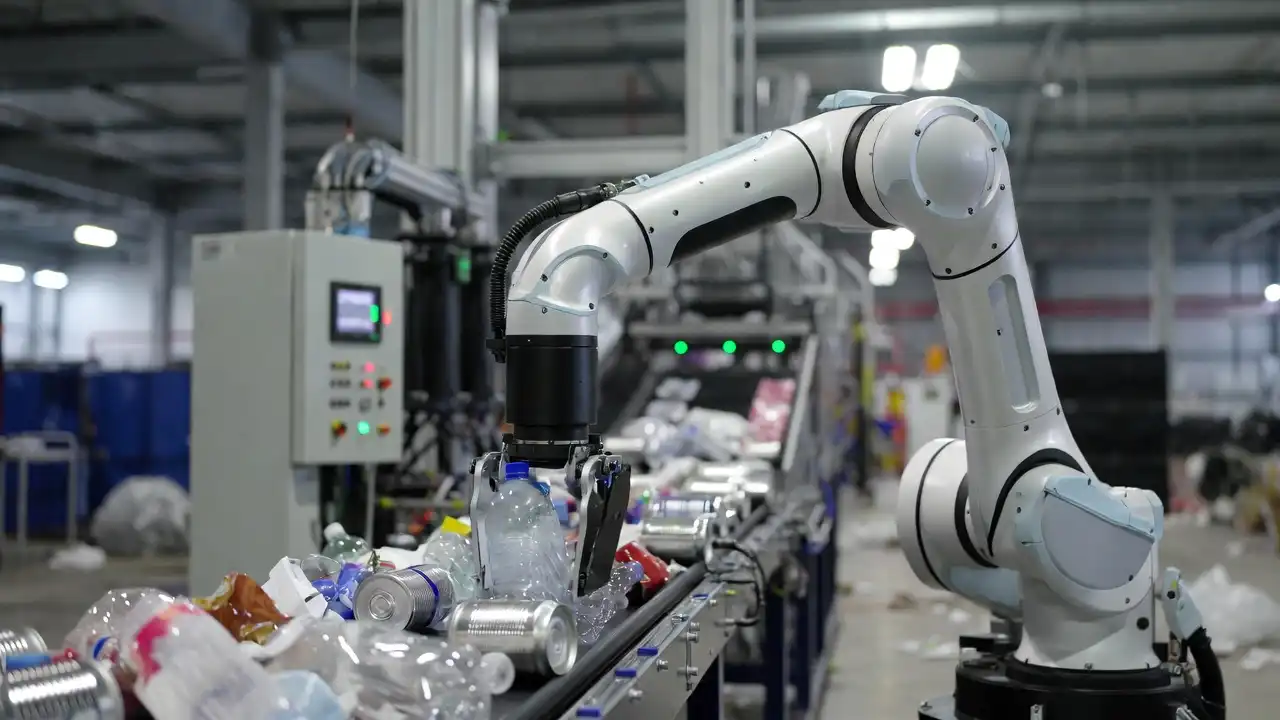
- Advanced Recycling Technologies: Traditional e-waste recycling often relies on shredding and smelting, which can only recover a limited number of bulk metals. New technologies are being developed to do better. This includes advanced robotic systems that can disassemble devices and sort components, as well as new hydrometallurgical and pyrometallurgical processes that can recover a wider range of precious and rare earth metals with higher purity and a smaller environmental footprint.
- Urban Mining: The concept of “urban mining” treats our cities and landfills as rich sources of valuable materials. The concentration of gold in a tonne of old mobile phones, for example, is significantly higher than the concentration in a tonne of high-grade gold ore from a mine. Building the infrastructure to efficiently “mine” our e-waste is a major economic and environmental opportunity.
The Role of Sustainable Materials and Green Chemistry
A truly circular model must also address the “take” phase of the linear economy. This involves a fundamental shift in the materials used to build our devices. This is about moving from a reliance on virgin, mined materials to a new palette of recycled and bio-based alternatives.
- Increasing Recycled Content: Leading electronics companies are setting ambitious goals to increase the amount of recycled content in their products. Apple, for example, now uses 100% recycled rare earth elements in the Taptic Engine and audio magnets of its new iPhones and has introduced the first-ever certified recycled gold in its supply chain.
- Bio-based Plastics and Materials: Researchers are developing new plastics and materials derived from biological sources, such as corn starch or algae, that can be used for casings and other components. The goal is to create materials that are both renewable and biodegradable.
- Green Chemistry: The principles of green chemistry are being applied to develop less toxic and more sustainable alternatives for materials such as solder, flame retardants, and cleaning solvents used in the manufacturing process.
The Path Forward: Challenges and Opportunities on the Road to a Circular Electronics System
The transition to a fully circular electronics industry is a monumental undertaking. It is a multi-decade journey that requires a systemic shift involving technological innovation, new business models, enabling public policy, and a change in consumer behavior.
The path is fraught with challenges, but the opportunities for innovation, economic growth, and environmental restoration are immense.
The Major Hurdles to Overcome
Despite the growing momentum, there are significant barriers that are slowing the transition to a circular model. Addressing these challenges will require a concerted effort from all stakeholders in the ecosystem.
- Economic and Path Dependency: The linear economy has been optimized for efficiency and low upfront cost for over 50 years. The entire global supply chain, from component suppliers to logistics providers and retailers, is built around this model. Shifting to a new system that prioritizes longevity and reverse logistics requires a massive and costly retooling.
- Consumer Behavior and Culture: We have been conditioned by decades of marketing to desire the newest thing and to view our electronics as disposable. Shifting this mindset to one that values durability, repair, and long-term ownership is a major cultural challenge.
- The Complexity of Global Supply Chains: The electronics supply chain is incredibly complex and fragmented. Tracking materials and components across this global web to ensure they are sourced responsibly and recovered at the end of their life is a massive data and logistics challenge. Technologies like blockchain are being explored as a way to create more transparent and traceable supply chains.
- The Technical Challenges of Recycling: Modern electronic devices are complex amalgams of dozens of different materials intricately fused. Cost-effective technologies to cleanly separate and recover all of these materials at a high level of purity remain a significant technical hurdle.
The Role of Policy and Regulation as an Accelerator
Voluntary corporate action, while important, will not be enough to drive a system-level change. Smart, forward-thinking public policy is essential to create a level playing field and accelerate the transition. Governments have a powerful toolkit of policy levers at their disposal to incentivize circularity.
- Strengthening and Expanding Right to Repair Laws: Making it easier and more affordable for people to repair their own devices is one of the most effective ways to extend the life of products.
- Implementing Robust Extended Producer Responsibility (EPR) Schemes: Holding producers responsible for the end-of-life of their products is a powerful incentive for them to design for circularity.
- Green Public Procurement: Governments are massive purchasers of electronics. By implementing procurement policies that favor products with durable, repairable designs and high recycled content, they can leverage their purchasing power to create a significant market demand for sustainable electronics.
- Tax Incentives and Harmonized Standards: Governments can use the tax system to favor circular activities (e.g., by lowering taxes on repair services or the use of recycled materials) and penalize linear ones (e.g., through taxes on virgin materials or waste generation). Harmonizing standards for items such as chargers and connectors can also reduce waste and enhance convenience.
The Business Case for Circularity: Beyond Corporate Social Responsibility
The transition to a circular economy is not only an environmental imperative but also a significant economic opportunity. The companies that embrace circularity will be the ones that are most resilient and profitable in the long run. The business case for the circular economy is built on several key value drivers.
- Reduced Material Costs and Supply Chain Risk: By recovering and reusing materials from old products, companies can reduce their dependence on volatile and increasingly expensive virgin commodity markets, making their supply chains more resilient to geopolitical shocks and resource scarcity.
- New Revenue Streams and Customer Relationships: Models like “Product as a Service” create long-term, recurring revenue streams and allow companies to build a deeper, ongoing relationship with their customers, moving beyond a single transactional sale.
- Enhanced Brand Loyalty and Reputation: In a world where consumers are increasingly environmentally conscious, a demonstrable commitment to sustainability and circularity can be a powerful brand differentiator, attracting both customers and top talent.
- Spurring Innovation: The design constraints imposed by the need for durability, repairability, and recyclability are forcing engineers and designers to think more creatively, leading to innovations in materials science, product architecture, and business models.
The Consumer’s Role in Driving the Change
Ultimately, the transition to a circular economy for electronics requires the active participation of consumers. Every purchasing decision is a vote for the kind of world we want to live in. Consumers can accelerate the shift by adopting new behaviors and expectations.
- Vote with Your Wallet: Choose to buy from companies that are transparent about their supply chains and are actively designing for repair and longevity. Support brands like Fairphone and Framework, and look for products with high repairability scores.
- Embrace Repair: The next time a device breaks, consider getting it repaired before replacing it. Support local, independent repair shops.
- Buy Secondhand: Consider buying a professionally refurbished device instead of a new one. It is often a fraction of the cost and has a much smaller environmental footprint.
- Become a Responsible Steward: When a device reaches the end of its useful life, ensure it is disposed of responsibly through a certified e-waste recycler, not in household trash.
Conclusion
The era of disposable technology, driven by the flawed logic of the linear economy, is coming to a close. Its legacy is a planet strained by extraction and choked by a toxic tide of e-waste. But from the ashes of this broken model, a more intelligent, resilient, and hopeful paradigm is rising. The circular economy for electronics is not a utopian fantasy; it is a practical and necessary blueprint for the future, a future where the genius that allows us to etch billions of transistors onto a sliver of silicon is finally matched by the wisdom to steward those creations responsibly.
This transformation will not be easy. It requires a fundamental reevaluation of our economic incentives, design philosophies, and consumer culture. It demands a collective effort from the engineers who design our devices, the companies that build them, the policymakers who regulate them, and the citizens who use them. It is a journey from a mindset of short-term consumption to one of long-term value, from extraction to regeneration, and from waste to resource. By embracing the principles of the circular economy, we have the opportunity not just to mitigate the damage of our digital age, but to forge a new one—a truly sustainable electronics future that is as innovative as it is regenerative.